
Sun-Dried Adobe Brick Yard
Mould and sun-cure mud bricks in the open with nothing but soil, straw, water and a timber mould — the cheapest wall material there is.

- Estimated cost
- $10 – $20 for moulds; bricks cost soil and labour
- Skill level
- Beginner
- Time
- 1 day to build moulds, 400 – 600 bricks/day with four people, 3 weeks curing
Why this is a Verified Build
Confirmed with build photos from a two-room house near Kumasi, Ghana (2025): 6,400 bricks moulded in eleven days, walls rendered and standing through two rainy seasons.
Tools
- Handsaw and hammer
- Hoe and shovel
- Wheelbarrow
- Straight edge for striking off
- Tape measure
If you don't have it
- No steel mould? A bottomless timber mould of 25 mm boards, wetted before each pour, releases just as cleanly.
Materials
Dimensions & cut list
Sun-dried adobe bricks for non-load-bearing and low load-bearing walls under a good roof overhang. These are the reference sizes from Appropedia — scale them to what you have, but keep the ratios.
| Brick size | 30 × 15 × 10 cm |
|---|---|
| Soil mix | 70–75% sand, 25–30% clayJar test: shake soil in water, let settle, read the bands |
| Straw or chopped grass | 1 part per 20 parts soil by volumeControls shrinkage cracking |
| Mould | Open timber box, no base, wetted before each fill |
| Drying | 3 days flat, then stood on edge 7–14 days, always in shade or under grass cover |
| Shrinkage test bar | 60 cm long bar; over 3 cm total shrinkage means too much clay |
| Wall protection | Plinth 30 cm above ground, roof overhang 50 cm minimum |
Take this list to the yard
- ≈ 20Bricks per m² of 30 cm wall
- ≈ 1 m³Soil per 100 bricks
- 4 m of 25 × 150 mmTimber for a 4-brick gang mould
- Enough to cover the whole drying yardGrass or tarpaulin for shade drying
Step by step
Step 1 of 6
Jar-test the soil
Shake a third-full bottle of sub-soil with water and let it settle overnight. Aim for 15 – 30% clay above the sand layer. Too much clay and the bricks crack as they dry; too much sand and they crumble when handled.
Swipe or use arrow keys
1. Jar-test the soil
Shake a third-full bottle of sub-soil with water and let it settle overnight. Aim for 15 – 30% clay above the sand layer. Too much clay and the bricks crack as they dry; too much sand and they crumble when handled.
2. Build a gang mould
Make a bottomless four-cell mould with internal cells of 290 × 140 × 100 mm from 25 mm timber. Fit two handles. Bottomless is the point — you lift the mould straight off the wet bricks and reuse it immediately.
3. Mix and soak overnight
Mix soil, chopped straw and water into a stiff paste that just holds a footprint, then leave it covered overnight. Soaking lets the clay fully hydrate and cuts shrinkage cracking noticeably.
4. Mould on a flat, cleared pad
Dust the mould with sand, throw the mix in hard so it fills the corners, strike level with a straight edge, then lift the mould straight up. Move along the pad and repeat. Wash the mould every ten or so bricks.
5. Dry flat, then on edge
Leave bricks flat for 3 – 4 days until they can be handled, then stand them on edge with gaps for airflow for another two weeks. Shade them from hard midday sun for the first two days or the faces craze.
6. Cure, stack and test
Stack cured bricks under cover for a further week. Drop one from waist height onto its corner: a good brick chips, a bad one shatters. Break another in half and check the middle is dry, not dark and damp.
Why mine failed
The ways this build usually goes wrong, and what fixes it.
Bricks crack all over while drying
CauseToo much clay and no fibre
FixRun the shrinkage bar test. Add sand until total shrinkage is under 3 cm in 60 cm, and mix in chopped grass or straw at about 1:20.
Bricks crumble when lifted
CauseToo much sand, or lifted too early
FixIncrease the clay fraction slightly and leave them flat for three days before standing them on edge.
Walls eroding after one rainy season
CauseAdobe exposed to splash and driving rain
FixAdobe needs a hat and boots: 50 cm roof overhang and a 30 cm stone or block plinth, plus a lime or soil-cement render on exposed elevations.
Safety notes
- Adobe is not waterproof. It needs good foundations, a rendered face and generous roof overhangs, or the walls erode from the base up.
- Stack drying bricks no more than five courses high — toppling stacks break toes.
- Do not use adobe below damp-proof level or in flood-prone ground.
Source & attribution
This plan is our build-step write-up of work documented by Appropedia. The original design and documentation belong to them — go read the source before you build.
Adobe brick constructionLocal adaptations
What builders changed to make this work where they live.
Kwabena A. · Kumasi, Ghana
We added a bucket of cement per barrow for the bottom three courses only. Cheap insurance against splash-back erosion.
Build this alongside
Plans that use the same materials or serve the same need.
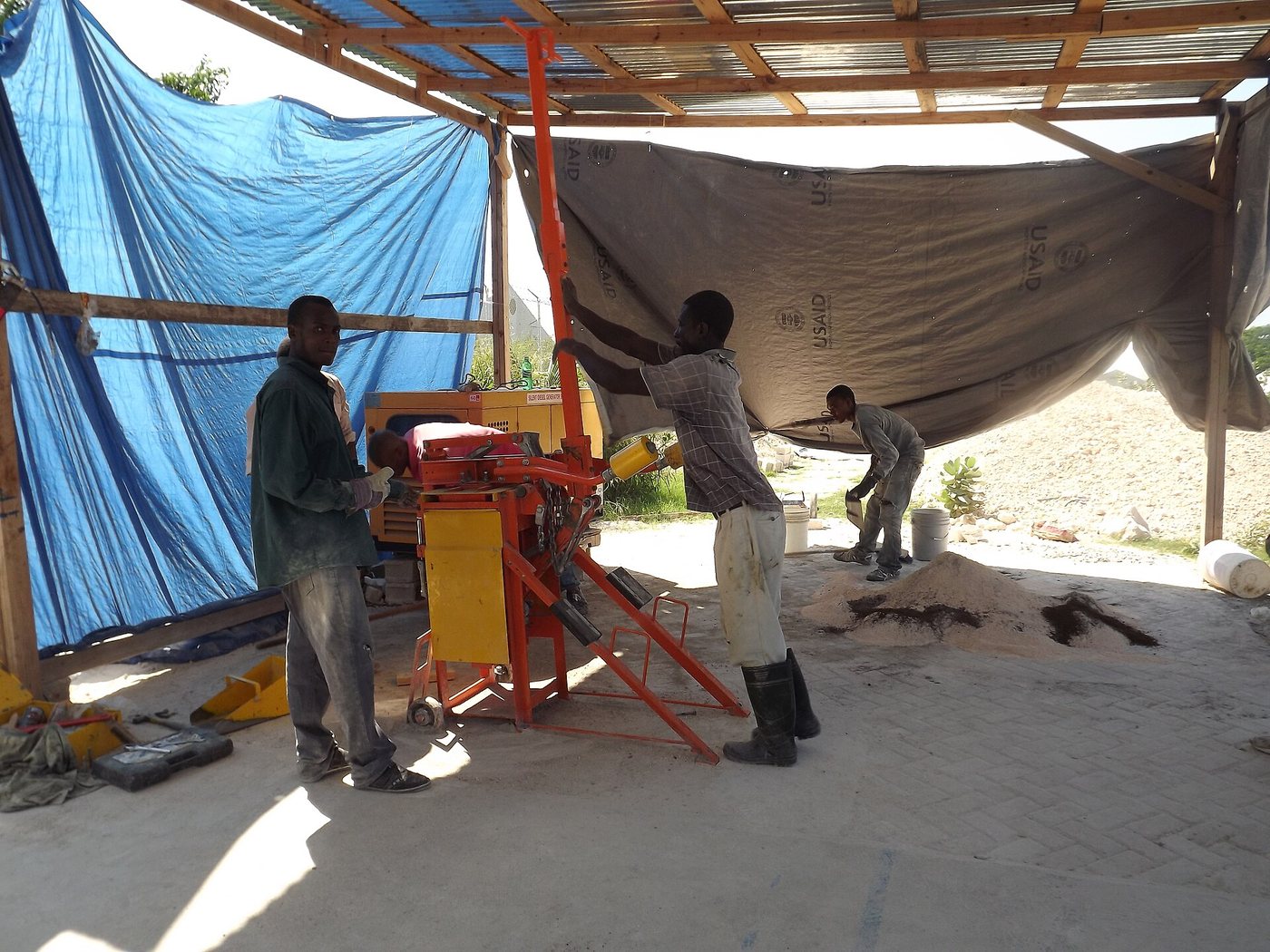
Manual Compressed Earth Block Press
A hand-built compound-lever press that turns local soil into load-bearing building blocks for about the price of a bag of cement.
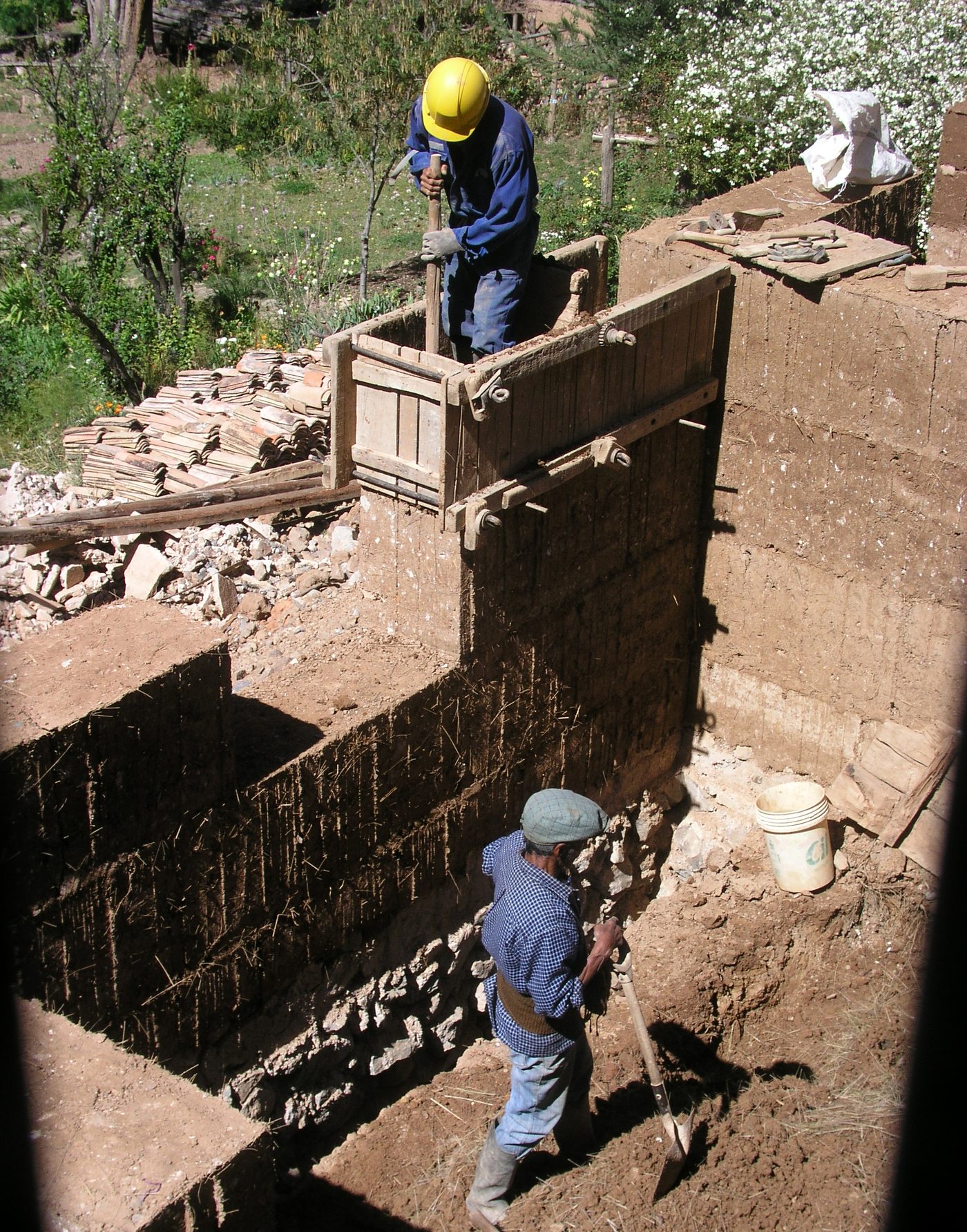
Rammed Earth Wall with Reusable Formwork
Tamp moist sub-soil in timber shuttering to raise thick, thermally massive walls that stay cool through the hottest afternoon.
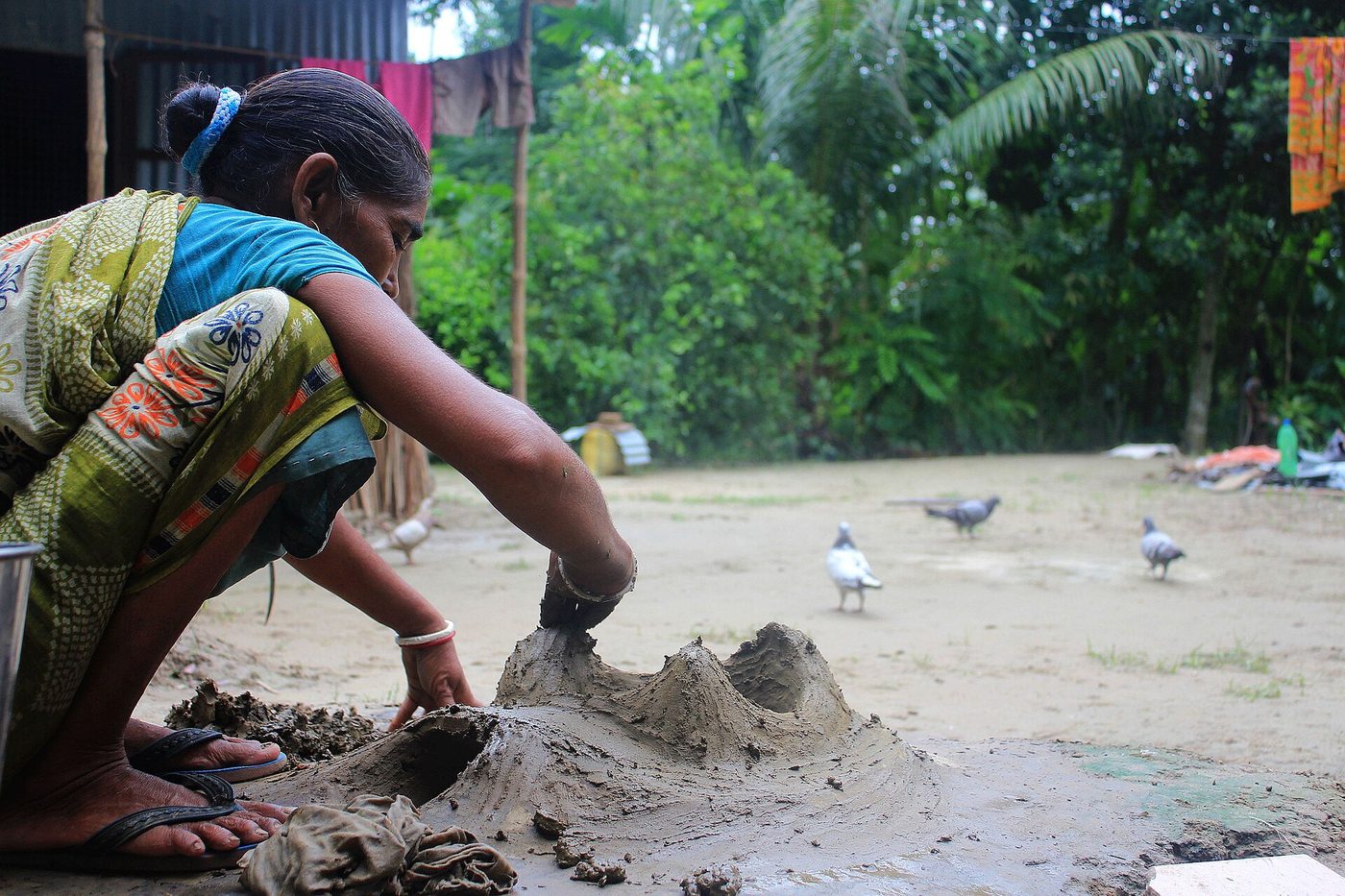
Cob Bread and Pizza Oven
A domed earth oven on a raised base that holds baking heat for hours from one small fire of scrap wood.