Eco-briquettes & biomass fuel
Charcoal costs a household money every single week. Briquettes turn things people already throw away — paper, leaves, crop residue, sawdust, charcoal dust — into fuel that burns longer and can be sold at the market. These 9 plans cover the whole chain, from the drying rack up to a screw extruder.
The fuel chain
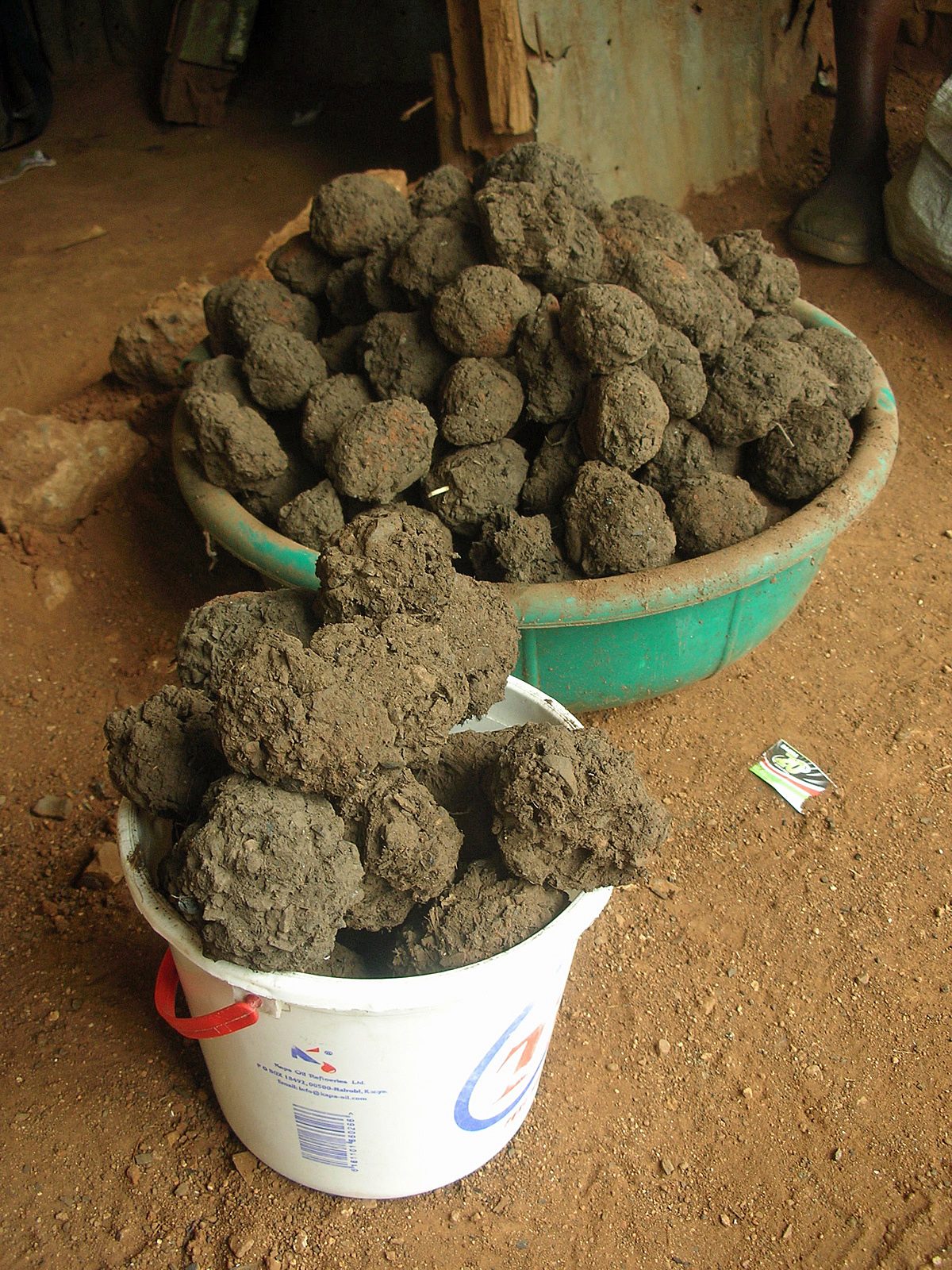
Briquette-making fails at the weakest link, and it is almost always drying. Work through the chain in order rather than buying a press first.
1. Feedstock
Waste paper, cardboard, dry leaves, crop residue, sawdust, charcoal dust — collected free and kept dry.
2. Char or soak
Woody residue becomes char in a cone kiln or retort. Paper and leaves get soaked to a pulp instead.
3. Press
Compact the mix into briquettes — by hand in a tin, in a lever press, or continuously through a screw extruder.
4. Dry
Two to three weeks raised and ventilated. Skip this and the briquettes mould or smoke instead of burning.
5. Burn
Briquettes need a stove that suits them: a rocket stove for sticks and briquettes, a TLUD or sawdust tin for fines.
Choose your press
Start at the top of this table. Every row up costs more and demands more tools, so only move up when the row below is genuinely selling out.
| Press | Cost | Output | Tools needed | Best feedstock |
|---|---|---|---|---|
| Hand tin mould | Under $15 | 40 – 80 / day | Hammer, nail, bucket | Soaked paper, leaves, sawdust |
| Lee Hite lever press | $25 – $90 | 200 – 400 / day | Saw, drill, spanners, bolts or welder | Paper pulp, crop residue, sawdust |
| Charcoal-dust lever press | $35 – $80 | 300 – 500 / day | Welder or bolt kit, grinder, drill | Charcoal dust + starch binder |
| Screw extruder | $120 – $400 | Continuous log, highest output | Welder, grinder, drill press, bearings | Dry sawdust and fine milled residue |
Every fuel plan
 Diagram
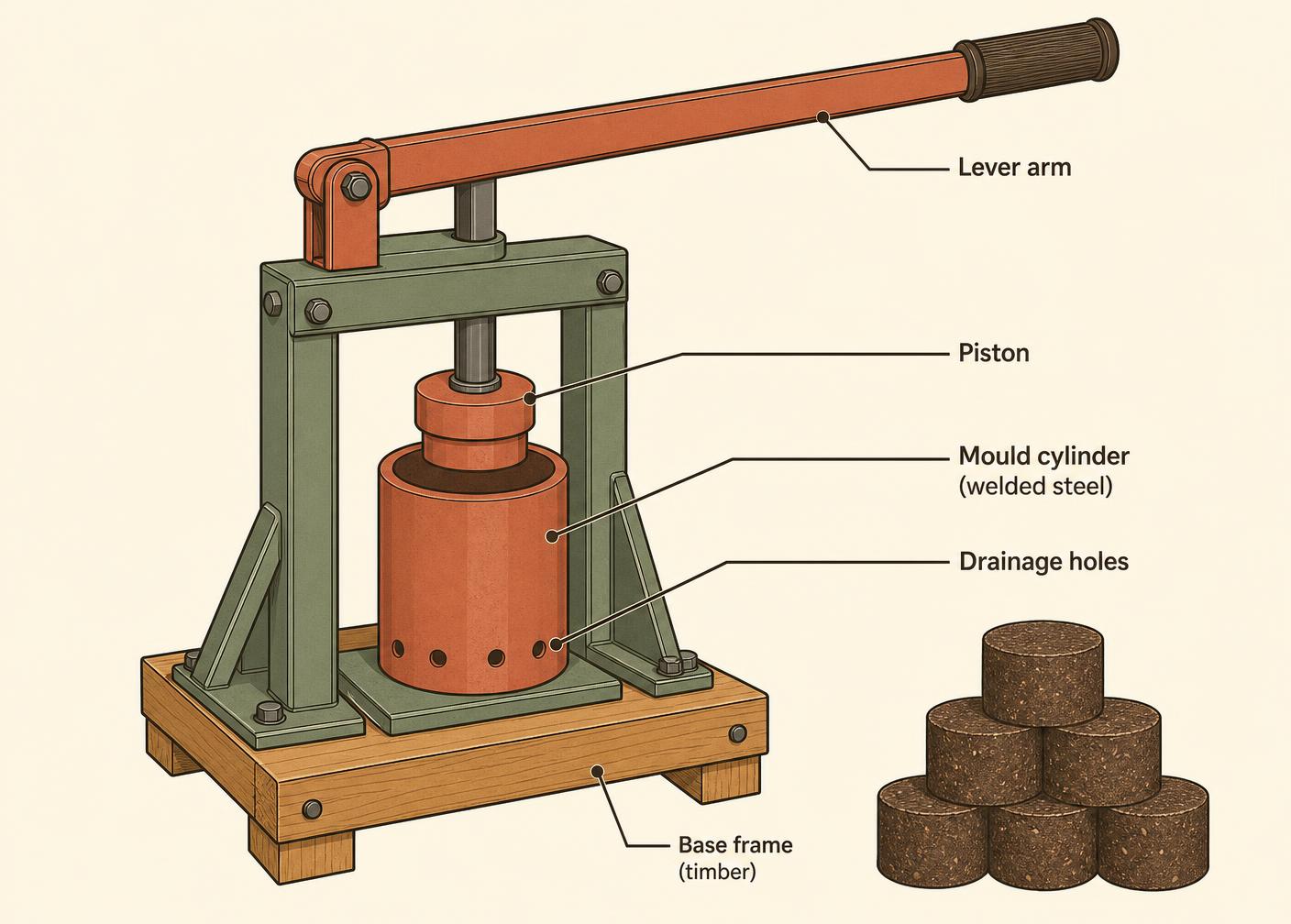
Lee Hite Eco-Briquette Lever Press
The EWB-documented lever press that squeezes soaked waste paper and biomass into dense fuel briquettes — the design with real numbers behind it.
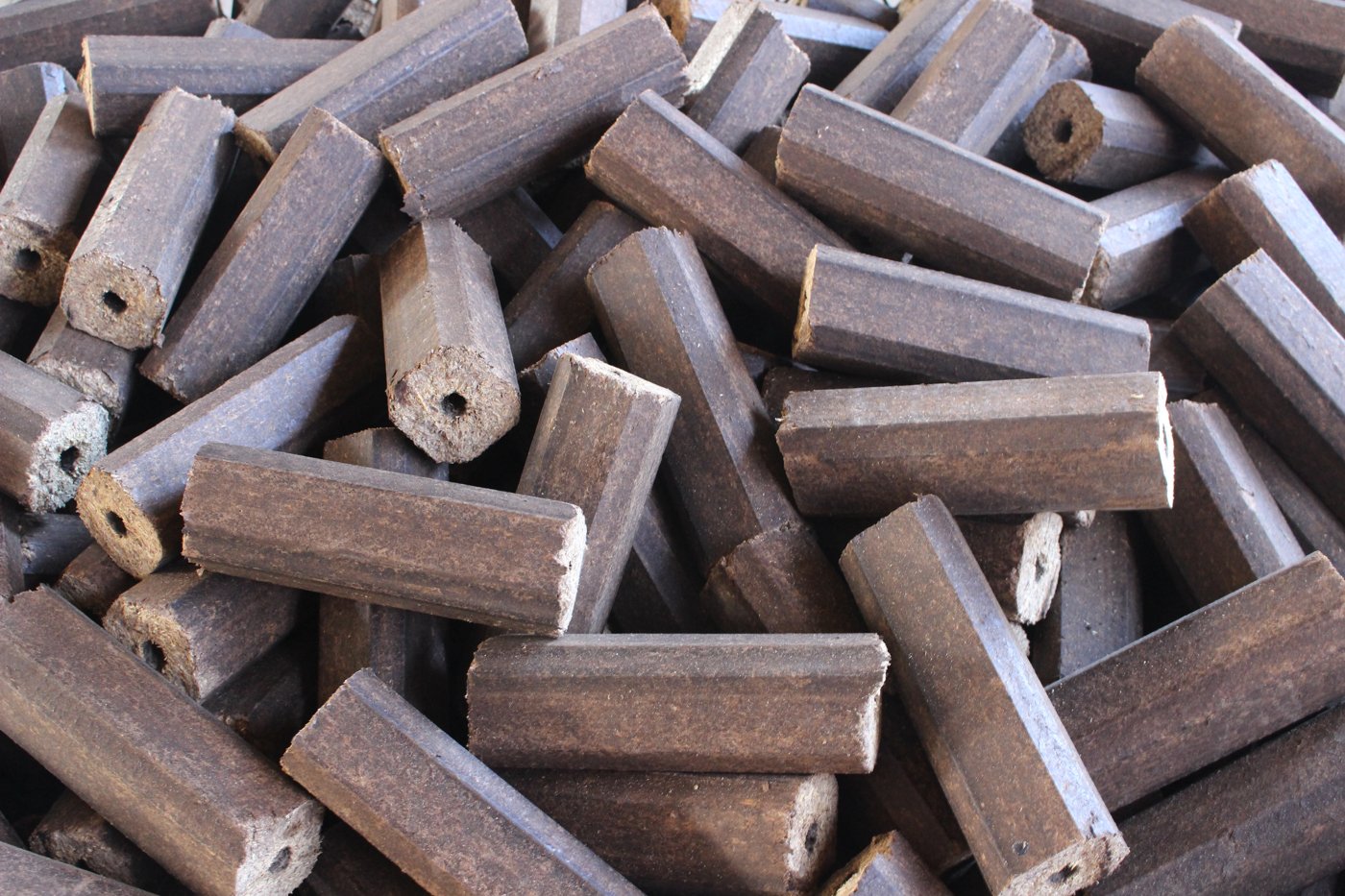
Hand-Cranked Screw Briquette Extruder
A screw auger in a tapering barrel that extrudes a continuous log of compacted biomass — higher output than a piston press once the feedstock is right.
Lever-Arm Charcoal Briquette Press
Press agricultural waste and charcoal dust into burnable briquettes, turning a disposal problem into cooking fuel or a product to sell.
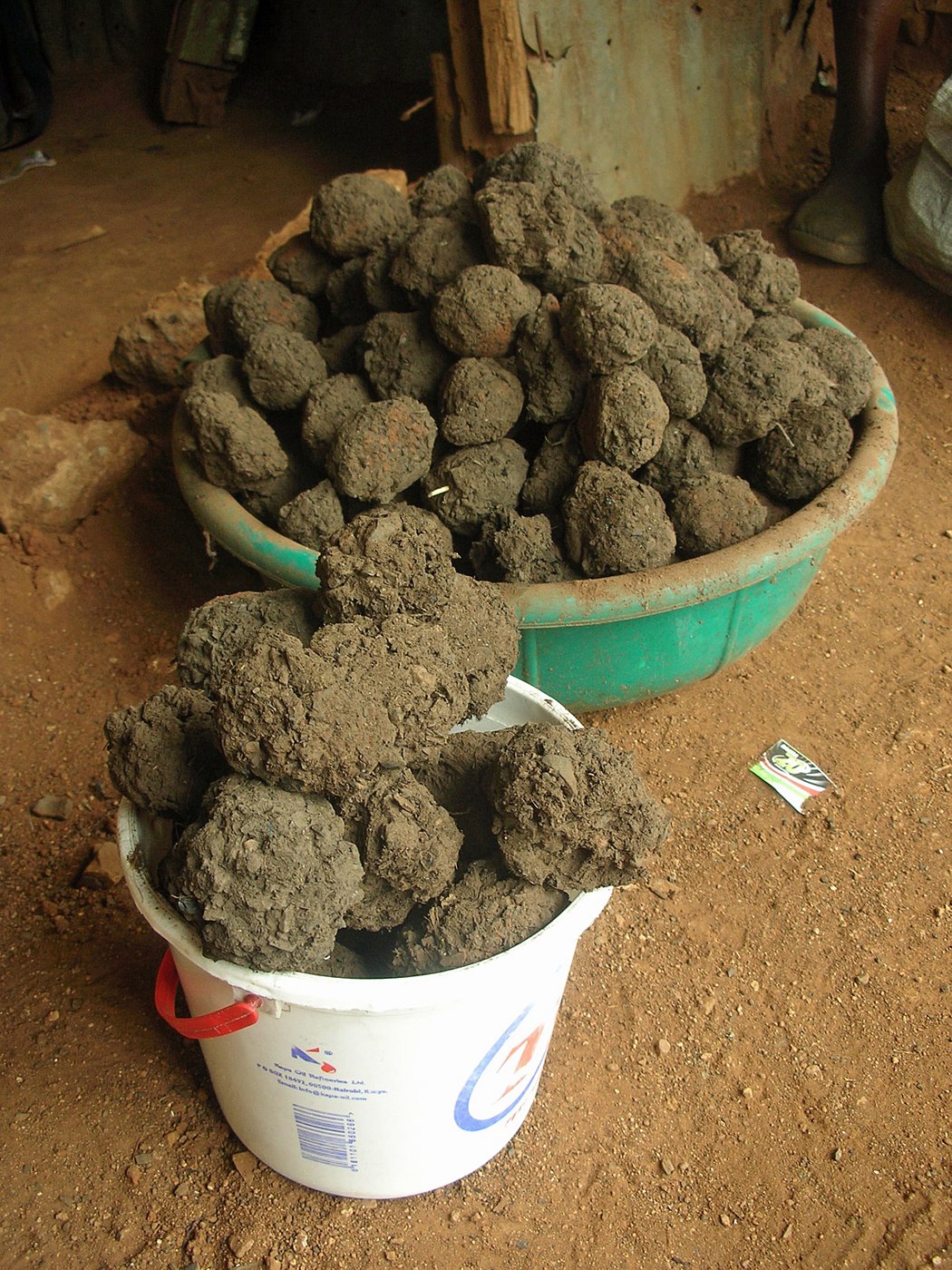
Waste Paper & Leaf Briquettes
The simplest fuel in the library: soak waste paper and dry leaves, press by hand in a perforated tin, dry hard, and burn what would have been rubbish.
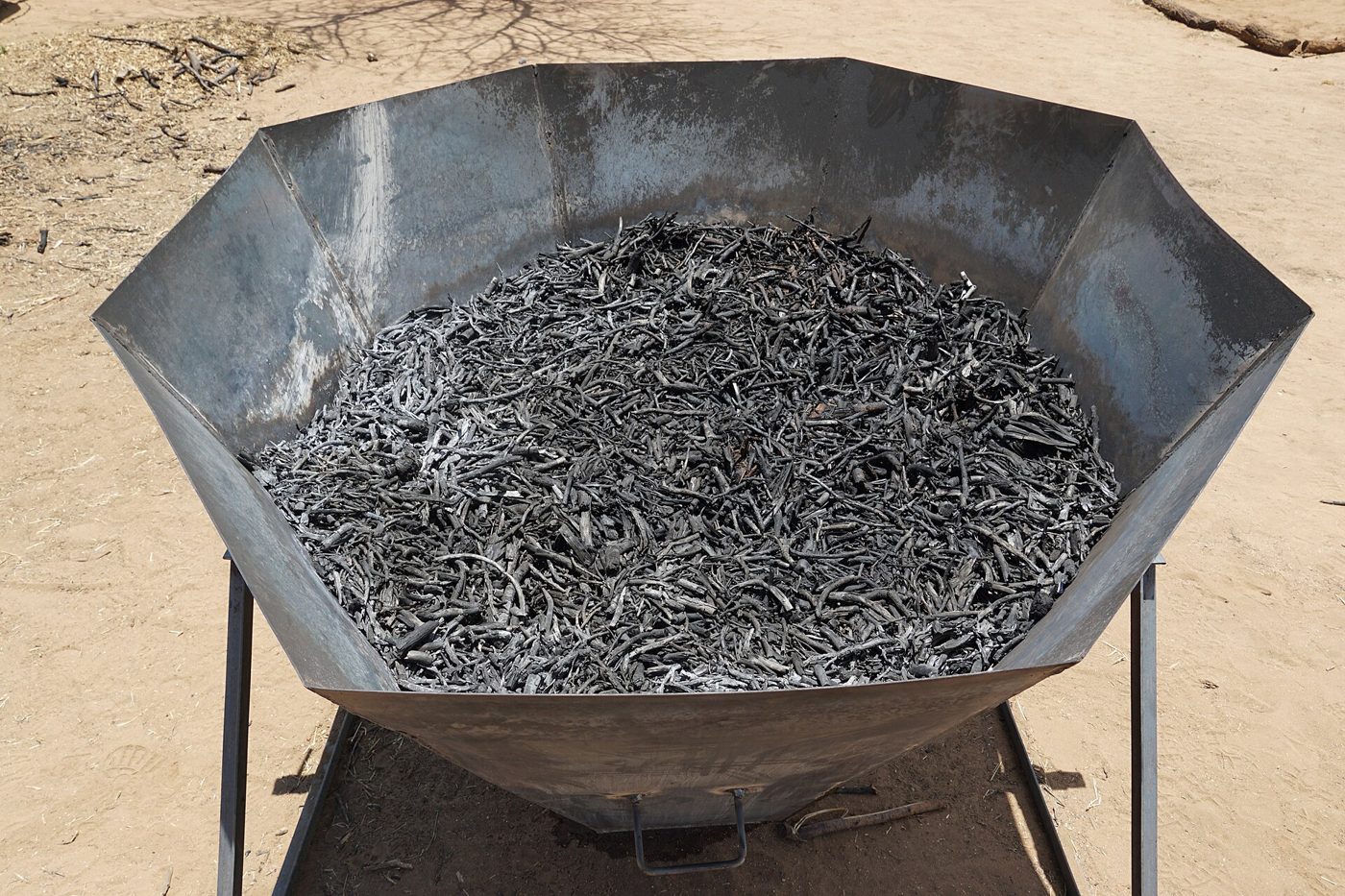
Cone Pit Biochar Kiln
A sloped-wall cone or flame-cap pit that turns crop residue and prunings into biochar with far less smoke than a smouldering pile.
 Diagram
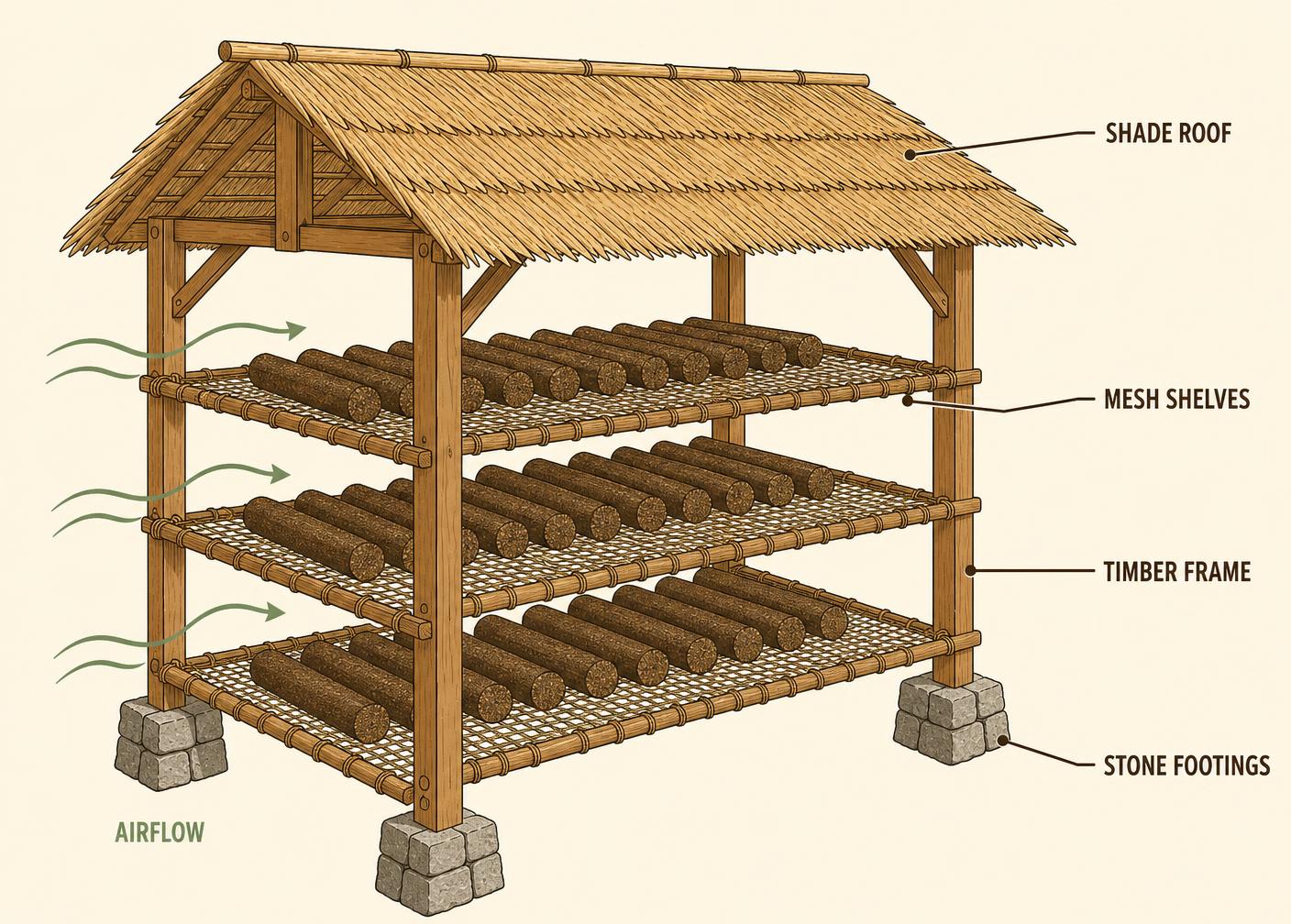
Raised Biomass Drying Rack
The unglamorous rack that makes every fuel project work: raised, ventilated and shaded from rain so briquettes and firewood actually dry instead of moulding.
 Diagram
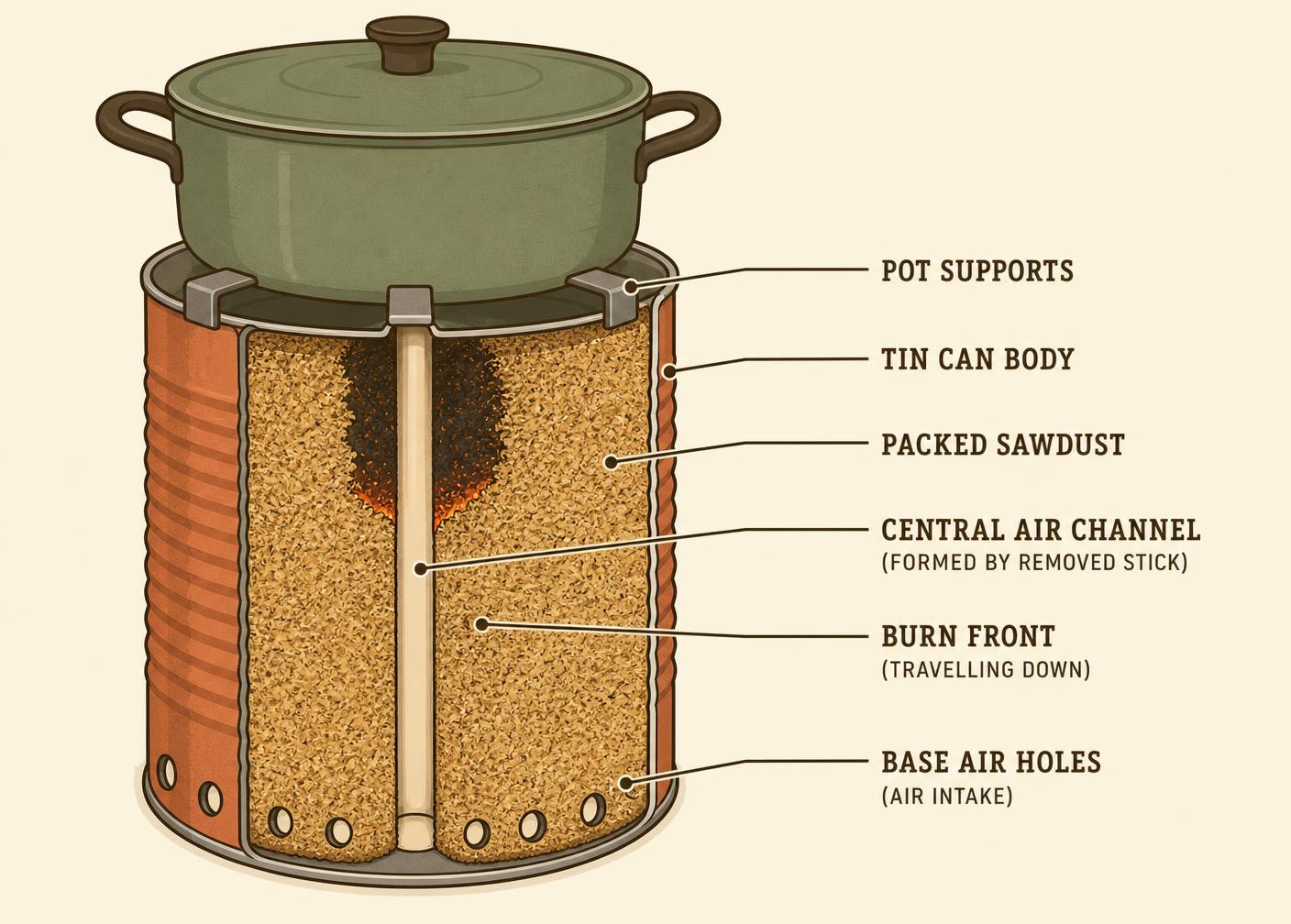
Packed Sawdust Tin Stove
Pack damp sawdust hard around a stick in a tin, pull the stick out, and light a stove that burns for an hour on waste from the timber yard.
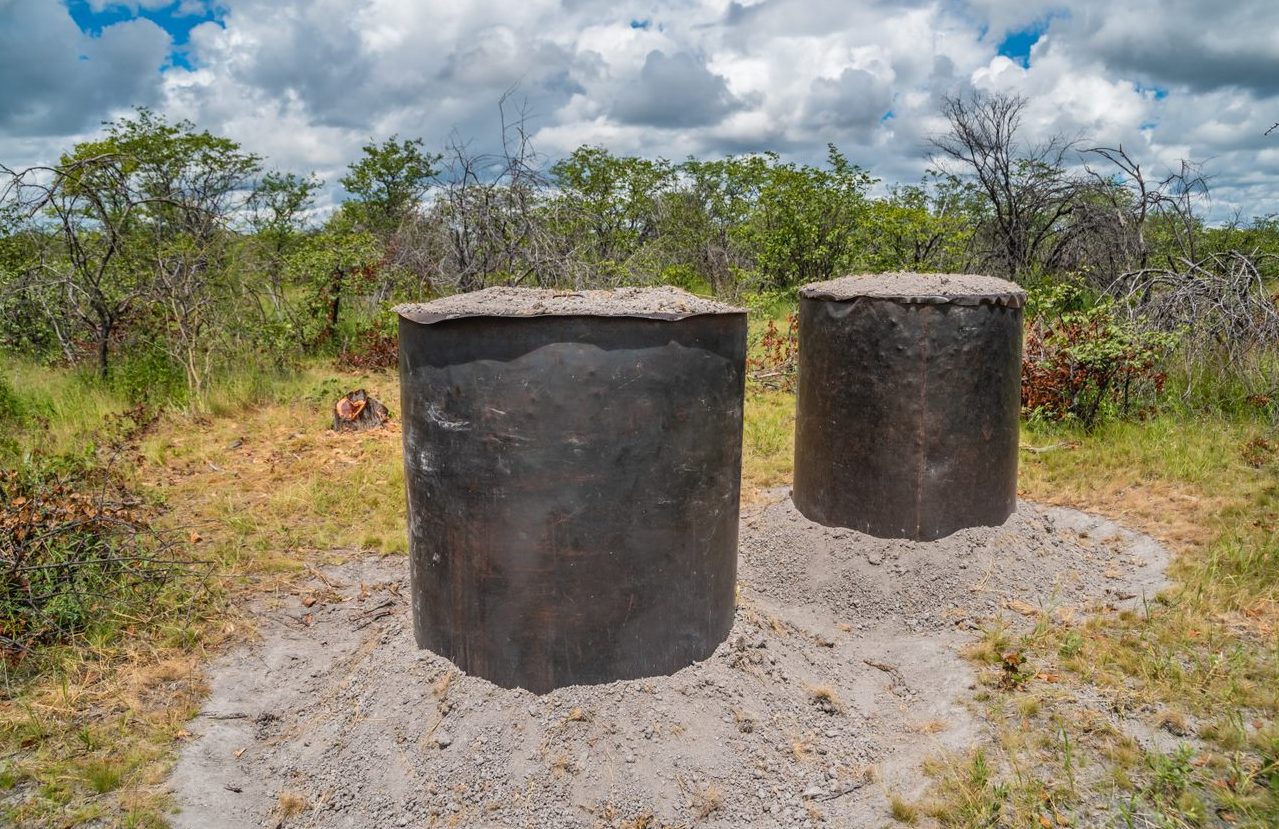
Drum Retort Charcoal Kiln
Char wood inside a sealed inner drum heated from outside, burning the smoke as fuel — far higher yield and far less smoke than an earth-mound burn.
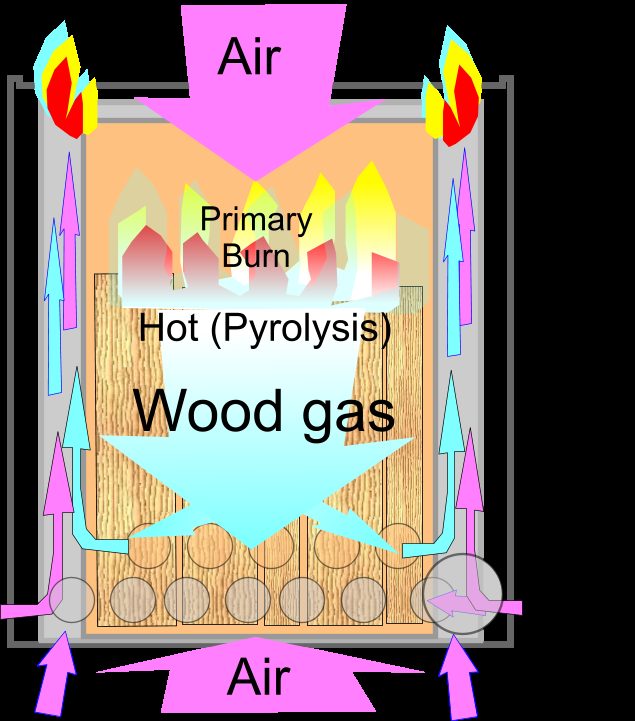
TLUD Gasifier Stove
A top-lit updraft can stove that burns wood gas cleanly with a blue flame and leaves behind biochar instead of ash — cleaner cooking and a soil amendment from one burn.
Where the briquette plans come from
The lever press, the screw extruder and the waste-paper experiments on this page are our build write-ups of work documented by Lee Hite with Engineers Without Borders — dimensioned press drawings, binder and moisture ratios, and results measured in the field. Read the original before you build; the numbers there are the reason these plans are worth trusting.
leehite.org — EWB briquette project