Lever-Arm Charcoal Briquette Press
Press agricultural waste and charcoal dust into burnable briquettes, turning a disposal problem into cooking fuel or a product to sell.
- Estimated cost
- $35 – $80 in timber, steel pipe and fasteners
- Skill level
- Intermediate
- Time
- 1 – 2 days to build; 300 – 500 briquettes per day by hand
Not yet verified
No confirmed build with photo proof has been submitted for this plan yet. Built it? Send photos and it earns the badge.
Tools
- Welder or a drill and bolts if building the bolted version
- Angle grinder or hacksaw
- Drill with metal bits
- Spanner set
- Mortar and pestle or a hammer mill for crushing
If you don't have it
- No cassava starch binder? Soaked waste paper pulp at 1 part pulp to 3 parts char dust binds as well; clay at 10% works but cuts heat output.
Materials
- Steel pipe, 75 – 100 mm diameter, ~300 mm, for the moulding cylinder
- Steel rod or pipe, 1200 – 1500 mm, for the lever arm
- Steel plate offcuts for the base, plunger face and pivot lugs
- 12 mm bolts, nuts and washers for the pivots
- Hardwood or steel frame stock
- Binder: cassava starch, waste paper pulp or clay at about 10%
Dimensions & cut list
A single-mould hand press making charcoal-dust briquettes from market waste fines. These are the reference sizes from Engineers Without Borders / Lee Hite — scale them to what you have, but keep the ratios.
| Mould bore | 60 mm diameter × 80 mm deep |
|---|---|
| Core pin | 20 mm, centredThe hole is what makes it burn instead of smoulder |
| Charcoal dust to binder | 5 parts sieved dust to 1 part cassava or clay binder |
| Binder paste | 1 part cassava flour cooked into 8 parts water |
| Dust sieve | 3 mmLumps stop the briquette holding together |
| Drying | 2–3 days in full sun, turned daily |
| Output | 150–250 briquettes a day, one presser and one mixer |
Take this list to the yard
- 100 mm lengthSteel pipe for mould, 60 mm bore
- 1.2 mFlat bar for lever, 40 × 6 mm
- 150 mmRound bar for core pin, 20 mm
- 1 off, ≈ 400 × 300 mmTimber or angle-iron base frame
Step by step
Step 1 of 6
Build the frame
Make a rigid A-frame or box frame that will not rack under lever load. Weld or bolt a flat base plate where the moulding cylinder will sit.
Swipe or use arrow keys
1. Build the frame
Make a rigid A-frame or box frame that will not rack under lever load. Weld or bolt a flat base plate where the moulding cylinder will sit.
2. Make the mould cylinder
Cut the pipe square at both ends. Drill four or five 5 mm drainage holes around the lower third so pressing water can escape — without them you get soggy briquettes that never dry.
3. Fit plunger and lever
Weld or bolt a plate to the plunger rod that slides in the cylinder with 1 mm clearance. Hinge the lever arm to the frame and connect it to the plunger about 120 mm from the pivot for a strong mechanical advantage.
4. Prepare the feedstock
Crush charcoal fines, carbonised husk or sawdust to a uniform powder. Mix in binder — about one part cassava starch paste to nine parts fines — and add water until the mix holds shape when squeezed.
5. Press
Charge the cylinder, pull the lever through its full stroke, hold for a count of five, and release. Eject the briquette onto a drying rack without dropping it.
6. Dry properly
Sun-dry on raised racks with airflow underneath for 3 – 7 days depending on humidity. Briquettes that go to market damp will smoke, crumble and lose you customers.
Why mine failed
The ways this build usually goes wrong, and what fixes it.
Briquettes fall apart when dry
CauseNot enough binder, or the binder paste was not cooked
FixCook the cassava paste until it thickens like porridge before mixing. Work up to 1 part binder in 5 of dust, no more — extra binder means more smoke.
Briquettes smoke heavily and smell
CauseToo much binder or unburnt organic matter in the dust
FixUse only fully carbonised dust and reduce the binder. If it still smokes, the feedstock was not properly charred.
They smoulder out instead of burning steadily
CauseNo centre hole, or still damp inside
FixKeep the core pin in every mould, and dry three full days in sun. Break one open — the middle must be dry to the touch.
Mould sticks and the briquette tears on release
CauseDry mould walls
FixWipe the bore with a wet cloth every few pressings; a smear of used oil once a morning is enough.
Safety notes
- Charcoal dust is an inhalation hazard and a fire risk. Wear a dust mask, work outdoors, and keep the pile away from any open flame.
- Keep fingers out of the cylinder mouth while the plunger is under load.
- If you weld, use proper eye protection and ventilate — galvanised steel gives off toxic fume when welded.
- Never burn briquettes made from treated wood, painted material or plastic waste.
Source & attribution
This plan is our build-step write-up of work documented by Engineers Without Borders / Lee Hite. The original design and documentation belong to them — go read the source before you build.
Briquette press project drawings and press-force notesLocal adaptations
What builders changed to make this work where they live.
Peter A. · Kisumu, Kenya
We run four cylinders on one frame so one person charges while another presses. Output roughly tripled.
Build this alongside
Plans that use the same materials or serve the same need.
 Diagram
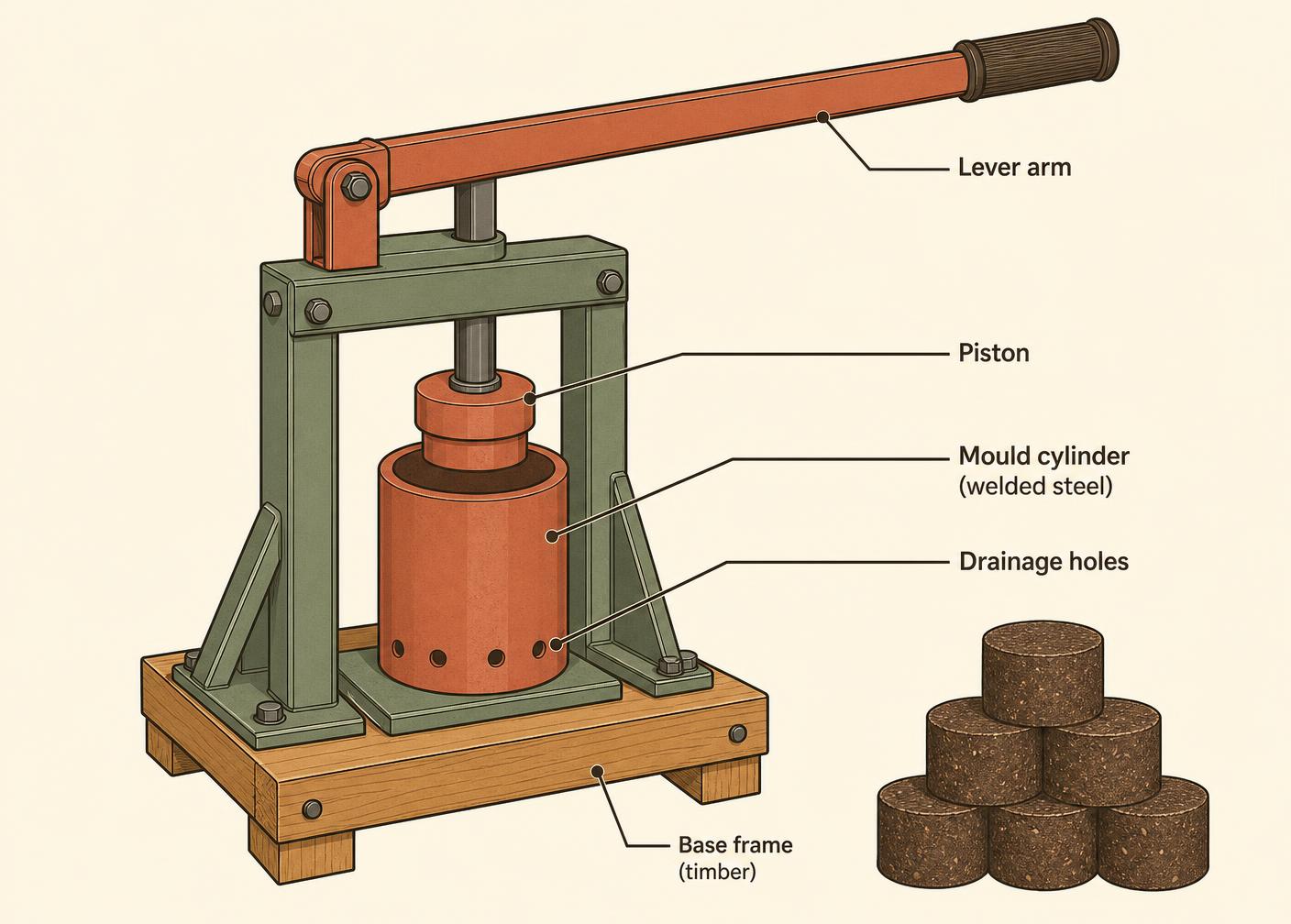
Lee Hite Eco-Briquette Lever Press
The EWB-documented lever press that squeezes soaked waste paper and biomass into dense fuel briquettes — the design with real numbers behind it.
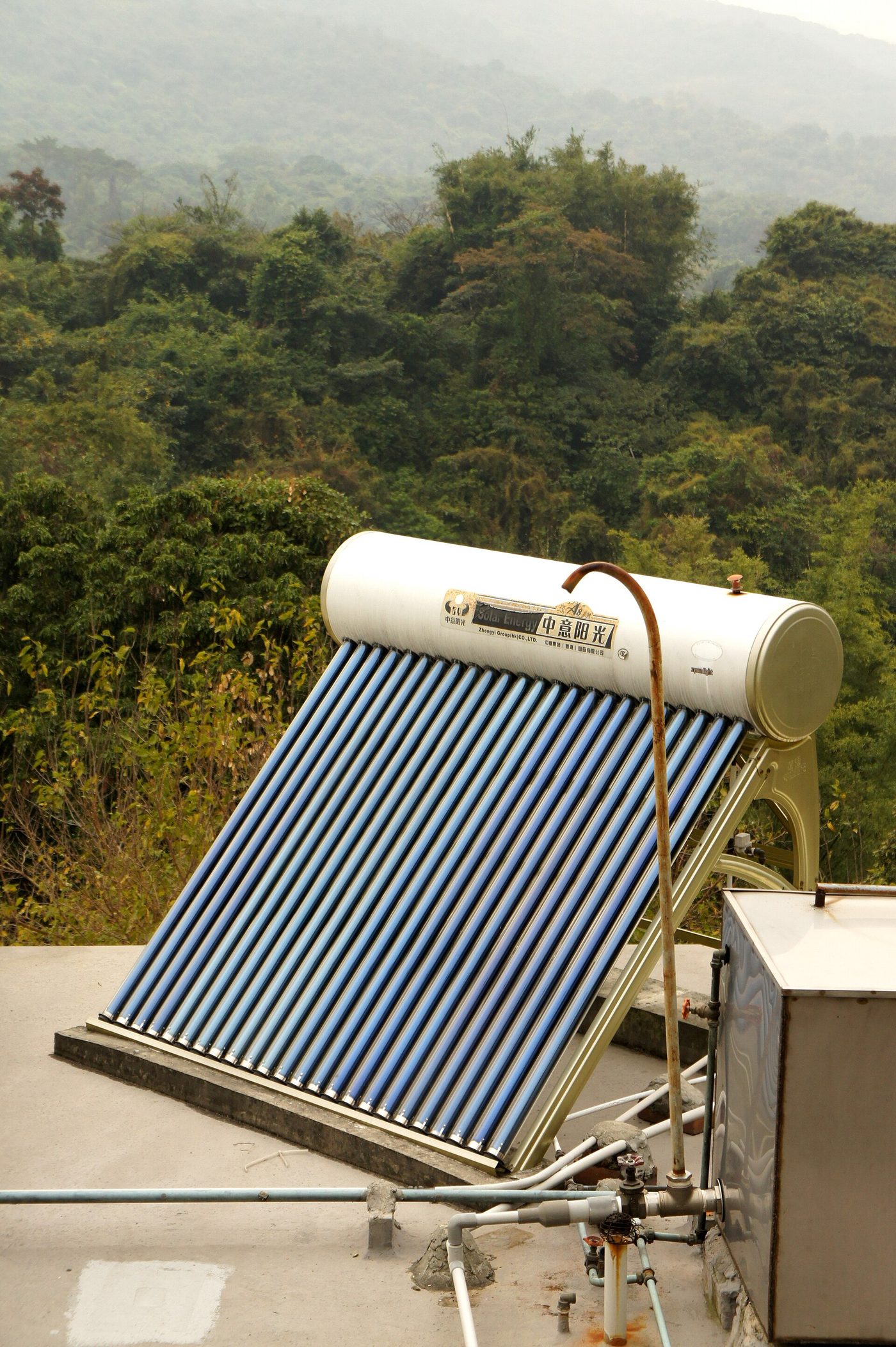
Batch Solar Water Heater from a Salvaged Tank
A black-painted tank in a glazed, insulated box that gives hot washing water by mid-afternoon with no pump, controller or electricity.
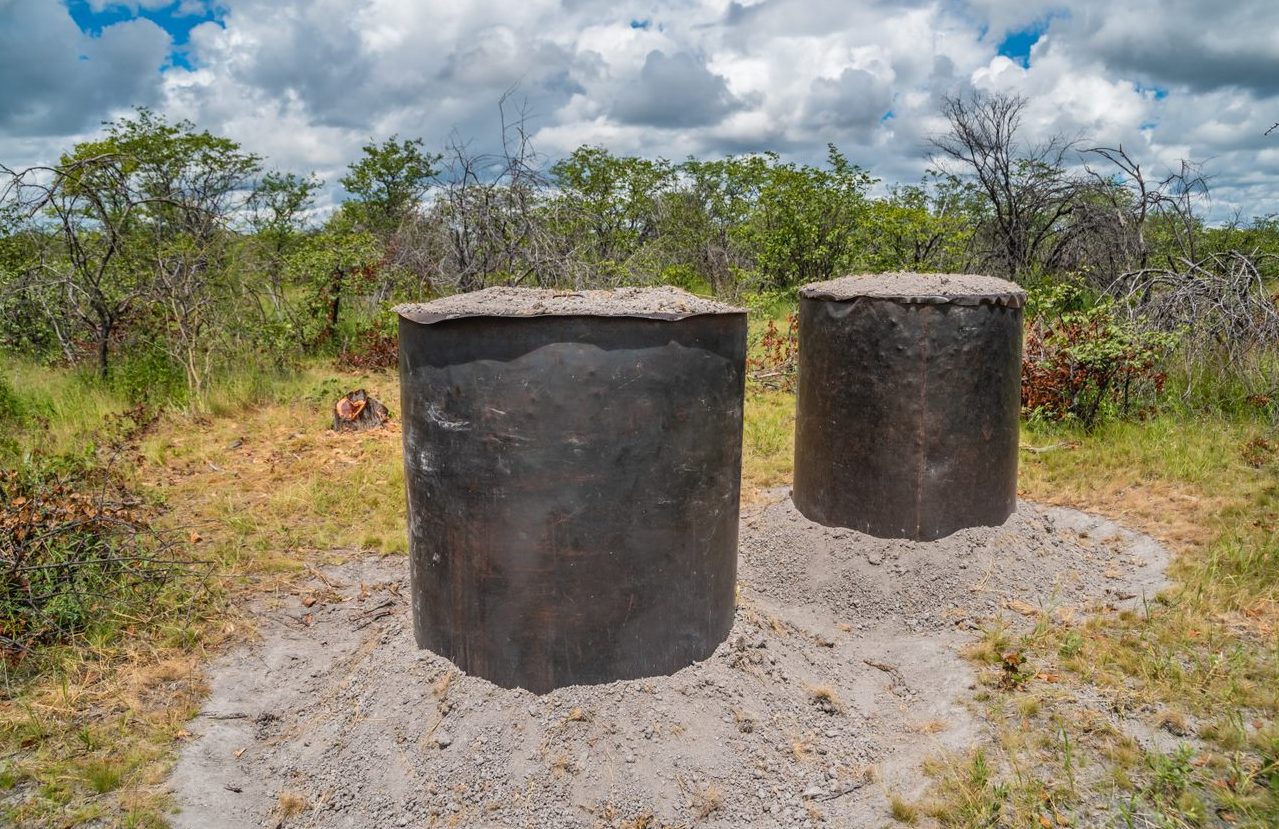
Drum Retort Charcoal Kiln
Char wood inside a sealed inner drum heated from outside, burning the smoke as fuel — far higher yield and far less smoke than an earth-mound burn.