
Waste Paper & Leaf Briquettes
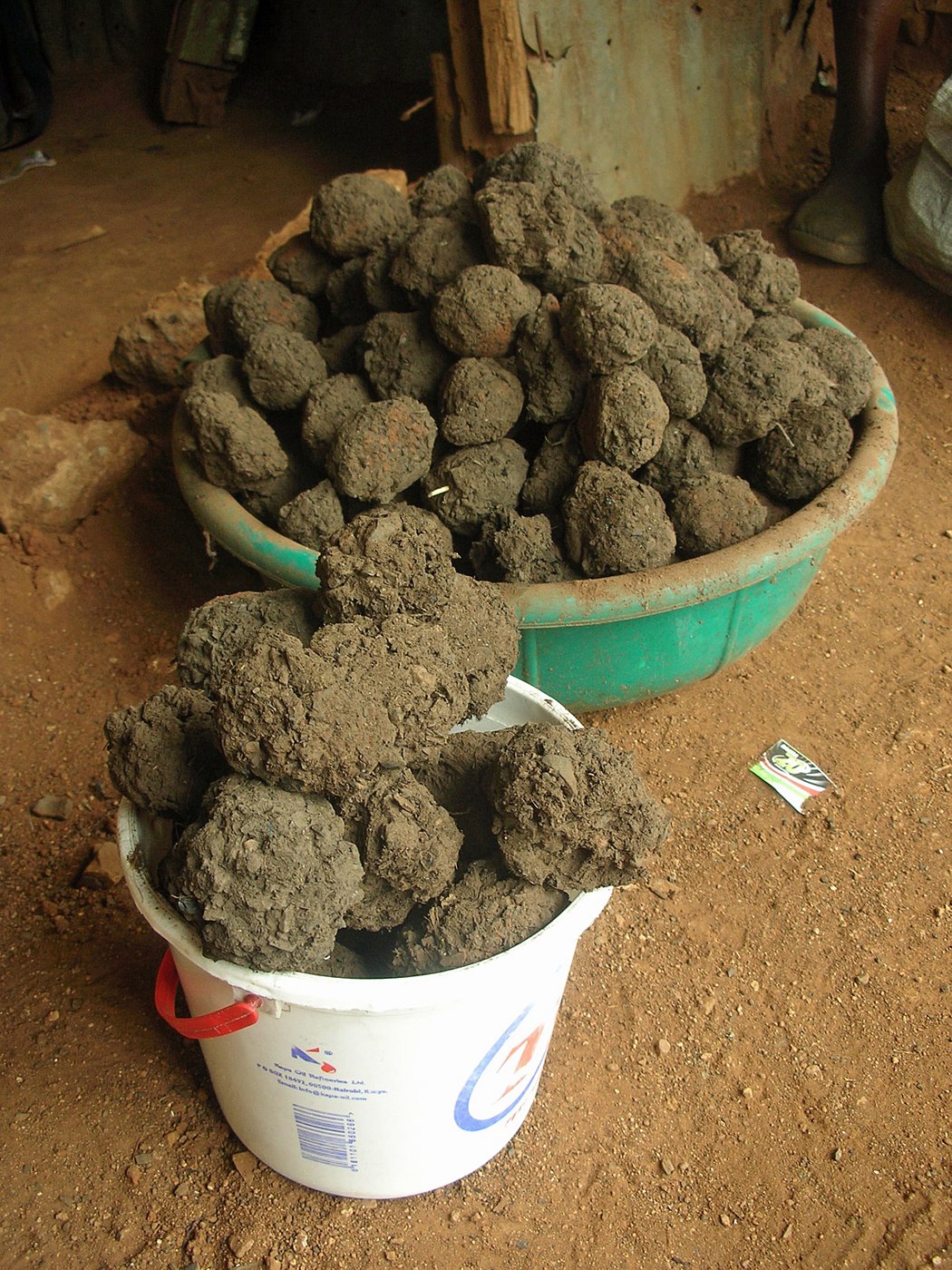
The simplest fuel in the library: soak waste paper and dry leaves, press by hand in a perforated tin, dry hard, and burn what would have been rubbish.
- Estimated cost
- Under $15 for a tin mould, a drum and a rack
- Skill level
- Beginner
- Time
- 1 day to set up, 2 weeks to first dry fuel
Not yet verified
No confirmed build with photo proof has been submitted for this plan yet. Built it? Send photos and it earns the badge.
Tools
- Nail and hammer or drill
- Bucket
- Old drum
- Stirring stick
If you don't have it
- No tin or pipe for a mould? Use a length of bamboo with holes burnt through the wall, or a hardwood box with a slatted base. Any mould that lets water out sideways will work.
- No sawdust or char fines? Chopped dry leaves, groundnut shell, maize cob crushed fine, rice husk or coffee husk all substitute directly. Chop to under about 10 mm or the briquette falls apart along the fibres.
- No sun or dry season? Dry under a roof with open sides and stack in single layers on mesh — airflow matters more than sun. Build the raised drying rack plan first; in the rains it is the difference between fuel and mould.
Materials
- Waste paper, cardboard, dry leaves, crop residue and sawdust
- A tin or short pipe with holes punched through the wall and base
- A wooden plunger that fits the tin
- Water for soaking, and a small amount of cassava or maize starch as binder if needed
- Raised drying racks
Dimensions & cut list
A hand tin mould making 40–80 briquettes a day with no metalwork. These are the reference sizes from Lee Hite / Engineers Without Borders — scale them to what you have, but keep the ratios.
| Mould tin | Any 1–2 litre tin, roughly 100 mm diameter |
|---|---|
| Drain holes | 5 mm holes across the base and lower 50 mm of the side |
| Press plate | Cut 2 mm smaller than the tin bore |
| Mix | 1 part soaked paper pulp to 1 part dry leaves or sawdust, by volume |
| Soak time | 24 hours minimum, until the paper breaks to a mush |
| Moisture test | A squeezed handful holds its shape and drips no water |
| Drying | 14–21 days raised and ventilated, turned every 3 days |
Take this list to the yard
- 1Tin can
- 1 eachHammer and 5 mm nail
- 1Soaking bucket, 20 litre
- 1Timber offcut for the press plate
Step by step
Step 1 of 6
Sort the waste
Use plain paper, cardboard and untreated plant matter only. Keep out plastic-laminated card, glossy foil packaging and anything painted or chemically treated.
Swipe or use arrow keys
1. Sort the waste
Use plain paper, cardboard and untreated plant matter only. Keep out plastic-laminated card, glossy foil packaging and anything painted or chemically treated.
2. Soak until it pulps
Tear the paper and steep it for one to three days, stirring daily, until it mashes between your fingers with no hard flakes left.
3. Blend to a ratio: 1 paper : 1 biomass
Mix roughly one part soaked paper pulp to one part chopped leaves, sawdust or char fines by volume. Paper is the binder; the biomass is the fuel. If dry briquettes crumble, add about 5% cooked cassava or maize starch paste — if they burn sluggishly, cut the paper share back.
4. Press hard in a perforated tin
Pack the mould, then press with the plunger while water runs out of the holes. Keep pressing until water stops coming; the drier it leaves the mould, the faster it cures. Expect 40 – 80 briquettes a day by hand from one tin.
5. Turn out and dry with airflow
Eject onto a raised rack in full sun with air moving underneath. Turn briquettes daily. Expect one to three weeks depending on humidity, and allow about 1 m² of rack for every 40 – 50 briquettes.
6. Test and store
Two tests for done: it rings rather than thuds when knocked, and one split in half shows the same colour right through with no damp core. Store off the ground under cover; a briquette that reabsorbs moisture smokes badly.
Safety notes
- Never burn briquettes containing plastic, printed foil or treated wood — the fumes are toxic.
- Burn only in a stove with adequate ventilation; briquettes produce carbon monoxide.
- Mould growth on slow-drying briquettes is a respiratory hazard — improve airflow, don't stack them wet.
Source & attribution
This plan is our build-step write-up of work documented by Lee Hite / Engineers Without Borders. The original design and documentation belong to them — go read the source before you build.
Paper briquette experiments and resultsLocal adaptations
What builders changed to make this work where they live.
- No adaptations shared yet for this plan.
Build this alongside
Plans that use the same materials or serve the same need.
 Diagram
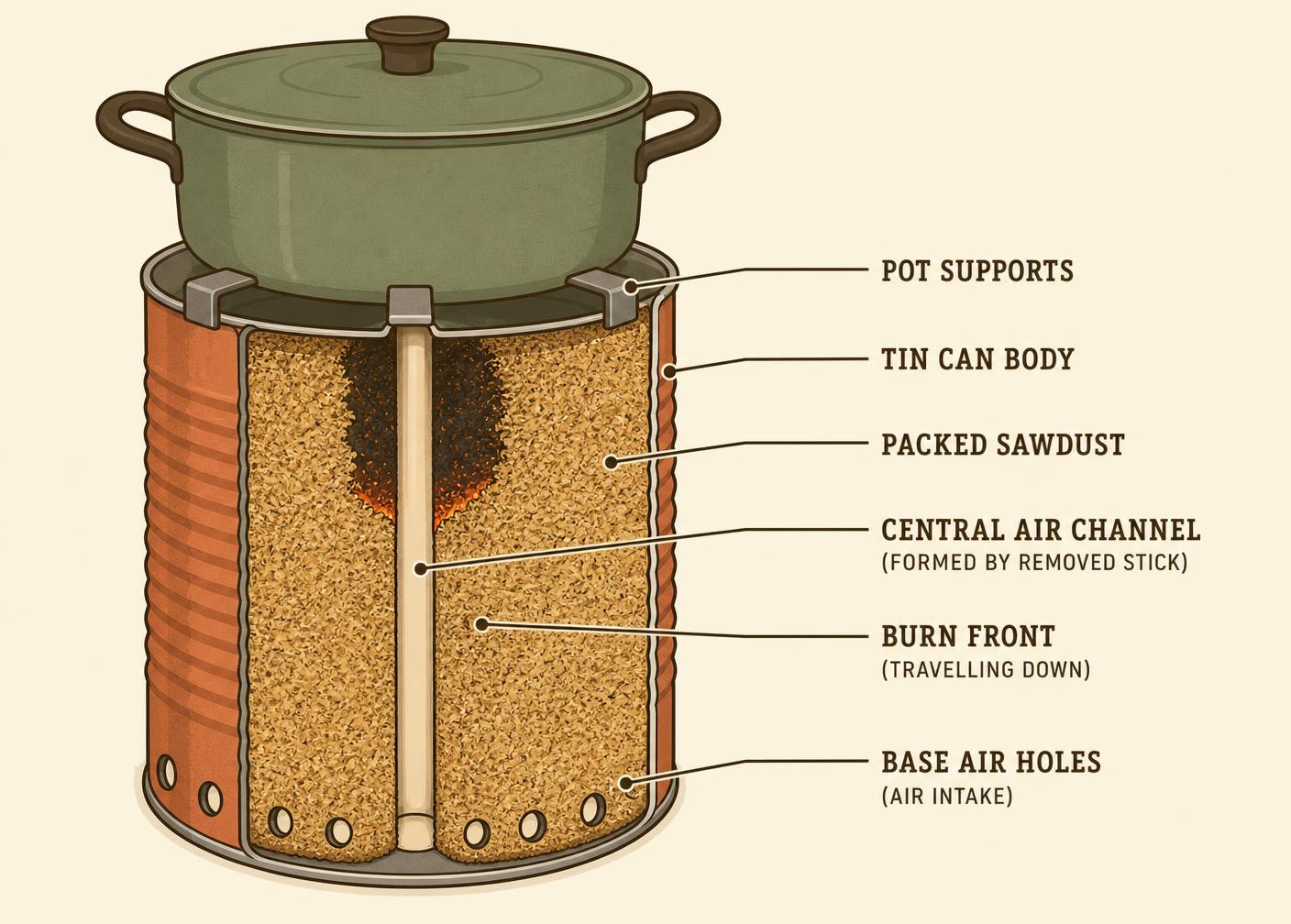
Packed Sawdust Tin Stove
Pack damp sawdust hard around a stick in a tin, pull the stick out, and light a stove that burns for an hour on waste from the timber yard.
 Diagram
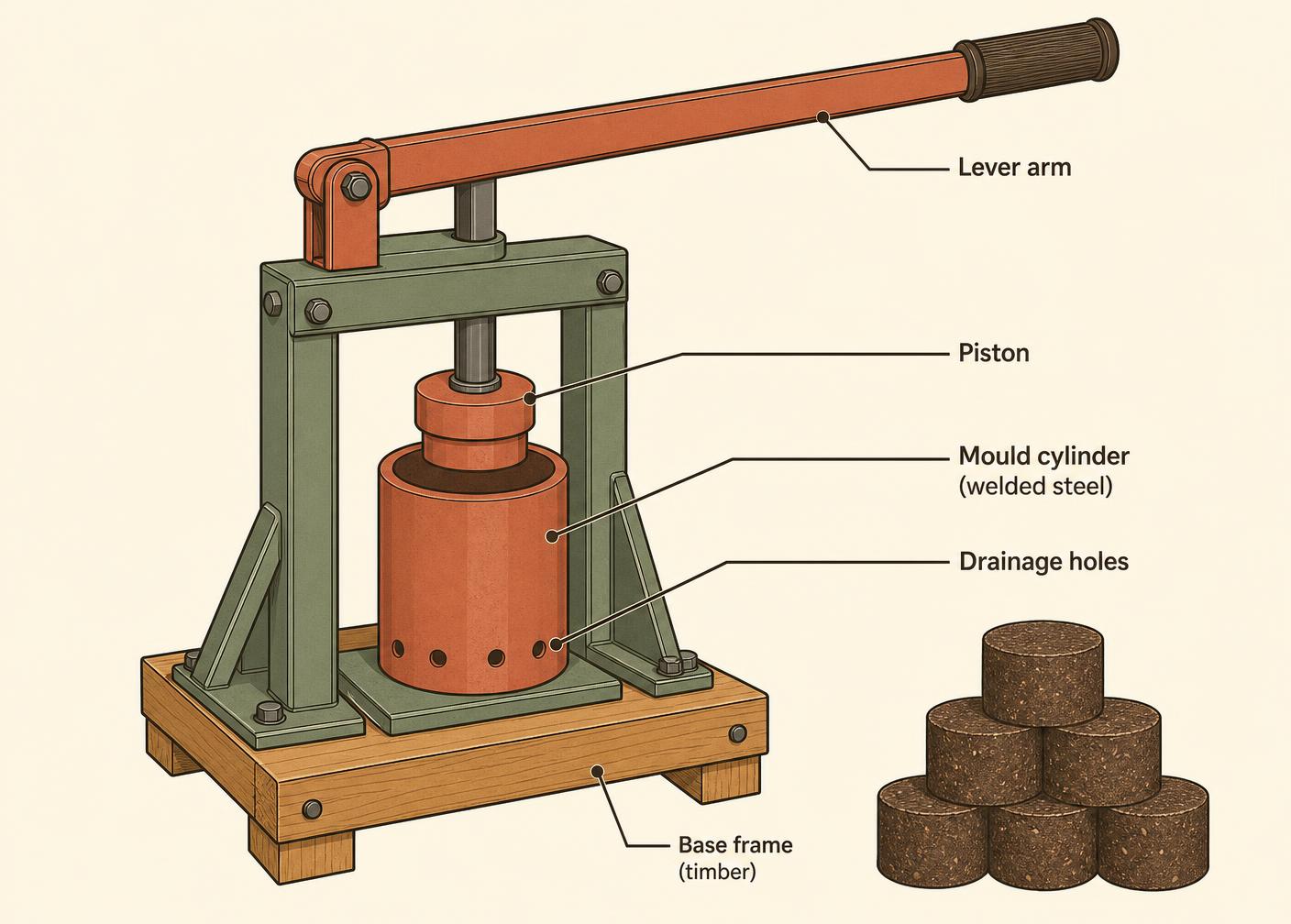
Lee Hite Eco-Briquette Lever Press
The EWB-documented lever press that squeezes soaked waste paper and biomass into dense fuel briquettes — the design with real numbers behind it.
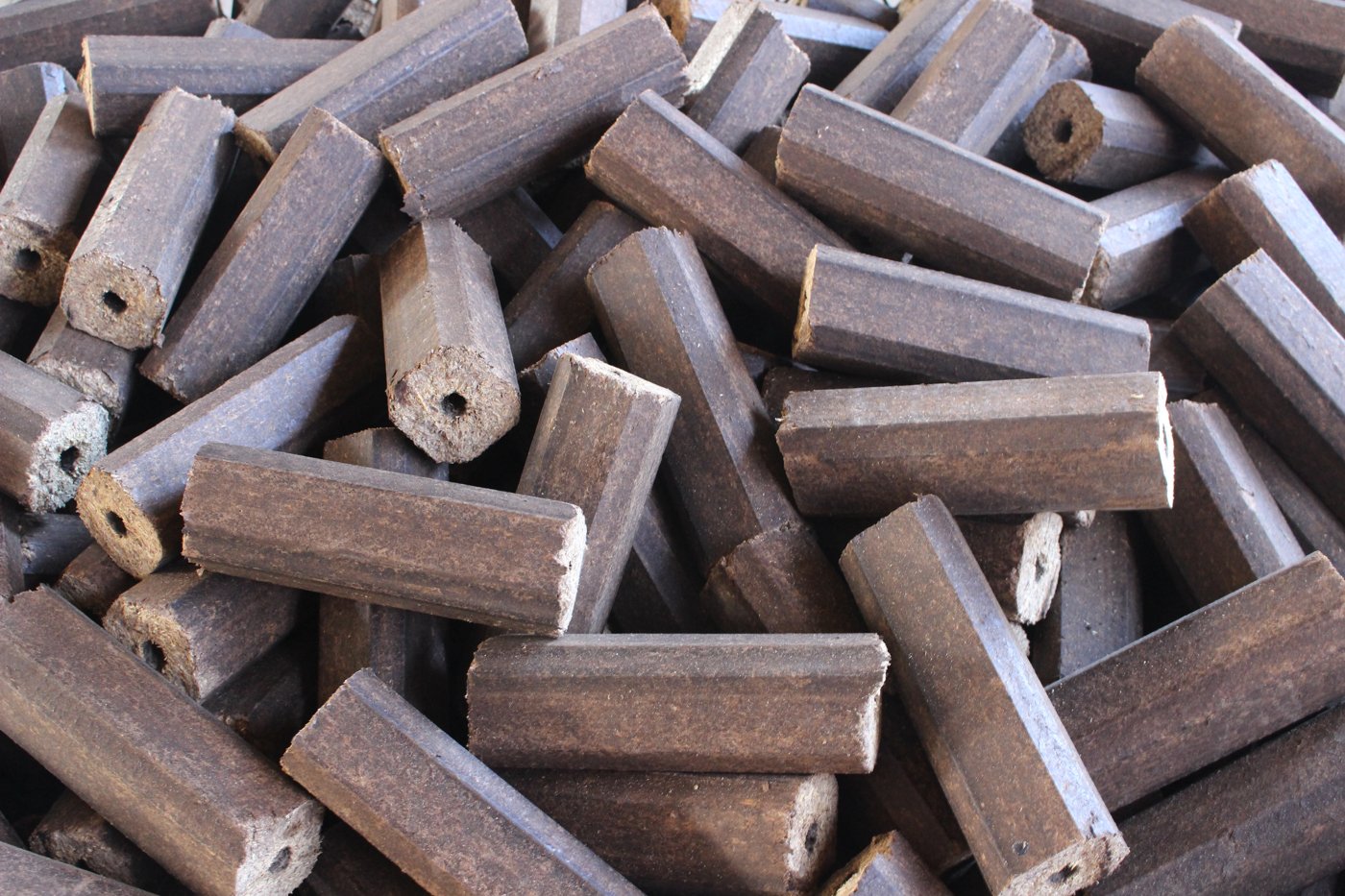
Hand-Cranked Screw Briquette Extruder
A screw auger in a tapering barrel that extrudes a continuous log of compacted biomass — higher output than a piston press once the feedstock is right.