
Split Bamboo Rainwater Gutter
Turn a thatch or sheet roof into a water source with split bamboo gutters and a downpipe — the cheapest rainwater harvesting there is.
- Estimated cost
- $5 – $30 for poles, wire and a collection drum
- Skill level
- Beginner
- Time
- Half a day
Not yet verified
No confirmed build with photo proof has been submitted for this plan yet. Built it? Send photos and it earns the badge.
Tools
- Saw
- Panga
- Chisel or long knife
- Pliers
- Spirit level or clear hose
Short a tool or material? Builders below have often swapped something local in — read Local adaptations before you buy anything.
Materials
Dimensions & cut list
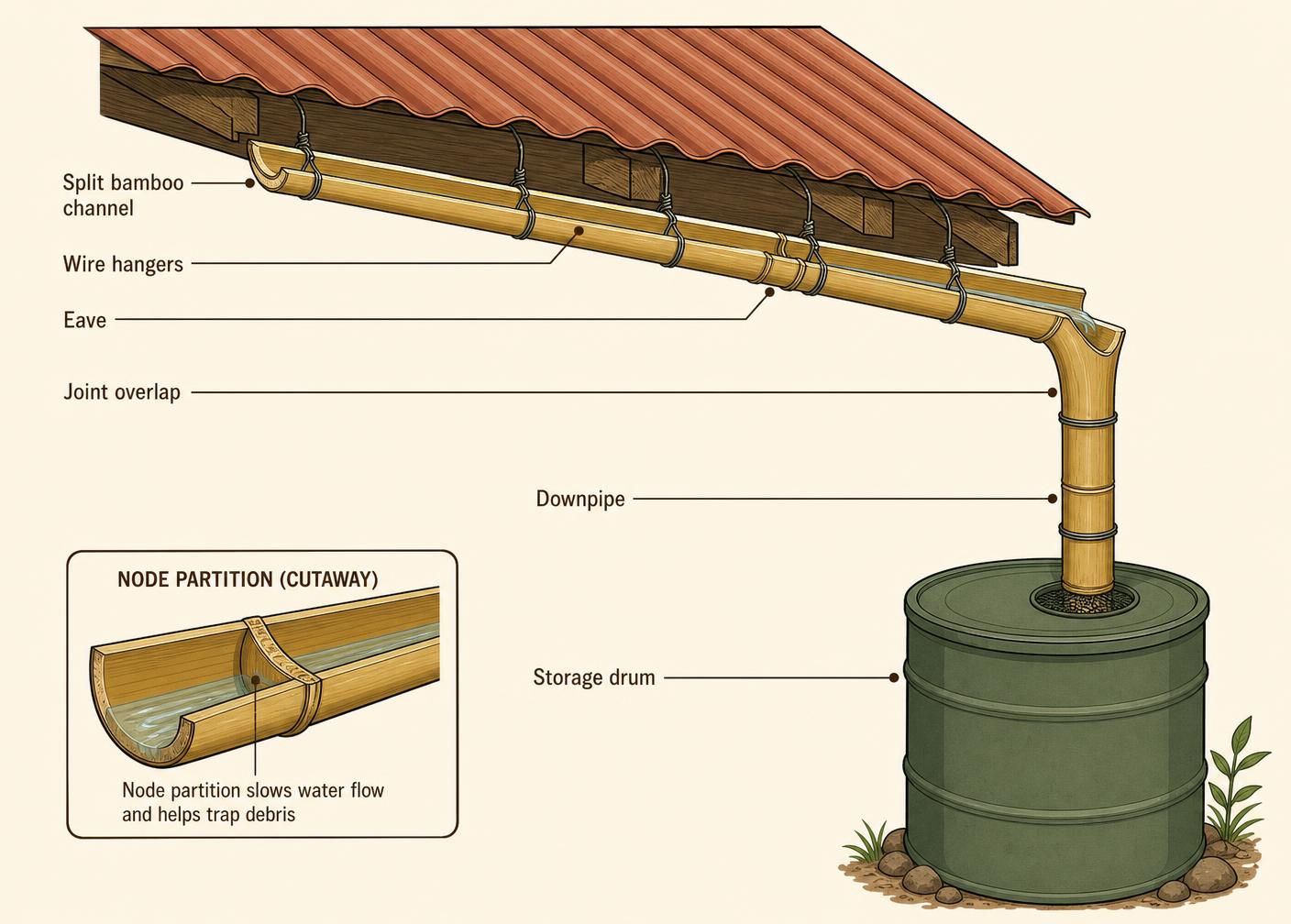
Split-bamboo guttering along a 6 m roof edge, feeding one downpipe into a tank. These are the reference sizes from Akvopedia — scale them to what you have, but keep the ratios.
| Culm diameter | 100–150 mm, split lengthways in half |
|---|---|
| Node treatment | Chisel every internal node flatOne missed node dams the whole run |
| Fall to the downpipe | 1:100 (10 mm per metre) |
| Bracket spacing | Every 600 mm |
| Overlap at joints | 150 mm, upstream piece on top |
| Gutter position | Top edge 20 mm below the roof-sheet line |
Take this list to the yard
- 2–3Mature bamboo culms, 3 m
- 10Wire or strap brackets
- 20 litresBorax/boric treatment solutionSoak the split culms a week — untreated bamboo lasts one season
- 3 mDownpipe (bamboo or PVC)
- 1 mLeaf screen mesh
Step by step
Step 1 of 6
Split the poles cleanly in half
Drive a chisel down the length of the pole and open it in one clean line. Half-round is stronger and holds more than a shallow cut.
Swipe or use arrow keys
1. Split the poles cleanly in half
Drive a chisel down the length of the pole and open it in one clean line. Half-round is stronger and holds more than a shallow cut.
2. Knock out the node walls
Chip out every internal node diaphragm so water runs the full length. A single missed node dams the gutter and it overflows in the first storm.
3. Hang with a real fall
Fix hangers so the gutter falls about 10 mm per metre towards the downpipe. Check with a clear hose level, not by eye — a flat gutter breeds mosquitoes.
4. Set the gutter under the drip line
Position the gutter so the roof edge overhangs the front lip by about a third of the gutter width, catching driving rain without shooting over the front.
5. Fit a downpipe and first-flush
Chute the outlet into a vertical pipe with a first-flush diverter so the dirtiest first minutes of runoff go to waste before storage.
6. Screen and maintain
Cover the tank inlet with mosquito mesh and sweep the gutter before every rainy season. Replace split bamboo lengths yearly — they are cheap.
Why mine failed
The ways this build usually goes wrong, and what fixes it.
Water pools in the middle and overflows
CauseNodes not chiselled out, or sagging between brackets
FixChisel every internal node flat and bracket at 600 mm. Re-string the line and reset the fall at 10 mm per metre.
Gutter splits and rots within a season
CauseUntreated bamboo
FixSoak split culms in borax/boric solution for a week and dry in shade before fitting. Untreated bamboo in sun and water lasts months, not years.
Water runs behind the gutter in heavy rain
CauseGutter set too low or too far out from the roof edge
FixRaise the back lip to within 20 mm of the sheet line so the sheet discharges inside the channel.
Safety notes
- Never drink harvested water untreated — filter and disinfect it first.
- Screen every opening; open rainwater storage is a mosquito breeding site.
- Avoid harvesting off roofs painted with lead-based or bitumen coatings.
Source & attribution
This plan is our build-step write-up of work documented by Akvopedia. The original design and documentation belong to them — go read the source before you build.
Rainwater harvesting guttersLocal adaptations
What builders changed to make this work where they live.
- No adaptations shared yet for this plan.
Build this alongside
Plans that use the same materials or serve the same need.
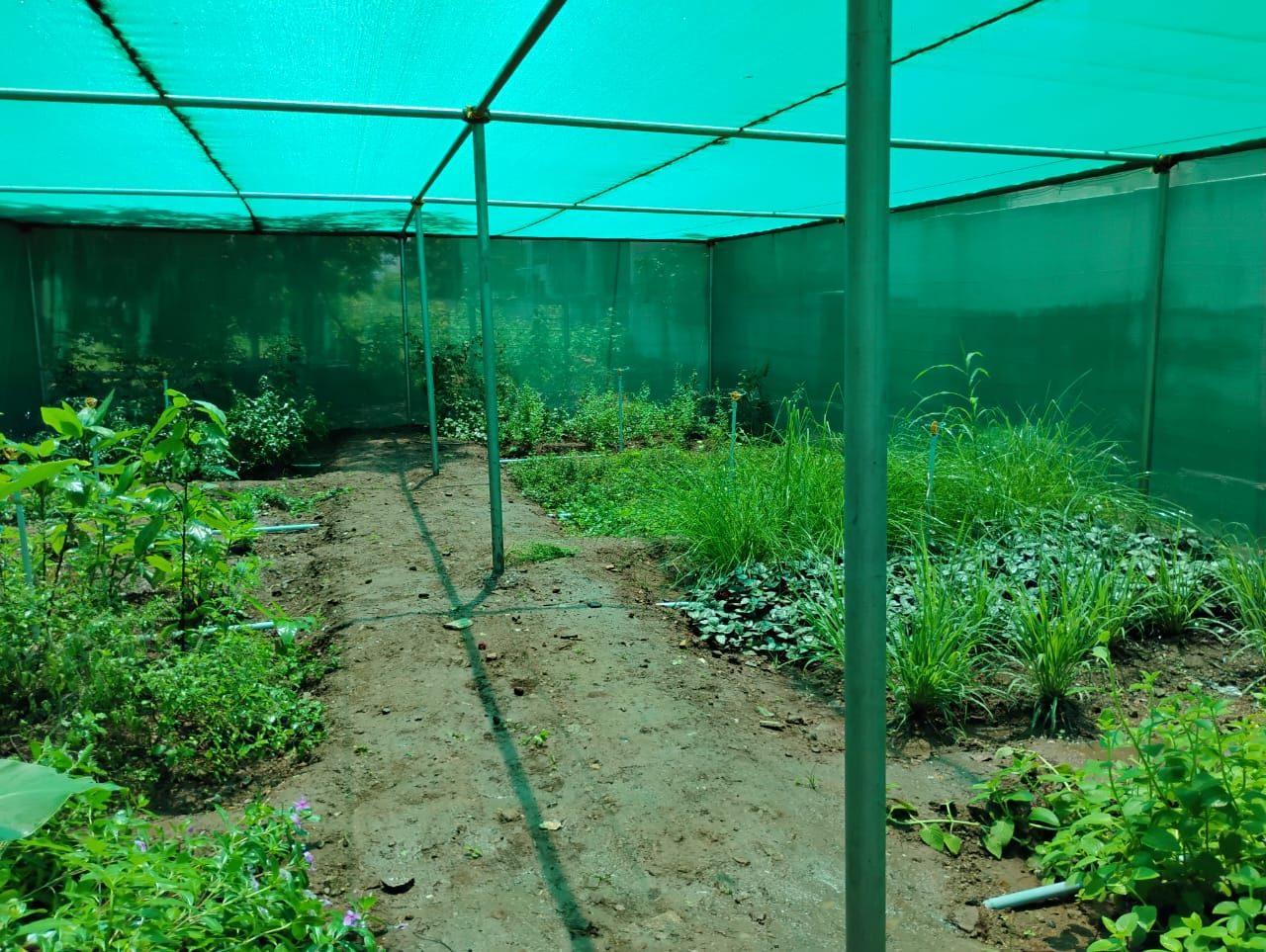
Shade Net Nursery Tunnel
A hooped shade tunnel that keeps seedlings alive through the hot months — the difference between a nursery that supplies a village and one that cooks in April.
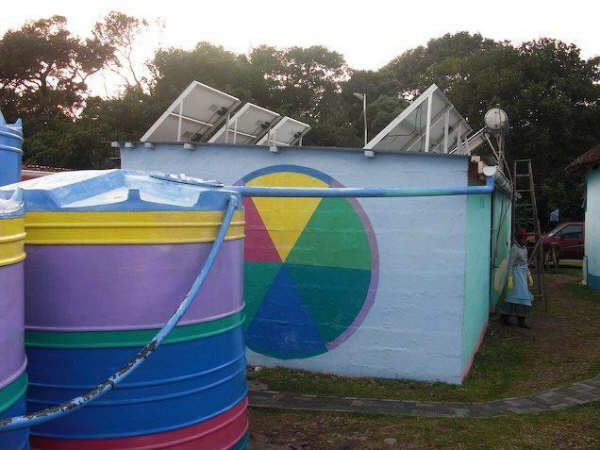
Rooftop Rainwater Harvesting with First-Flush Diverter
Catch and store roof runoff, and throw away the dirty first few litres automatically so what reaches your tank is worth storing.

SODIS Solar Water Disinfection Rack
Clear PET bottles on a black-painted roof rack, using six hours of sun to make biologically safe drinking water at no running cost.