
SODIS Solar Water Disinfection Rack
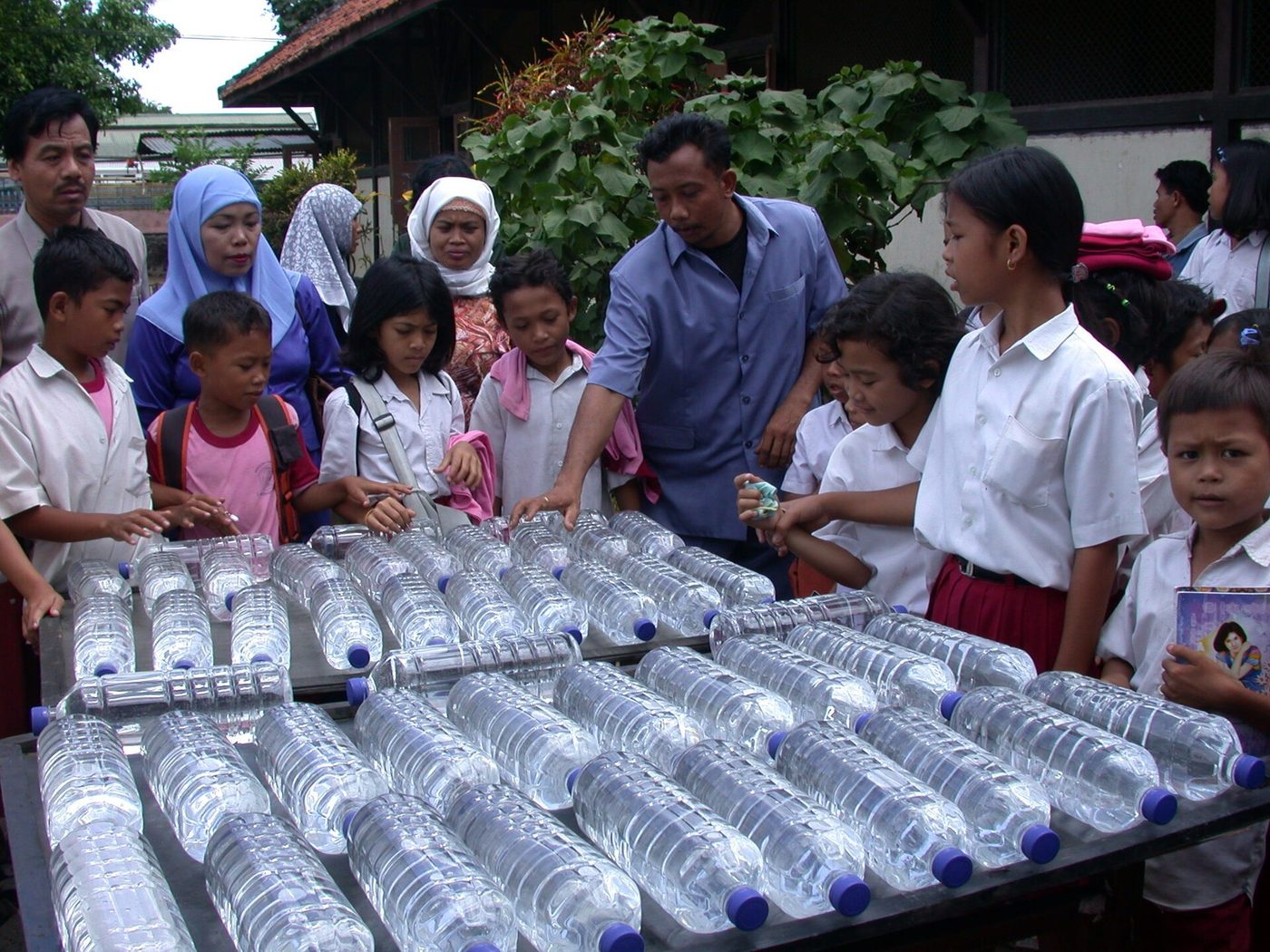
Clear PET bottles on a black-painted roof rack, using six hours of sun to make biologically safe drinking water at no running cost.
- Estimated cost
- Under $10 for a rack; bottles are salvaged
- Skill level
- Beginner
- Time
- 2 hours to build the rack; 6 hours of sun per batch
Why this is a Verified Build
Photo-verified household use in Mbale, Uganda (2025): 24-bottle roof rack serving eight people, with a written turn-and-log routine on the wall.
Tools
- Handsaw
- Hammer
- Paint brush
- Marker pen
Short a tool or material? Builders below have often swapped something local in — read Local adaptations before you buy anything.
Materials
- Clear PET bottles, 1 – 2 L, undamaged and unscratched (no green, blue or glass)
- Sheet of corrugated iron or flat board, roughly 1 × 2 m
- Matt black paint
- Timber battens for the frame and rack legs
- Cloth for pre-filtering
Dimensions & cut list
Solar disinfection of drinking water in clear PET bottles on a household roof. These are the reference sizes from Appropedia / Eawag SANDEC — scale them to what you have, but keep the ratios.
| Bottle size | 1–2 litres maximumDeeper than 100 mm of water and UV cannot reach the bottom |
|---|---|
| Bottle material | Clear PET, no scratches, labels removed |
| Exposure, clear sky | 6 hours full sun |
| Exposure, cloudy | 2 consecutive days |
| Turbidity limit | Under 30 NTUYou must be able to read newsprint through the filled bottle |
| Placement | Lying on a corrugated iron sheet, not upright |
| Water temperature boost | Painting the bottle's back half black raises the temperature and shortens the time |
| Bottle life | Replace every 6–12 months, or when hazy |
Take this list to the yard
- 12Clear PET bottles, 1.5 litreEnough for a family's daily needs plus a batch in rotation
- 1Corrugated iron sheet as a reflector base
- 1Cloth pre-filterCloudy water must be clarified first — SODIS cannot work through silt
- 1Shaded storage for treated bottles
Step by step
Step 1 of 6
Check the water is clear enough
SODIS only works on clear water. Test it: with a filled bottle stood on newspaper, you should be able to read the headline through the water from the top. If not, settle it and filter it through folded cloth first.
Swipe or use arrow keys
1. Check the water is clear enough
SODIS only works on clear water. Test it: with a filled bottle stood on newspaper, you should be able to read the headline through the water from the top. If not, settle it and filter it through folded cloth first.
2. Build and blacken the rack
Frame the sheet with battens and paint the top surface matt black, then set it on a south- or north-facing slope where sun hits all day. The black backing raises water temperature, which sharply speeds up disinfection.
3. Prepare the bottles
Use clear PET only, no more than 2 L and no more than about 100 mm deep lying down — deeper water blocks UV. Remove labels, wash the bottles, and discard any that are scratched or cloudy.
4. Fill three-quarters and shake
Fill each bottle three-quarters full, cap it, and shake hard for 20 seconds to oxygenate — dissolved oxygen makes the UV reaction more effective. Then top up and cap tightly.
5. Expose for six hours
Lay bottles flat on the rack from morning. Six hours of good sun is enough; on a cloudy day, run them for two consecutive days. Mark caps with the date so nobody drinks a half-treated bottle.
6. Cool, store and rotate
Drink from the bottle it was treated in, keeping it capped. Run a fixed rotation — today's batch is tomorrow's drinking water — and replace bottles every six months or when scratched.
Why mine failed
The ways this build usually goes wrong, and what fixes it.
People still fall ill using SODIS water
CauseWater too turbid, or exposure too short
FixYou must be able to read newsprint through the filled bottle — filter first if not. Give 6 hours of full sun, or two whole days when cloudy.
Bottles are hazy and scratched
CauseReused too long, or scrubbed with sand
FixReplace PET bottles every 6–12 months and rinse rather than scour. UV cannot get through a milky bottle.
Family drinks untreated water anyway
CauseOnly one batch in the system
FixRun a rotation: one batch out in the sun while yesterday's batch is being drunk. Twelve bottles keeps a household going.
Large containers do not work
CauseWater depth over 100 mm blocks the UV
FixStick to 1–2 litre bottles laid on their side on a metal sheet. Buckets and jerrycans cannot be treated this way.
Safety notes
- SODIS kills bacteria, viruses and protozoa but removes nothing chemical: no arsenic, fluoride, salt or pesticide.
- Never use coloured or scratched bottles, and never reuse a bottle that held fuel or chemicals.
- Turbid water must be cleared first — particles shield microbes from UV and the process silently fails.
- If the water source is a known chemical or sewage risk, treat SODIS as inadequate and use another method.
Source & attribution
This plan is our build-step write-up of work documented by Appropedia / Eawag SANDEC. The original design and documentation belong to them — go read the source before you build.
SODIS solar water disinfection methodLocal adaptations
What builders changed to make this work where they live.
Peter W. · Mbale, Uganda
We painted a red line on the rack at the halfway point. Bottles move left to right through the day — nobody has to remember which batch is which.
Build this alongside
Plans that use the same materials or serve the same need.
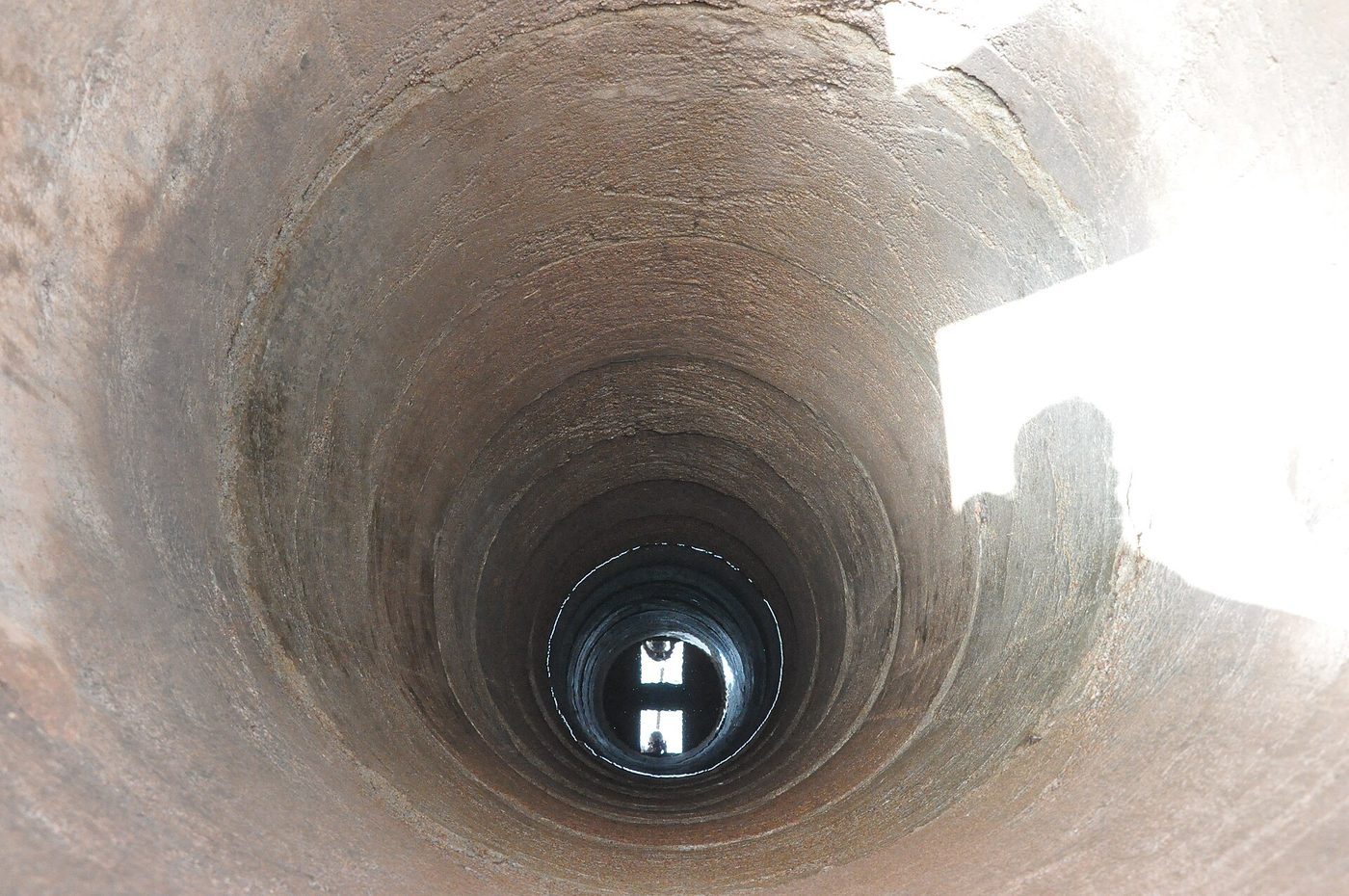
Hand-Dug Well with Concrete Ring Lining
Cast concrete rings on the surface, sink them as you dig, and finish with a sealed apron so the well does not contaminate itself.
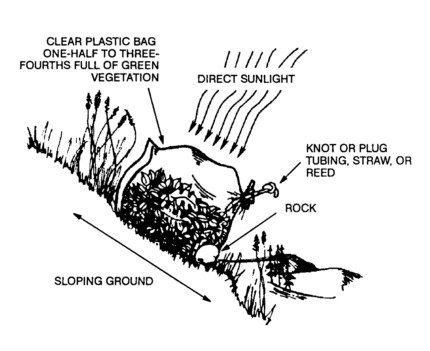
Basin Solar Still
Evaporate brackish or dirty water under a sloping glass cover and collect the condensate — slow, but it produces genuinely distilled water from sun alone.
 Diagram
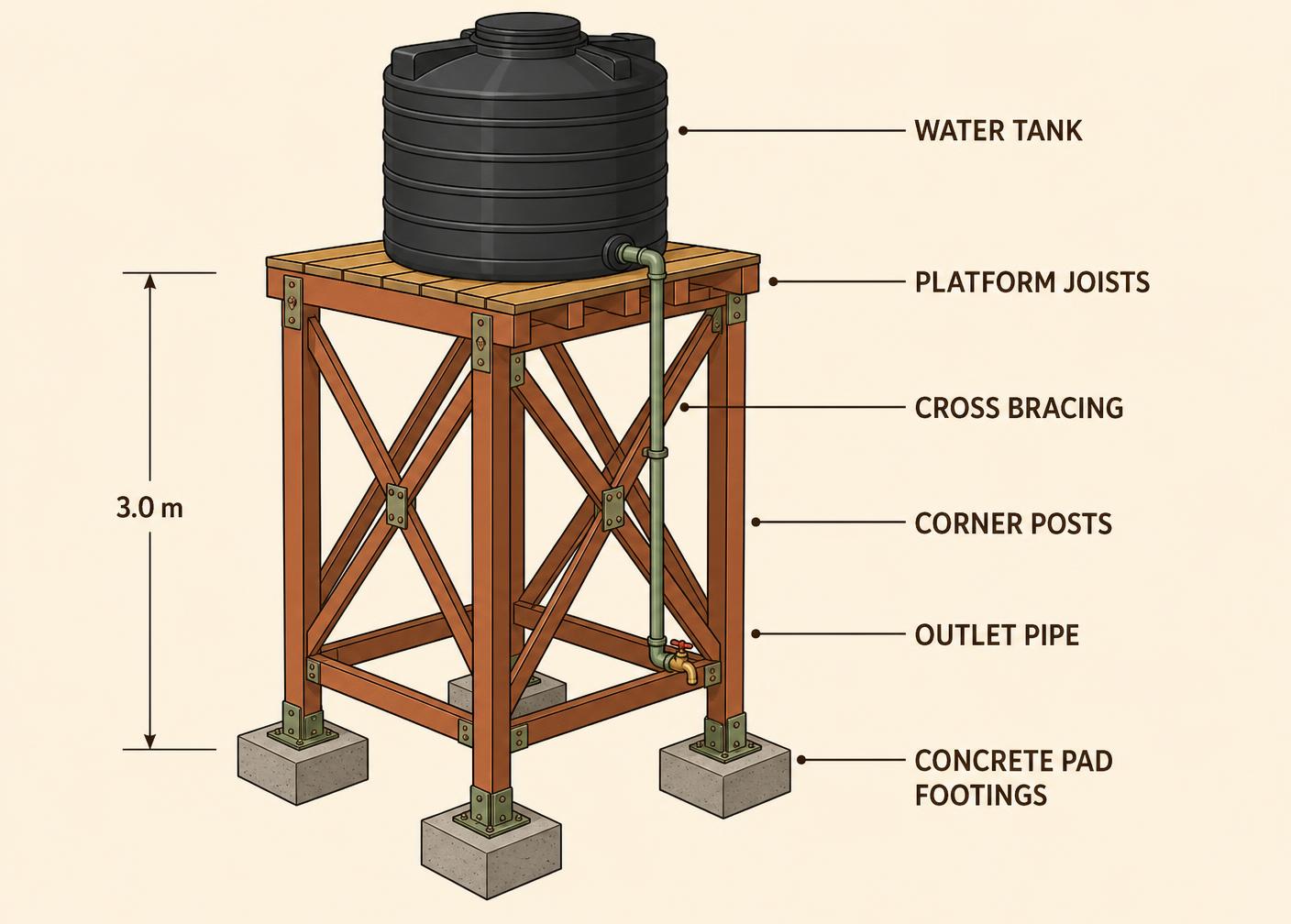
Timber & Stone Tank Stand
A braced stand that lifts a full water tank safely to head height and gives you gravity pressure at the tap without a pump.