
Basin Solar Still
Evaporate brackish or dirty water under a sloping glass cover and collect the condensate — slow, but it produces genuinely distilled water from sun alone.
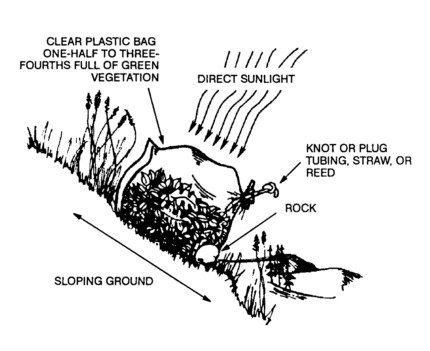
- Estimated cost
- $40 – $150 for a 1 m² still
- Skill level
- Intermediate
- Time
- 1 – 2 days to build
Not yet verified
No confirmed build with photo proof has been submitted for this plan yet. Built it? Send photos and it earns the badge.
Tools
- Saw
- Drill
- Caulking gun
- Trowel
- Spirit level
If you don't have it
- No glass cover? Clear polythene sheet weighted at the centre with a stone gives the same condensing slope; replace it each season as it clouds.
Materials
- Timber or blockwork box, insulated underneath
- Glass sheet or rigid clear plastic for the cover, tilted 10 – 20°
- Black butyl liner, black-painted metal tray or black plastic basin
- Food-grade collection channel and outlet tube
- Non-toxic silicone sealant
Dimensions & cut list
A single-basin solar still producing 3–4 litres of distilled water a day from brackish or dirty water. These are the reference sizes from Appropedia / solar water treatment builders — scale them to what you have, but keep the ratios.
| Basin area | 2 m² (2 × 1 m) |
|---|---|
| Water depth in basin | 20–30 mmDeeper water heats too slowly and output falls |
| Glass cover slope | 15–20°, facing the equator |
| Cover-to-water gap | 100 mm at the low edge |
| Basin liner | Black butyl or painted metal, fully sealed |
| Insulation under the basin | 50 mm of dry sawdust, rice husk or straw |
| Condensate channel | V-gutter along the low edge, falling 1:50 to the outlet |
| Yield | 1.5–2 litres per m² per clear day |
Take this list to the yard
- 2.2 m²Glass sheet, 4 mmGlass, not plastic — plastic hazes and stops draining properly
- 1Timber or blockwork basin box
- 2.5 m²Black liner
- 0.1 m³Insulation material
- 2 tubesSilicone sealantEvery leak is lost output — the still must be airtight
- 1 eachCollection bottle and feed can
Step by step
Step 1 of 6
Build an insulated basin
Make a shallow watertight tray with sawdust, straw or foam insulation underneath. Heat lost downward is distillate you never get.
Swipe or use arrow keys
1. Build an insulated basin
Make a shallow watertight tray with sawdust, straw or foam insulation underneath. Heat lost downward is distillate you never get.
2. Blacken the water surface
Line the basin black so it absorbs sunlight instead of reflecting it. Keep the water shallow, 20 – 30 mm, so it heats fast.
3. Glaze at a slope
Fit the cover sloping towards the collection channel and seal all edges. Condensate must run down the glass, not drip back into the basin.
4. Fit the collection channel
Run a food-grade gutter along the low edge inside the still, piped out to a clean covered jar.
5. Charge, run and flush
Top up daily and flush the concentrated brine out weekly so salts do not crust the liner and choke evaporation.
6. Know the yield
Expect roughly 2 – 4 litres per square metre on a hot clear day. Size the still to drinking needs only — it will never irrigate anything.
Why mine failed
The ways this build usually goes wrong, and what fixes it.
Output far below a litre per m² a day
CauseAir leaks, or too much water in the basin
FixSeal every joint with silicone and keep the basin water only 20–30 mm deep. A still that whistles is a still that produces nothing.
Condensate drips back into the basin instead of the channel
CauseCover slope too flat
FixSet the glass at 15–20° and make sure the collection channel is below the glass's lower edge with a 1:50 fall to the outlet.
Distillate tastes of plastic
CausePlastic cover or liner off-gassing
FixUse glass for the cover and a butyl or painted-metal liner. Plastic covers also haze and stop shedding droplets properly.
Salt crust builds up in the basin
CauseNever flushed
FixDrain and rinse the basin weekly when distilling brackish water, and top up daily rather than letting it run dry.
Safety notes
- Distillate is pure but flat and mineral-free; use it for drinking and cooking alongside a normal diet, not as the only water for livestock or infants without advice.
- Use food-grade liners, tubing and sealants — hot plastics can leach into the condensate.
- Never distil water containing fuel, solvents or pesticide: volatile contaminants carry over with the steam.
- Glass in the sun gets hot and can crack; use tempered glass or edge-protected sheet and keep children away.
Source & attribution
This plan is our build-step write-up of work documented by Appropedia / solar water treatment builders. The original design and documentation belong to them — go read the source before you build.
Solar stillLocal adaptations
What builders changed to make this work where they live.
Field note · Coastal Kenya
Households on brackish wells run two small stills side by side and use the distillate purely for drinking, keeping well water for washing.
Build this alongside
Plans that use the same materials or serve the same need.
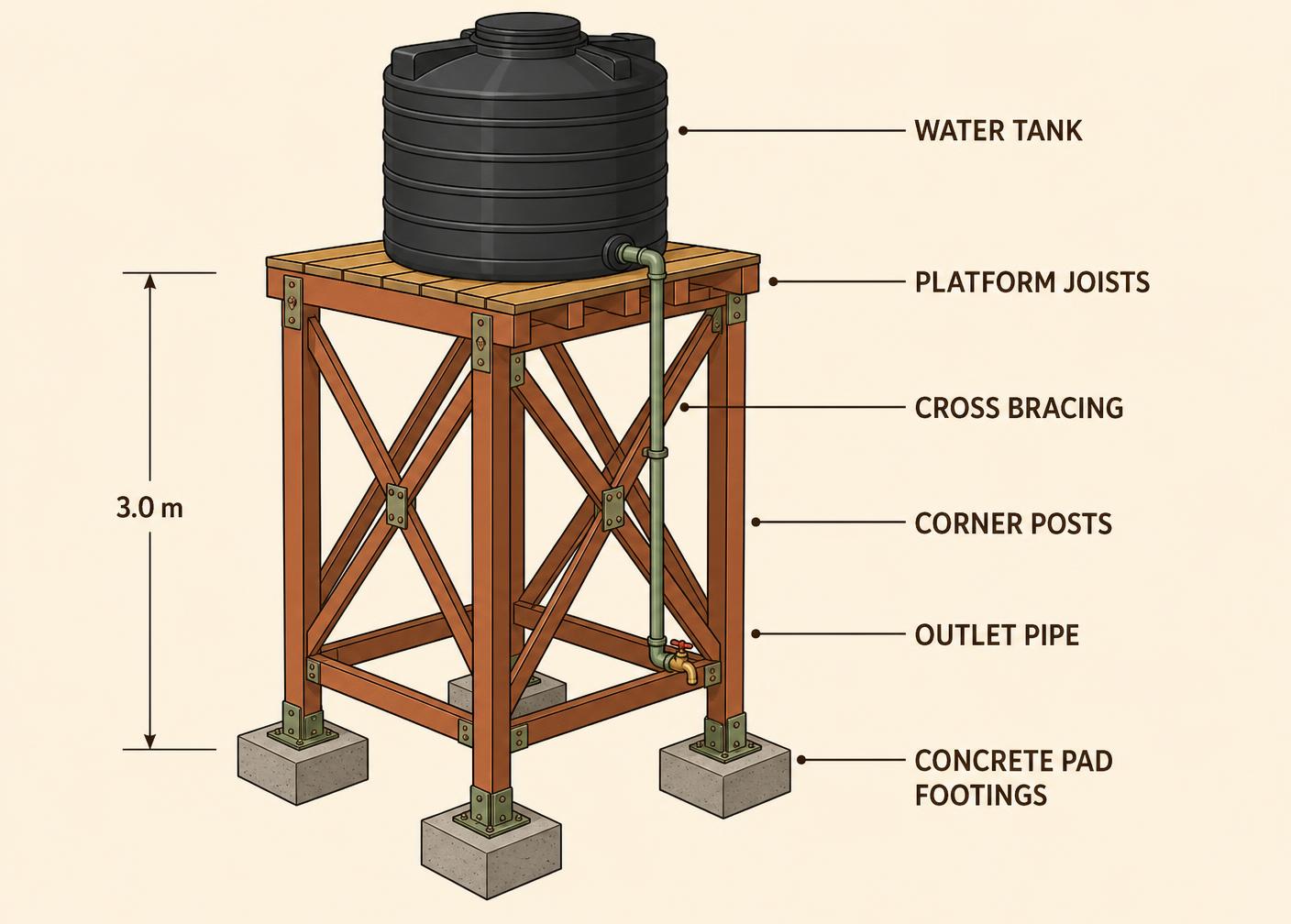 Diagram
Timber & Stone Tank Stand
A braced stand that lifts a full water tank safely to head height and gives you gravity pressure at the tap without a pump.
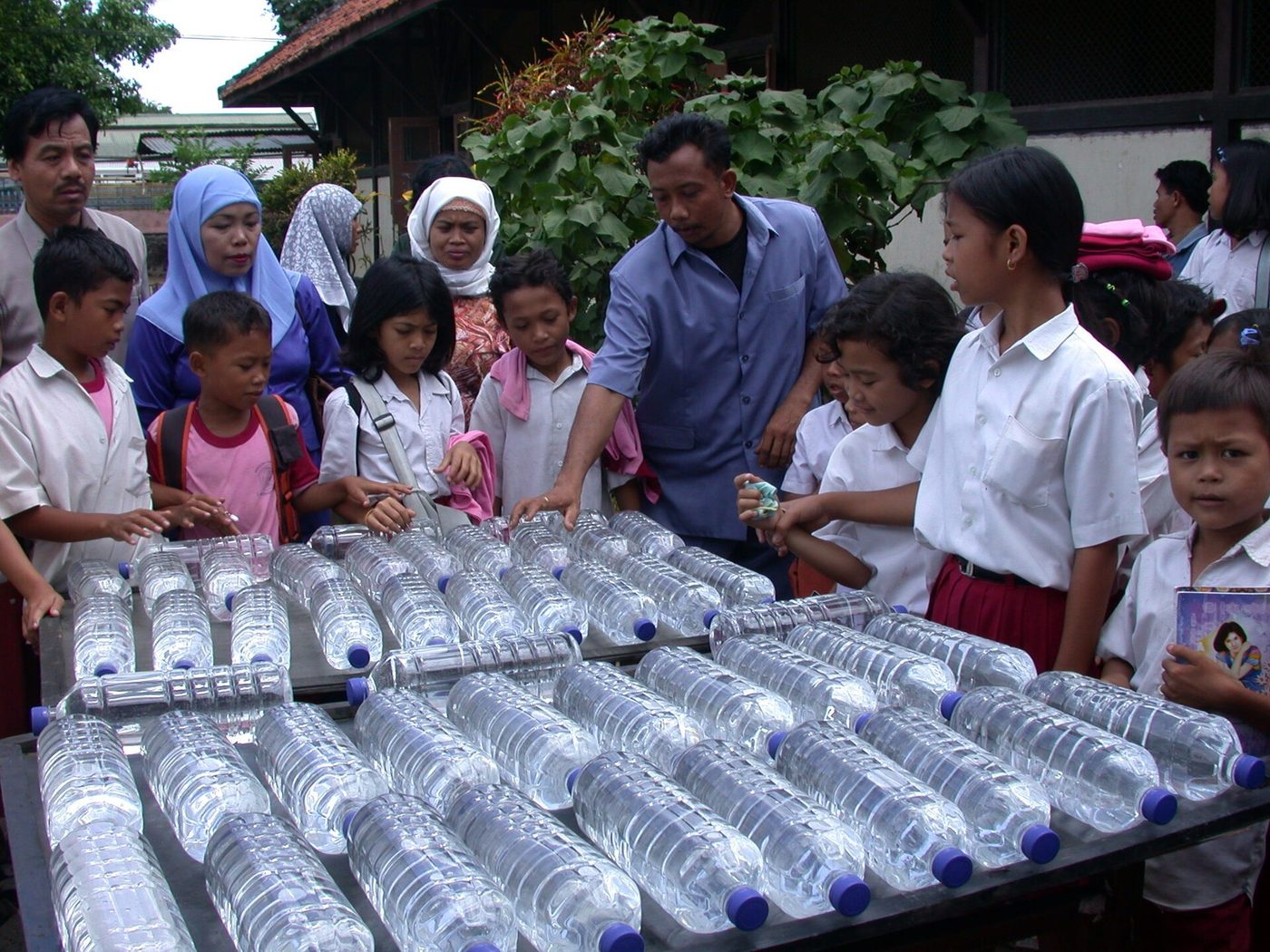
SODIS Solar Water Disinfection Rack
Clear PET bottles on a black-painted roof rack, using six hours of sun to make biologically safe drinking water at no running cost.
Hand-Dug Well with Concrete Ring Lining
Cast concrete rings on the surface, sink them as you dig, and finish with a sealed apron so the well does not contaminate itself.