
Bamboo Truss Roof Frame
A treated bamboo truss and purlin frame that spans small buildings for a fraction of the cost of sawn timber or steel.
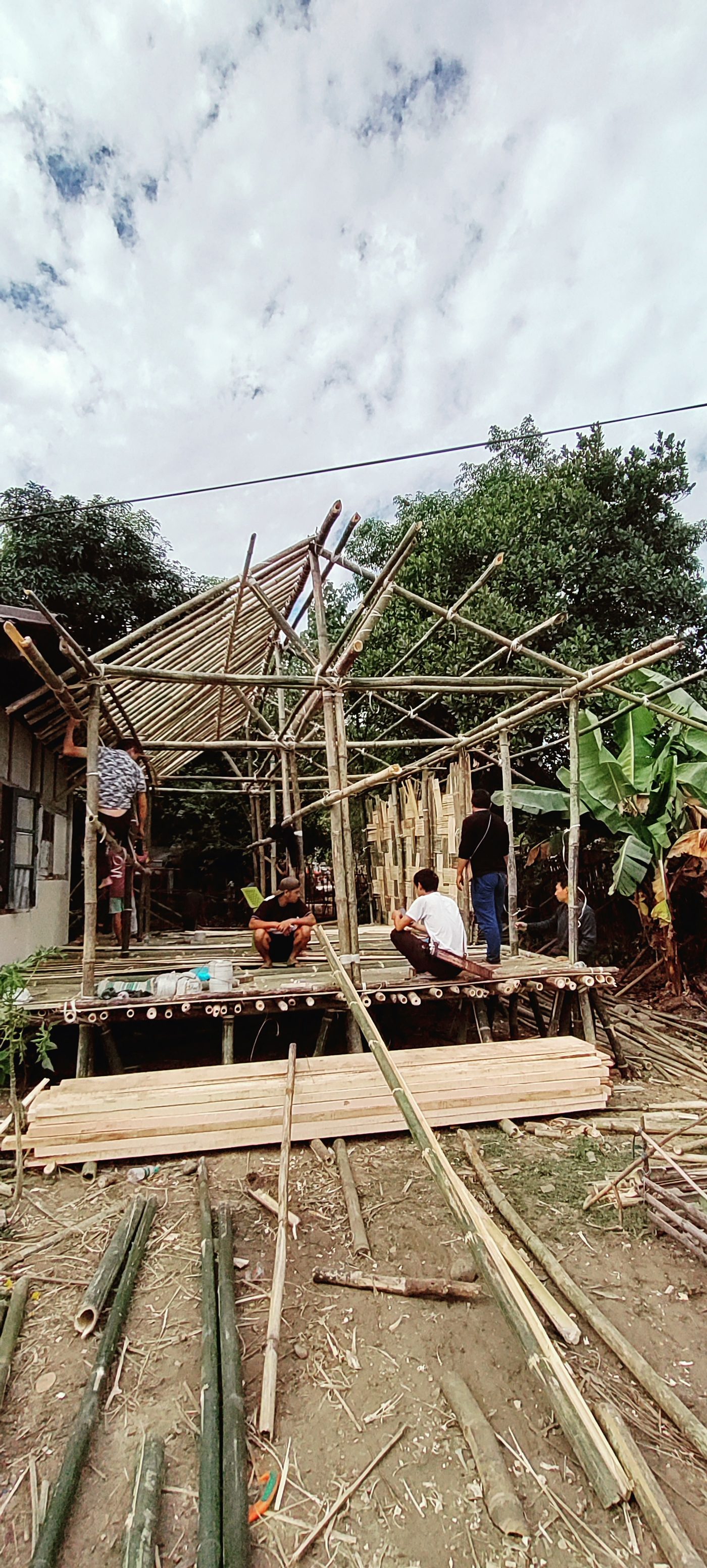
- Estimated cost
- $90 – $300 for a small building, mostly treatment and fixings
- Skill level
- Advanced
- Time
- 1 week including treatment soak, 2 days to erect
Not yet verified
No confirmed build with photo proof has been submitted for this plan yet. Built it? Send photos and it earns the badge.
Tools
- Bow saw or fine-tooth handsaw
- Drill with long wood bits
- Chisel and mallet
- Spanners
- String line, level and plumb bob
- Soaking drum or trench lined with plastic
Short a tool or material? Builders below have often swapped something local in — read Local adaptations before you buy anything.
Materials
- Mature bamboo culms, 3 – 5 years old, 80 – 120 mm diameter
- Borax and boric acid for treatment (1:1.5 ratio, 5% solution)
- 10 mm threaded rod, nuts and washers for bolted joints
- Cement mortar for filling joint internodes
- Galvanised wire or steel strapping for lashings
- Roofing sheet or thatch with fixings
Dimensions & cut list
A bamboo king-post truss spanning 6 m over a single room, at 30° pitch. These are the reference sizes from Appropedia / Practical Action — scale them to what you have, but keep the ratios.
| Clear span | 6 m |
|---|---|
| Roof pitch | 30°Thatch wants 40°+; sheet metal is fine at 15–30° |
| Truss spacing | 1.2 m centres |
| Rafter culms | 80–100 mm diameter |
| Bottom chord | 100–120 mm culm, doubled at the span centre |
| Purlin spacing | 600 mm |
| Eaves overhang | 600 mm minimumOverhang is what keeps rain off earth walls |
Take this list to the yard
- ≈ 40 for a 6 × 8 m roofTreated bamboo culms
- 30 sets10 mm threaded rod and washers for jointsFill the joint internode with mortar before bolting so the culm does not crush
- 80 mLashing wire or rope
- As per areaRoof sheets or thatch bundles
Step by step
Step 1 of 7
Harvest and select culms
Cut mature culms in the dry season, early morning, and only those 3 – 5 years old — young bamboo is weak and insect food. Cut just above a node and stand the culms upright for a week to drain sap.
Swipe or use arrow keys
1. Harvest and select culms
Cut mature culms in the dry season, early morning, and only those 3 – 5 years old — young bamboo is weak and insect food. Cut just above a node and stand the culms upright for a week to drain sap.
2. Treat against borers
Punch through the internode diaphragms with a rod and soak the culms in a 5% borax/boric acid solution for 7 – 10 days. Untreated bamboo in a roof is a two-year roof. Treated, it lasts fifteen or more.
3. Dry under cover
Stack treated culms off the ground under a roof with spacers between, for three to four weeks. Never dry bamboo in direct sun — it splits along its length.
4. Cut fish-mouth joints
Where one culm meets another, cut a curved fish-mouth so the surfaces mate over their full width. Gaps in joints are where bamboo frames fail, not the culms themselves.
5. Make bolted mortar-filled joints
Drill through the culm within 50 mm of a node, pour cement mortar into that internode through a small hole, and let it set before bolting. The mortar plug stops the bolt crushing and splitting the hollow culm.
6. Assemble trusses on the ground
Build each truss flat on a marked-out template so all trusses are identical. Triangulate fully — bamboo is strong in tension and compression but joints hate bending.
7. Erect, brace and purlin
Lift trusses onto the wall plate at 1.0 – 1.2 m centres, plumb and temporarily brace them, then fix permanent diagonal wind bracing before adding purlins and roofing. Keep a generous overhang: bamboo hates repeated wetting.
Why mine failed
The ways this build usually goes wrong, and what fixes it.
Bolted joints crush and go loose
CauseHollow culm collapsing under the bolt
FixFill the internode with sand-cement grout before drilling and bolting, and always add a lashing as a second line of defence.
Roof leaks at the ridge after wind
CausePurlins too widely spaced for the covering
FixBring purlins to 600 mm centres and fix sheets at every second corrugation with washered screws, not nails.
Earth walls below are eroding
CauseEaves overhang too short
FixExtend the overhang to at least 600 mm — the roof is the raincoat for an earthen wall.
Bamboo powders and holes appear
CausePowder-post beetle in untreated culms
FixOnly build with treated, seasoned culms harvested at 3–4 years and cut in the dry season. Replacing a beetle-infested truss means dismantling the roof.
Safety notes
- Borax solution is harmful if swallowed and irritates skin. Wear gloves, keep the soak tank fenced and away from livestock and children, and never dump the solution into a stream or well catchment.
- Bamboo splits explosively when overloaded. Do not shortcut the mortar plugs at bolt holes.
- Work at height with proper scaffolding and a second person, not a leaning stick ladder.
Source & attribution
This plan is our build-step write-up of work documented by Appropedia / Practical Action. The original design and documentation belong to them — go read the source before you build.
Bamboo as a building material: treatment and jointingLocal adaptations
What builders changed to make this work where they live.
Esther N. · Kisumu, Kenya
Borax was hard to find, so we used the smoke-curing method over the cooking fire for three weeks. Not as good, but three years in and no borer holes yet.
Build this alongside
Plans that use the same materials or serve the same need.
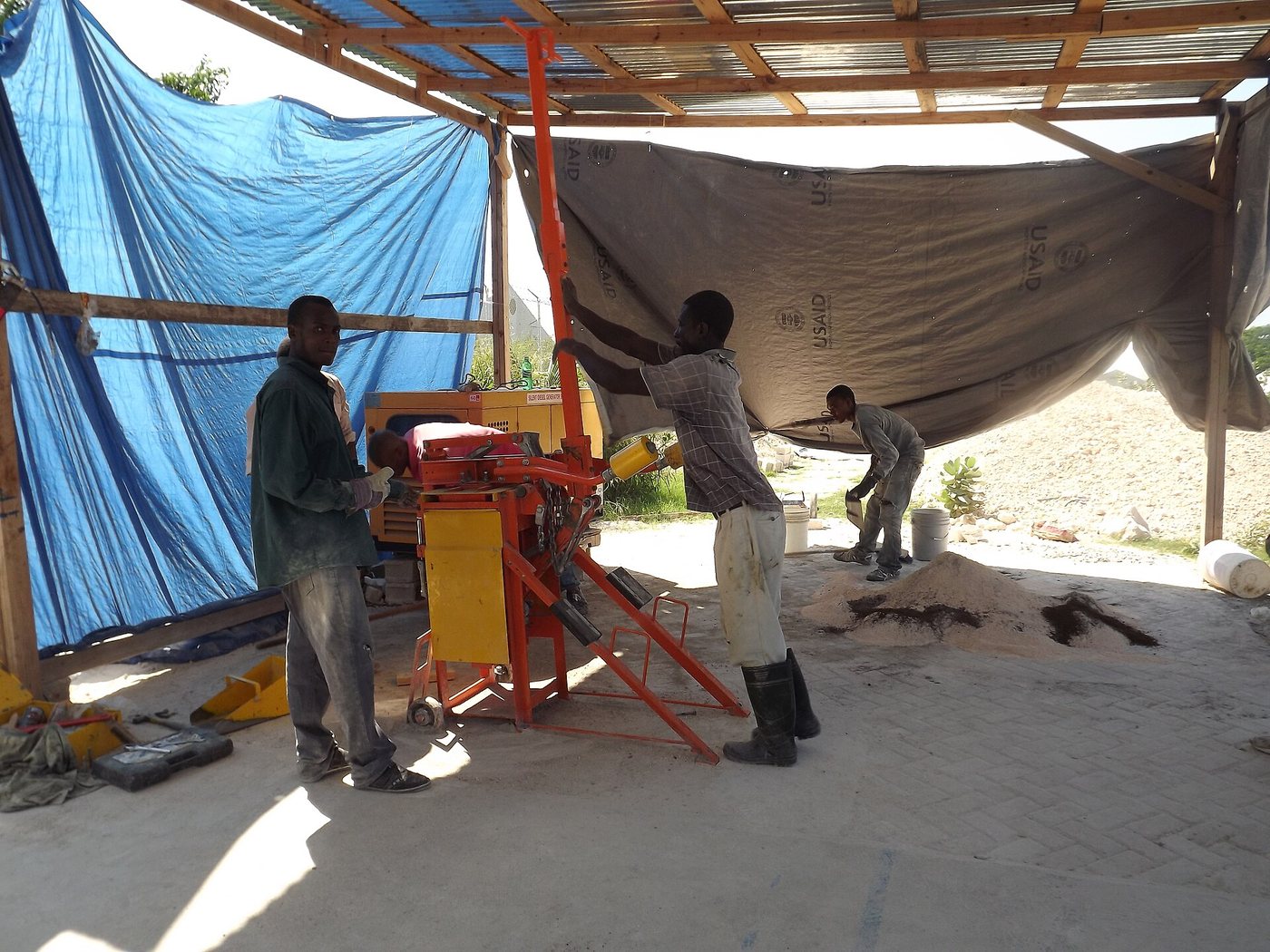
Manual Compressed Earth Block Press
A hand-built compound-lever press that turns local soil into load-bearing building blocks for about the price of a bag of cement.
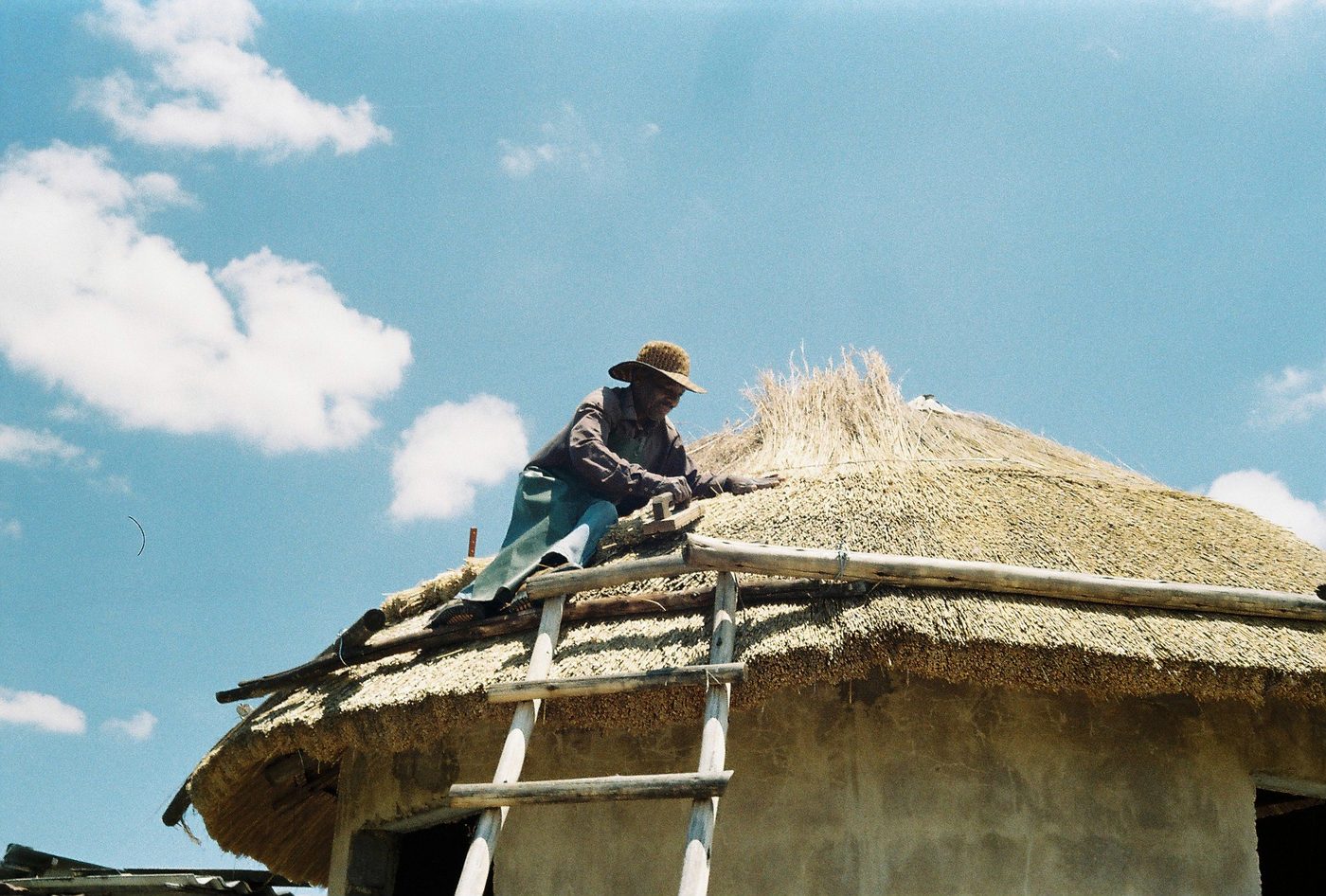
Grass Thatch Roof
Bundle, comb and lash local grass onto a timber or bamboo frame at a steep pitch for a cool, quiet, no-cost roof that sheds heavy rain.
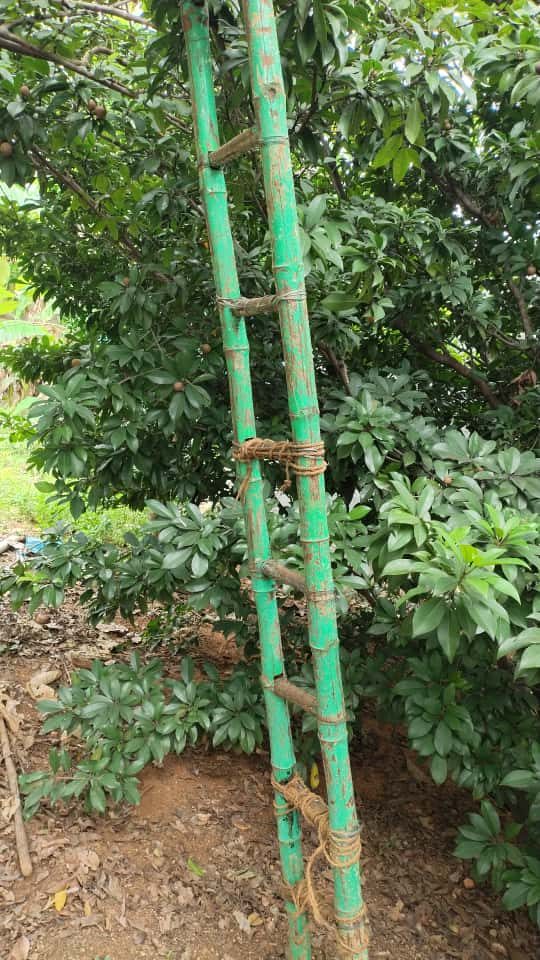
Bamboo Scaffold & Ladder
Lash a working platform and ladder from bamboo poles so you can plaster, roof and repair at height without hiring steel scaffold.