
Floating-Drum Biogas Digester
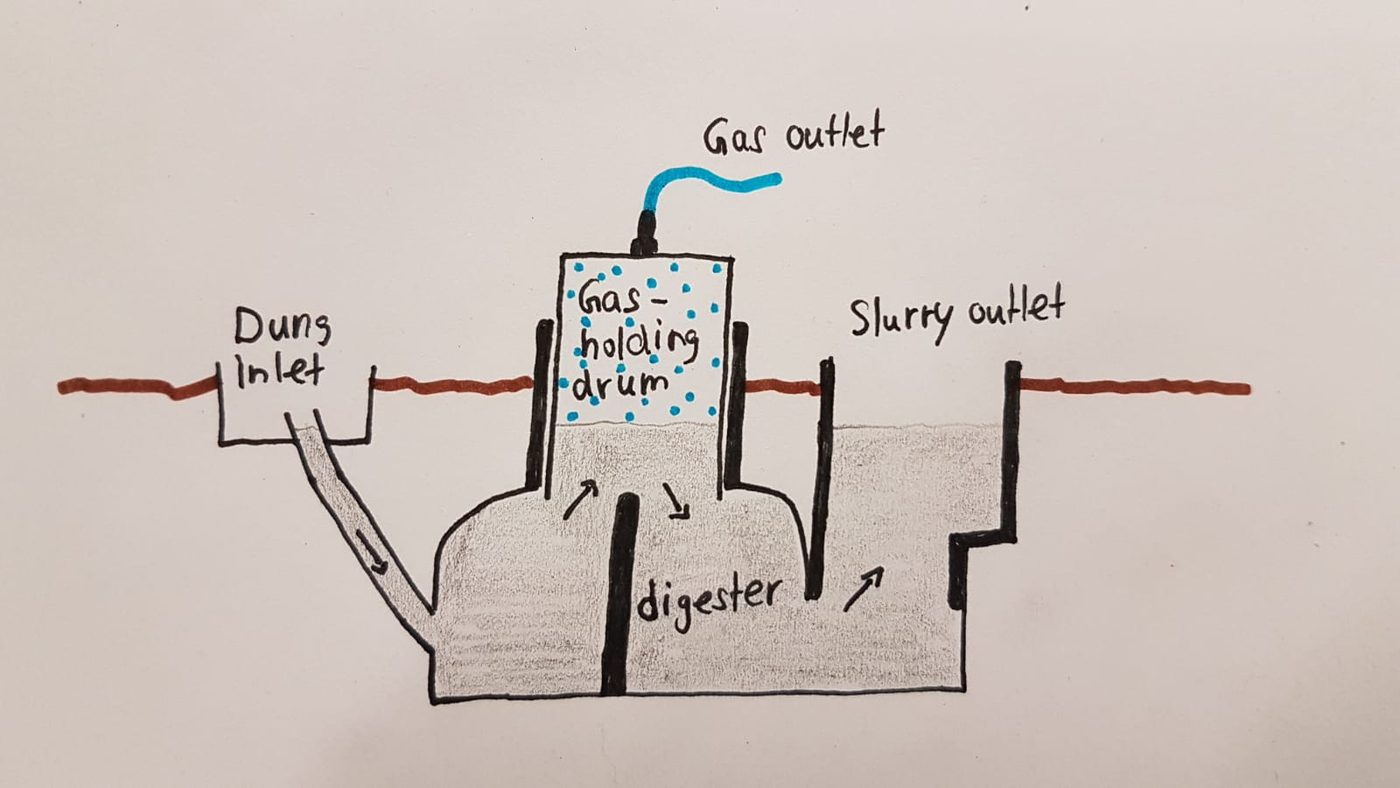
A dung-fed digester with a floating gas holder that supplies two to three hours of cooking gas a day from a few animals' manure.
- Estimated cost
- $300 – $900 for a 4 – 6 m³ household unit
- Skill level
- Advanced
- Time
- 2 – 3 weeks to build, 3 – 6 weeks to start producing
Not yet verified
No confirmed build with photo proof has been submitted for this plan yet. Built it? Send photos and it earns the badge.
Tools
- Digging tools
- Masonry and concreting tools
- Welder or drum-sealing kit
- Pipe wrench and thread tape
- Spirit level
Short a tool or material? Builders below have often swapped something local in — read Local adaptations before you buy anything.
Materials
- Cement, sand, gravel and bricks for the digester pit
- Steel drum or fabricated gas holder, sized to about a third of daily gas production
- Guide frame or central guide pipe for the drum
- 150 mm inlet and outlet pipes
- 20 mm gas pipe, water trap, valve and a biogas burner
- Anti-corrosion paint for the drum
- Fresh animal manure and water for the first charge
Dimensions & cut list
A floating-drum household digester on fresh cattle dung, giving 1–2 hours of cooking gas a day. These are the reference sizes from Appropedia / Practical Action — scale them to what you have, but keep the ratios.
| Digester volume | 1 m³ per 2 cattleSized on daily dung, not on family size |
|---|---|
| Daily feed | 20 kg fresh dung + 20 litres water1:1 by weight, mixed to a thin slurry |
| Retention time | 30–40 days warm climate, 50+ days highland |
| Gasholder drum | 200 litre steel drum, inverted, 15 cm water seal |
| Inlet and outlet pipes | 100 mm, entering below slurry level, opposite each other |
| Gas pressure | 8–10 cm water columnWeight bricks on the drum to raise it |
| Gas yield | ≈ 40 litres per kg fresh dung |
Take this list to the yard
- 8–10 bags for a 4 m³ pitCement
- 1200 litre drumWire-brushed and bitumen-painted inside and out
- As far as the kitchenGas pipe 12 mm with tap and water trap
- 1Single-burner biogas stoveLPG burners will not work — the jet is the wrong size
Step by step
Step 1 of 7
Check you actually have enough feedstock
You need roughly the daily dung of two to four cattle, or the equivalent in pigs, to run a household burner. Without steady daily feeding the digester stalls, so count animals honestly before spending money.
Swipe or use arrow keys
1. Check you actually have enough feedstock
You need roughly the daily dung of two to four cattle, or the equivalent in pigs, to run a household burner. Without steady daily feeding the digester stalls, so count animals honestly before spending money.
2. Dig and build the digester pit
Build a cylindrical brick or concrete pit, plastered inside and fully watertight. Test it with water for 24 hours before going any further — a leaking digester never works and cannot be fixed later.
3. Set inlet and outlet
Fit the inlet pipe entering low on one side and the outlet on the opposite side at the correct overflow level, so fresh slurry travels the length of the digester instead of short-circuiting to the outlet.
4. Prepare the gas holder
Clean, de-rust and paint the drum inside and out with anti-corrosion paint, weld on the gas outlet, and fit guide rollers or a central guide pipe so it rises and falls without jamming or tipping.
5. Charge and seed
Fill with a 1:1 dung and water slurry, adding a bucket of slurry from a working digester as a seed culture if you can get one. Vent the first two or three gas fillings — the early mix is mostly carbon dioxide and air and will not burn.
6. Pipe the gas safely
Run gas pipe with a continuous fall to a water trap at the low point, then to a valve and burner. Condensate in a sagging line blocks gas flow and is the most common complaint in the field.
7. Feed daily and use the slurry
Feed the same amount at the same time each day, keeping the slurry near 1:1. The effluent is an excellent fertiliser — apply it to crops, but never to leafy vegetables eaten raw.
Why mine failed
The ways this build usually goes wrong, and what fixes it.
Gas burns with a weak yellow flame or not at all
CauseDigester still starting up, or CO2-heavy gas from an overloaded pit
FixVent the first two weeks of gas — it is mostly CO2. If it persists, halve the daily feed for a fortnight; overfeeding sours the digester.
Gas production stops after a few weeks
CauseAcidified slurry, often from soap, disinfectant or urine-heavy feed
FixNever let washing water or disinfectant reach the digester. Stop feeding for a week and add a bucket of fresh dung slurry to reseed the bacteria.
Water in the gas line and the flame dies at the stove
CauseCondensate collecting in a low point
FixFit a water trap at the lowest point of the run and drain it weekly, and lay the pipe with a continuous fall back to the trap.
Safety notes
- Biogas is explosive when mixed with air. No naked flames near the digester or gas holder, ever, and no smoking on site.
- Digester gas contains hydrogen sulphide and displaces oxygen. Never enter a digester pit — people die doing this. Empty and ventilate for days and use a harness and watcher if entry is unavoidable.
- Vent the first fillings until the gas burns with a steady blue flame.
- Fence the unit from children and livestock, and keep the outlet chamber covered.
Source & attribution
This plan is our build-step write-up of work documented by Appropedia / Practical Action. The original design and documentation belong to them — go read the source before you build.
Floating drum biogas plant construction and operationLocal adaptations
What builders changed to make this work where they live.
Daniel O. · Meru, Kenya
We insulated the pit walls with a soil berm because the nights are cold up here. Gas output through July went up by about a quarter.
Build this alongside
Plans that use the same materials or serve the same need.
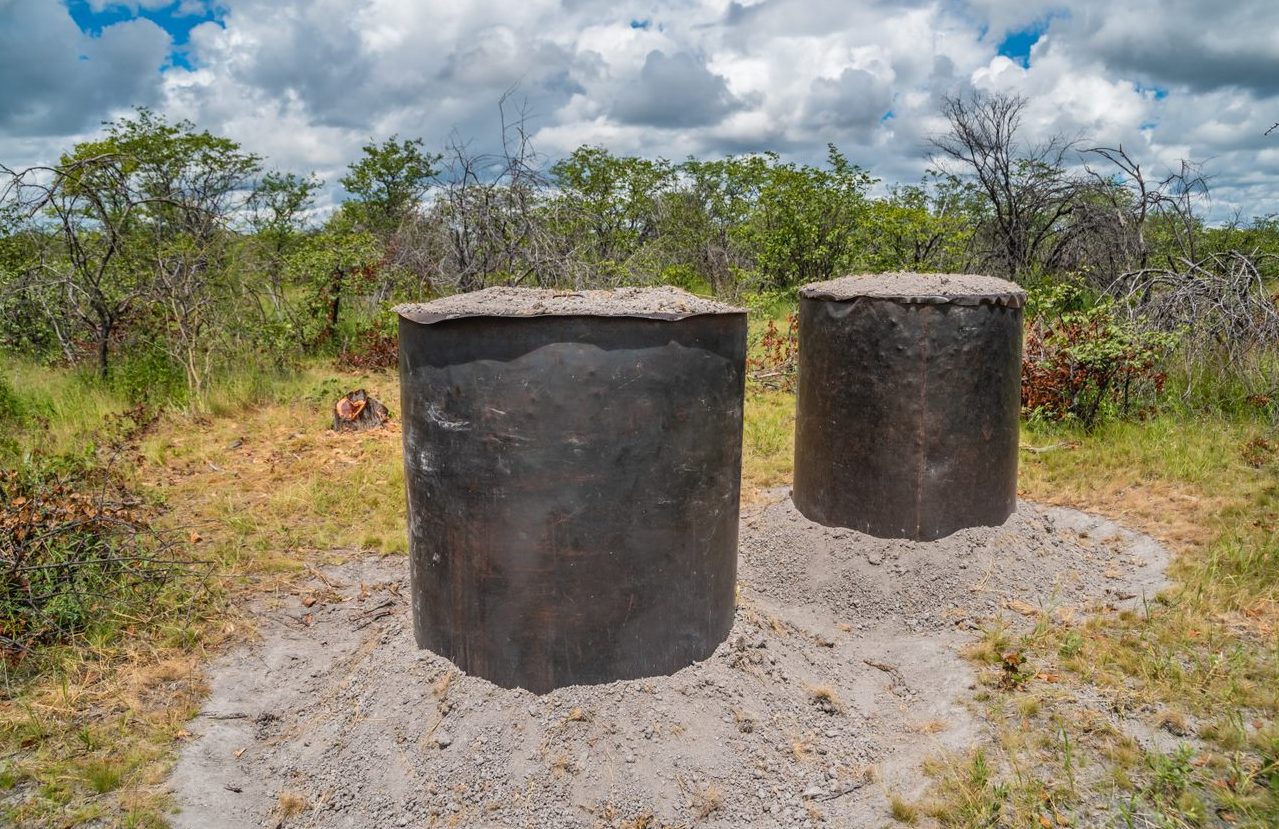
Drum Retort Charcoal Kiln
Char wood inside a sealed inner drum heated from outside, burning the smoke as fuel — far higher yield and far less smoke than an earth-mound burn.
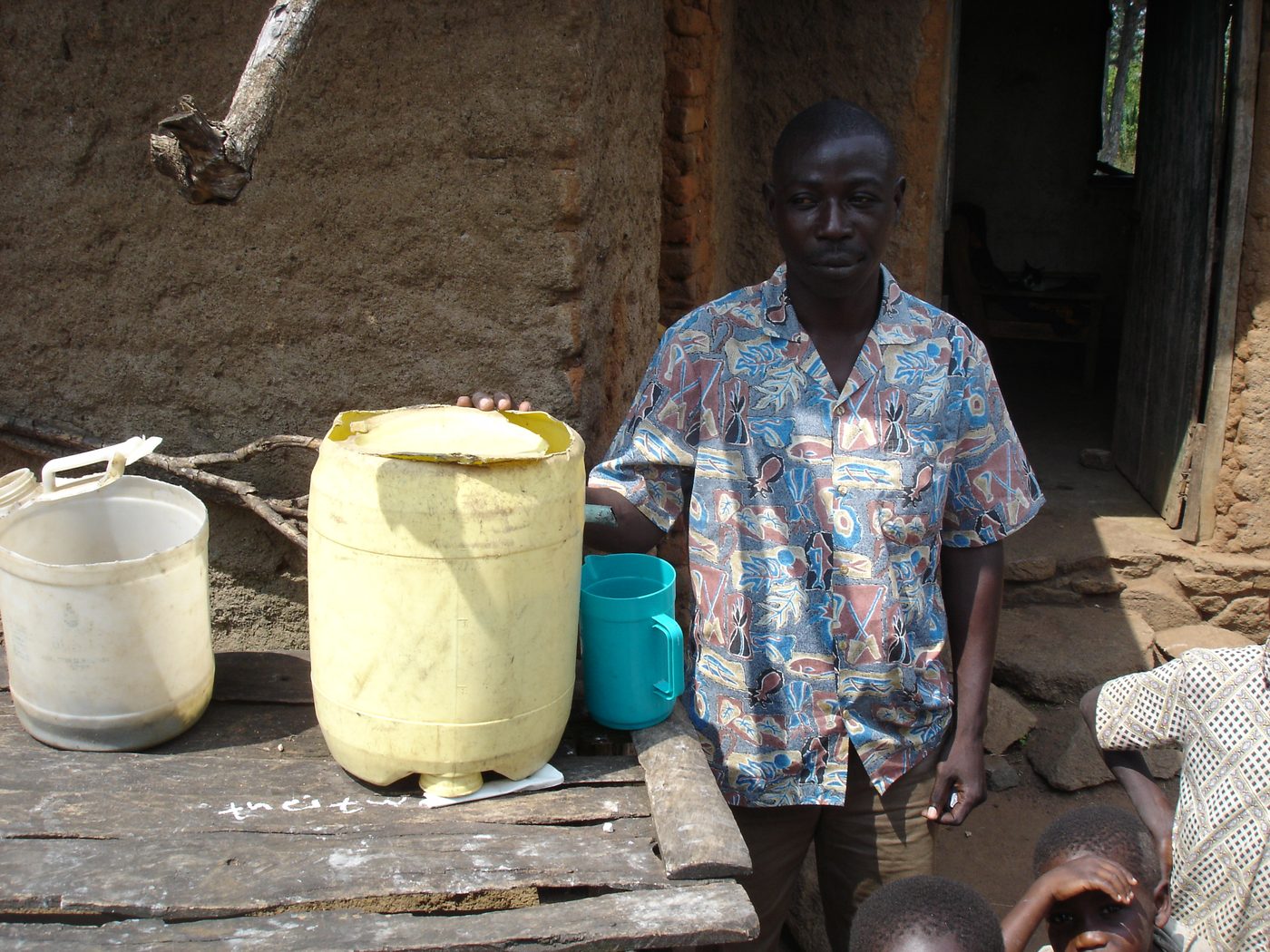
Concrete Biosand Water Filter
A household slow-sand filter in a concrete body that removes most pathogens and turbidity with no power, no cartridges and no ongoing cost.
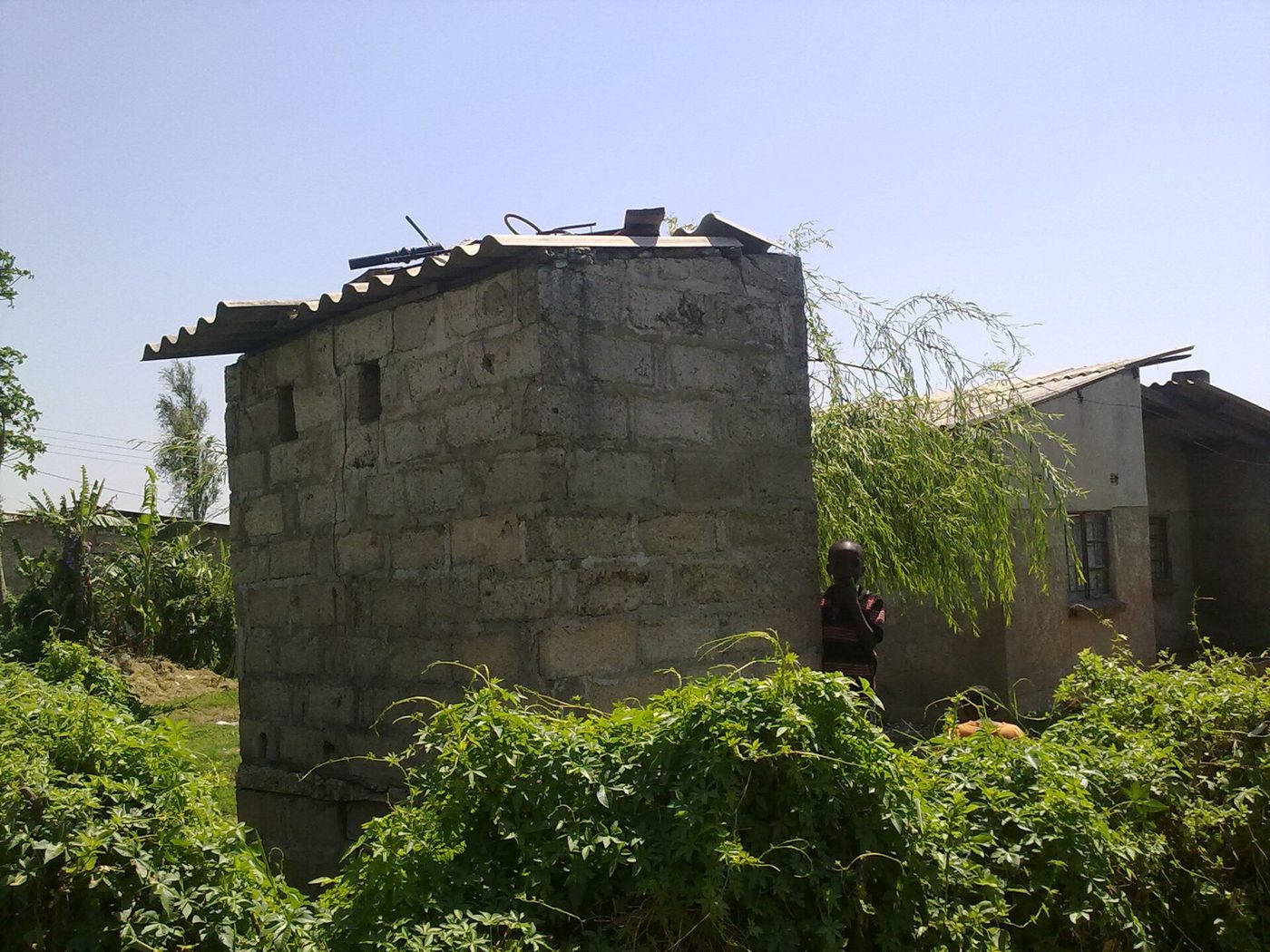
Ventilated Improved Pit Latrine
A lined pit latrine with a dark interior and a screened vent pipe that pulls odour out and traps flies — the standard upgrade from an open pit.