
Concrete Biosand Water Filter
A household slow-sand filter in a concrete body that removes most pathogens and turbidity with no power, no cartridges and no ongoing cost.
- Estimated cost
- $25 – $75 depending on cement and mould access
- Skill level
- Intermediate
- Time
- 1 day to cast, 7 days to cure, 3 weeks for the biolayer to mature
Why this is a Verified Build
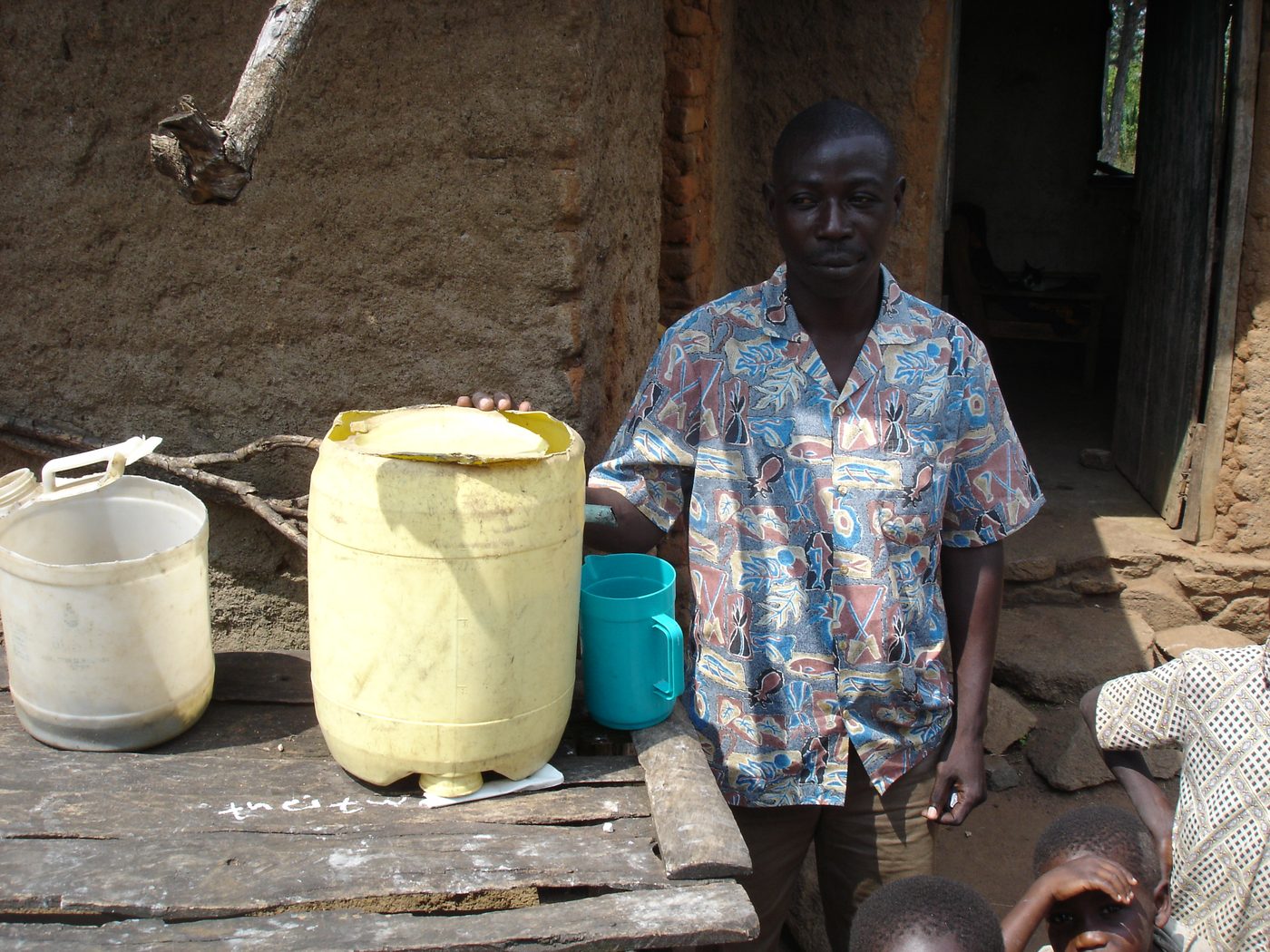
Verified by two households in Mwanza, Tanzania with photo proof of the finished filter and six months of use. Independent turbidity readings dropped from visibly cloudy to clear; users still chlorinate or boil for drinking.
Tools
- Filter body mould (steel or timber) or a 200 L plastic drum as the body
- Concrete mixing tools
- Sieves: 0.7 mm, 6 mm and 12 mm
- Hacksaw for PVC
- Buckets and a measuring jug
If you don't have it
- No concrete mould? Build the body from a 200 L plastic drum or two stacked 20 L buckets — the sand and gravel layer depths matter far more than the shell material.
- No diffuser plate? Drill a 60 × 60 mm grid of 3 mm holes in a plastic basin lid and rest it 50 mm above the sand. Without a diffuser the pour scours the biolayer and the filter stops working.
Materials
- Cement, sharp sand and 12 mm aggregate for the body (skip if using a drum)
- Filtration sand, washed and sieved to 0.15 – 0.7 mm
- Separating gravel, 6 mm, washed
- Drainage gravel, 12 mm, washed
- 20 mm PVC pipe and elbows for the riser
- A diffuser plate — perforated plastic or a punched metal sheet
- Lid to keep out light, insects and dust
Dimensions & cut list
One concrete household filter serving a family of 6–8, treating about 30 litres per hour. These are the reference sizes from Appropedia / CAWST — scale them to what you have, but keep the ratios.
| Body height | 90 cm outsideComfortable pouring height for an adult |
|---|---|
| Body footprint | 30 × 30 cm inside |
| Gravel base layer | 5 cm of 6–12 mm gravel |
| Separating gravel | 5 cm of 1–6 mm gravel |
| Filtration sand | 50 cm deep, grains under 0.7 mmWashed until rinse water runs clear |
| Standing water above sand | 5 cmSet by the height of the outlet pipe bend — this keeps the biolayer alive |
| Diffuser plate | Sits 5 cm above the standing water, holes 3 mm at 2.5 cm spacing |
Take this list to the yard
- 1 bag (50 kg)CementBody and lid
- ≈ 0.05 m³Clean sharp sand for the concrete
- ≈ 45 litresFiltration sand, sieved and washed
- ≈ 10 litres eachGravel, two grades
- 1.2 mOutlet pipe, 12 mmCast into the wall, rising inside to set the water level
Step by step
Step 1 of 6
Wash the media until the water runs clear
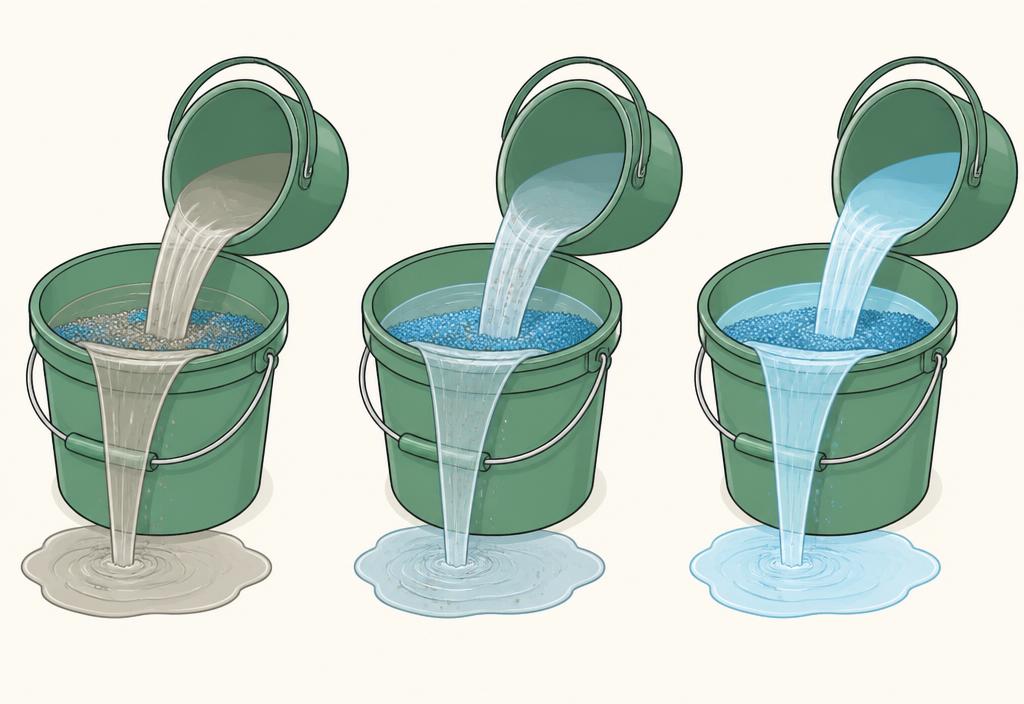
This is the step people skip and the step that decides whether the filter works. Wash the filtration sand in batches, agitating and pouring off the cloudy water, until rinse water stays clear. Wash the gravels the same way.
Swipe or use arrow keys
1. Wash the media until the water runs clear
This is the step people skip and the step that decides whether the filter works. Wash the filtration sand in batches, agitating and pouring off the cloudy water, until rinse water stays clear. Wash the gravels the same way.
2. Cast or prepare the body
Cast a concrete body roughly 900 mm tall with a 300 mm square internal section, or adapt a food-grade 200 L drum. Set the outlet riser pipe in place as you cast so its top sits 50 mm above the final sand surface — that residual head is what keeps the biolayer alive.
3. Layer the media
Load 50 mm of 12 mm drainage gravel, then 50 mm of 6 mm separating gravel, then 500 mm of washed filtration sand. Add water while loading the sand so no air pockets form. Level the sand surface flat.
4. Set the diffuser
Fit the perforated diffuser plate 50 mm above the sand. Water must never be poured straight onto the sand — it will punch a hole through the biolayer and let untreated water pass.
5. Charge and ripen
Pour through a full charge of source water daily for three weeks. The biological layer that forms on the top few millimetres of sand is what removes most pathogens, and it needs time and steady feeding to establish.
6. Use and maintain
Pour one charge at a time and let it run through. When flow slows, swirl and scoop only the top 10 mm of sand, rinse it, and return it. Never remove or wash the whole sand bed.
Why mine failed
The ways this build usually goes wrong, and what fixes it.
Flow rate has dropped to a trickle
CauseThe biolayer and trapped silt have clogged the top of the sand
FixSwirl and harvest: stir the top 2 cm of sand with your hand, let it settle, scoop out the dirty water. Never dig the sand out.
Water comes out cloudy
CauseThe sand was not washed enough, or the grains are too coarse
FixRun the filter for a few days — early cloudiness clears. If it persists, remove the sand, wash until rinse water is clear and sieve out anything over 0.7 mm.
Filter runs dry between uses
CauseThe outlet pipe is set too low, so the standing water drains away
FixThe outlet bend must hold 5 cm of water above the sand. Raise the pipe. Without that water the biolayer dies and the filter stops removing pathogens.
Sand surface is pitted and channelled
CauseWater is being poured in without the diffuser plate
FixAlways pour through the diffuser. Channels let water run straight through untreated.
Safety notes
- A biosand filter reduces but does not guarantee elimination of pathogens. Chlorinate, boil or solar-disinfect the output before drinking, especially for children and anyone immunocompromised.
- Use only food-safe containers. A drum that held chemicals or fuel cannot be made safe by washing.
- Never let the filter dry out — the biolayer dies and the filter must be re-ripened.
- Keep the lid on. Open standing water breeds mosquitoes.
Source & attribution
This plan is our build-step write-up of work documented by Appropedia / CAWST. The original design and documentation belong to them — go read the source before you build.
Biosand filter construction manual and media specificationsLocal adaptations
What builders changed to make this work where they live.
Grace K. · Mwanza, Tanzania
We used a 200 L drum instead of casting concrete — half the work, and it has run two years. Just keep it out of direct sun so the plastic does not go brittle.
Ibrahim S. · Zaria, Nigeria
Harmattan dust wrecked our flow rate until we added a cloth pre-filter over the diffuser. Now we scoop the sand once a quarter instead of monthly.
Build this alongside
Plans that use the same materials or serve the same need.
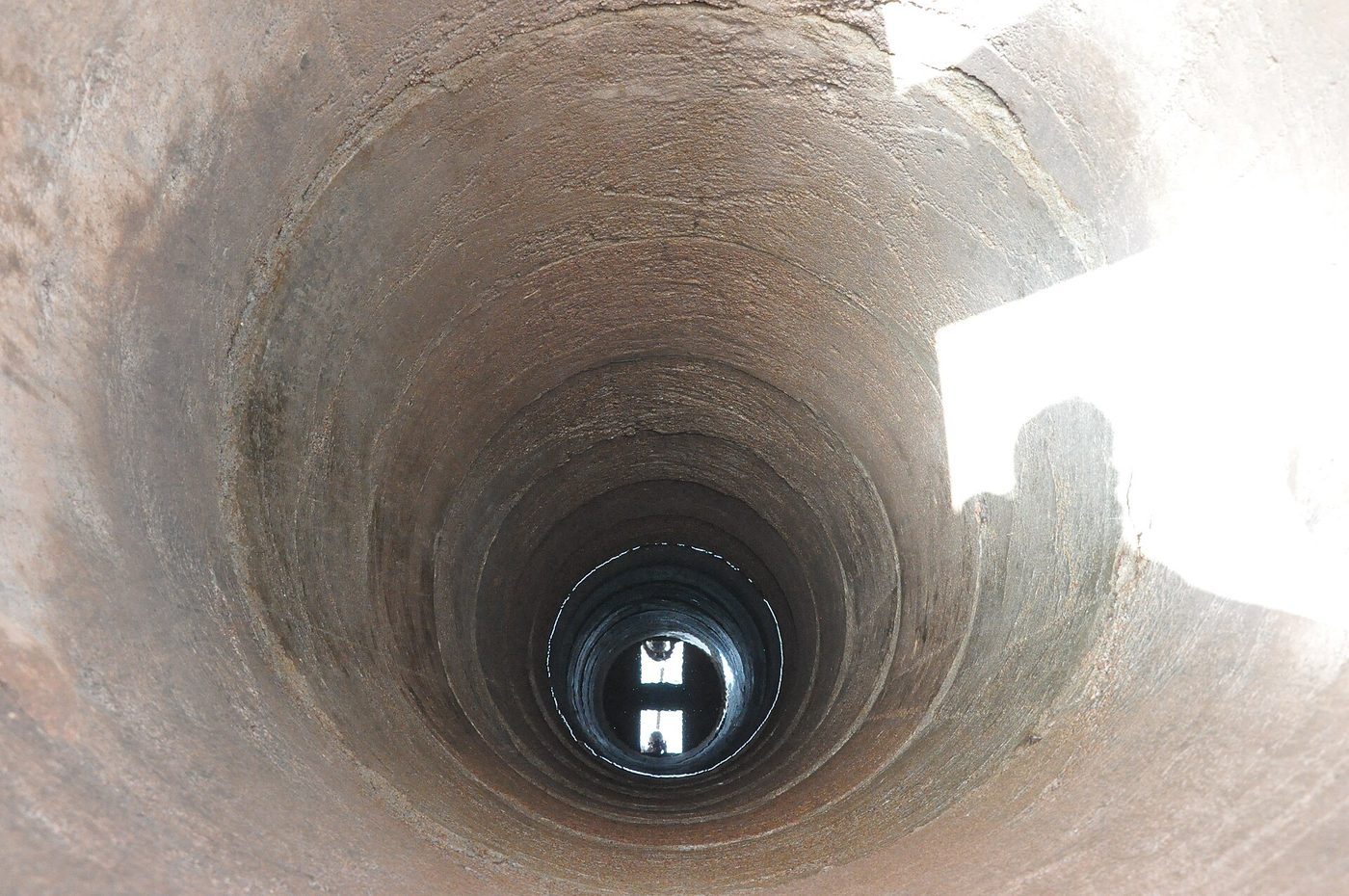
Hand-Dug Well with Concrete Ring Lining
Cast concrete rings on the surface, sink them as you dig, and finish with a sealed apron so the well does not contaminate itself.
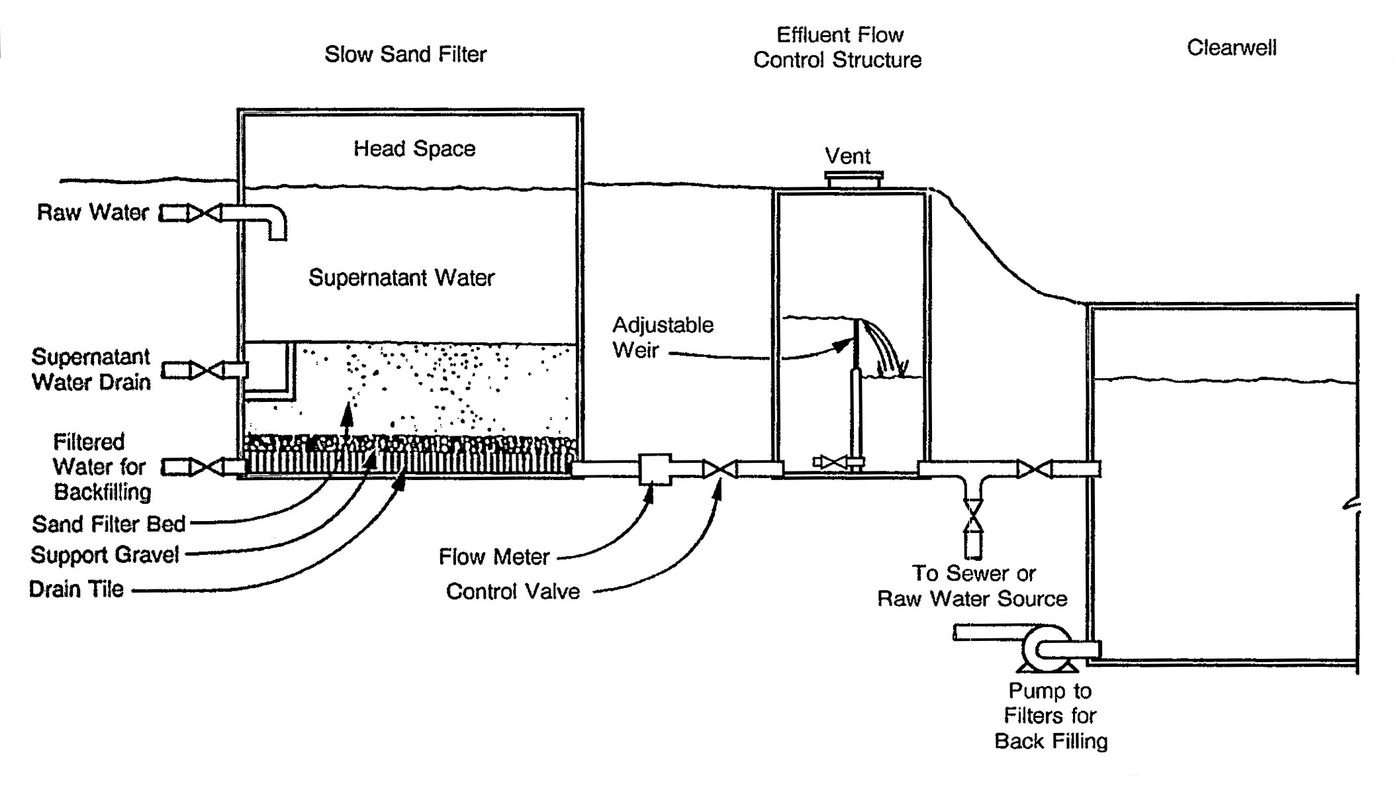
Community Slow Sand Filter
A tank of fine sand with a living biological layer on top that treats a household or small community's drinking water continuously, with no chemicals and no power.
Protected Spring Box
Cap a natural spring at its eye with a sealed masonry box and pipe it to a raised tap, so people collect flowing water that never touches the contaminated surface.