
Community Slow Sand Filter
A tank of fine sand with a living biological layer on top that treats a household or small community's drinking water continuously, with no chemicals and no power.
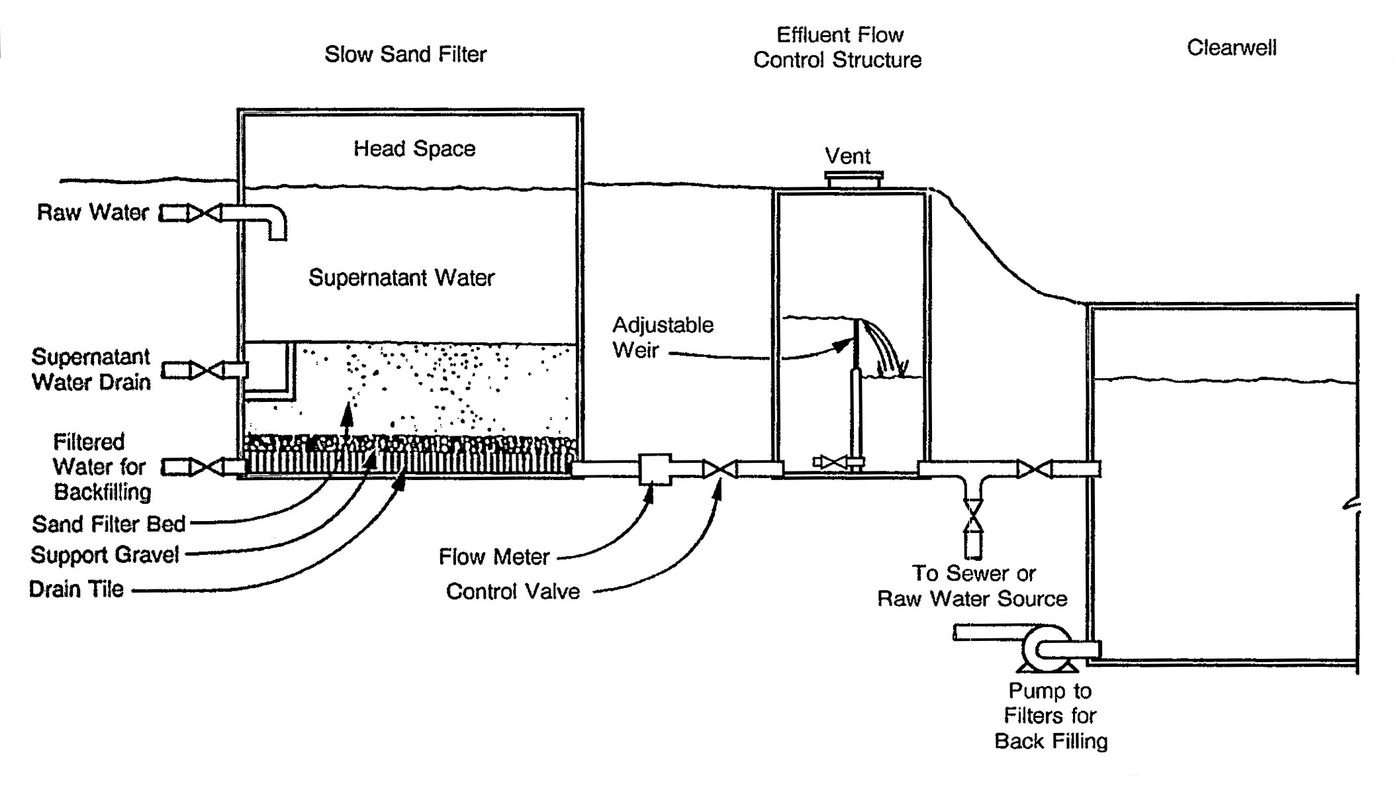
- Estimated cost
- $150 – $400 for a community-scale tank
- Skill level
- Intermediate
- Time
- 3 – 5 days to build, 2 – 4 weeks to ripen the biolayer
Not yet verified
No confirmed build with photo proof has been submitted for this plan yet. Built it? Send photos and it earns the badge.
Tools
- Trowel and float
- Sieves for grading sand
- Pipe wrench and hacksaw
- Buckets and shovels
- Spirit level
If you don't have it
- No graded filter sand? Wash river sand through a 1 mm and a 0.15 mm sieve (mosquito mesh over a frame works) and use only what passes the coarse and stays on the fine screen.
Materials
Dimensions & cut list
A community-scale slow sand filter drum treating roughly 200 litres per day. These are the reference sizes from Appropedia / CAWST slow sand filtration guidance — scale them to what you have, but keep the ratios.
| Filter bed area | 0.25 m² per 100 litres a day |
|---|---|
| Sand depth | 70 cm |
| Effective sand grain size | 0.15–0.35 mm |
| Supernatant water depth | 20–30 cm above the sand |
| Design filtration rate | 0.1–0.2 m per hourFaster than this and the biolayer cannot do its work |
| Underdrain | Slotted pipe in 15 cm of graded gravel |
Take this list to the yard
- 1200 litre drum or block tank
- ≈ 140 litresWashed filter sand
- ≈ 25 litres eachGraded gravel, two sizes
- 2 m of 20 mmOutlet pipework with control valve
Step by step
Step 1 of 6
Size the filter to the demand
Slow sand filters run at 0.1 – 0.3 m per hour. For 1,000 litres a day, plan roughly 0.5 m² of sand surface. Undersizing and pushing flow is the most common way these fail.
Swipe or use arrow keys
1. Size the filter to the demand
Slow sand filters run at 0.1 – 0.3 m per hour. For 1,000 litres a day, plan roughly 0.5 m² of sand surface. Undersizing and pushing flow is the most common way these fail.
2. Build the tank and underdrain
Lay a perforated collection pipe across the base, then cover with graded gravel from coarse at the bottom to fine at the top, 300 mm total.
3. Wash and place the sand
Wash sand until rinse water runs clear, then place to 800 – 900 mm depth. Unwashed sand clouds the output for weeks and can never be fixed in place.
4. Set the outlet above the sand
Turn the outlet up so its lip sits above the sand surface. This keeps the bed permanently submerged — a dried-out biolayer is a dead biolayer.
5. Fill gently and ripen
Fill from the bottom up to avoid disturbing the surface, then keep 50 – 100 mm of standing water over the sand and run continuously for 2 – 4 weeks while the schmutzdecke establishes.
6. Maintain by wet harrowing or scraping
When flow drops, scrape off the top 10 – 20 mm of dirty sand, wash and store it. After several scrapes, top the bed back up to depth with clean sand and re-ripen.
Why mine failed
The ways this build usually goes wrong, and what fixes it.
Water leaves the filter cloudy
CauseSand too coarse, bed too shallow, or the biolayer has not formed yet
FixGive it two to three weeks of continuous slow flow to ripen. If it stays cloudy, the sand is too coarse — re-sieve it.
Flow has almost stopped
CauseSurface mat of silt and algae
FixDrain to just above the sand and scrape off the top 1–2 cm. Never dig into the bed; scraping is the whole maintenance routine.
Algae growing thickly on the water surface
CauseDirect sunlight on the open filter
FixCover the filter. Shade also keeps the water cool enough for the biolayer.
Safety notes
- A slow sand filter is not a disinfection step for grossly contaminated water. Chlorinate or boil the output if source water is sewage-affected, and test regularly.
- Never let the bed dry out or the biolayer dies and the filter passes pathogens until it re-ripens.
- Keep the tank covered and insect-proof, but not airtight — the biolayer needs oxygen.
- Discard the first days of output after every scrape.
Source & attribution
This plan is our build-step write-up of work documented by Appropedia / CAWST slow sand filtration guidance. The original design and documentation belong to them — go read the source before you build.
Slow sand filterLocal adaptations
What builders changed to make this work where they live.
- No adaptations shared yet for this plan.
Build this alongside
Plans that use the same materials or serve the same need.
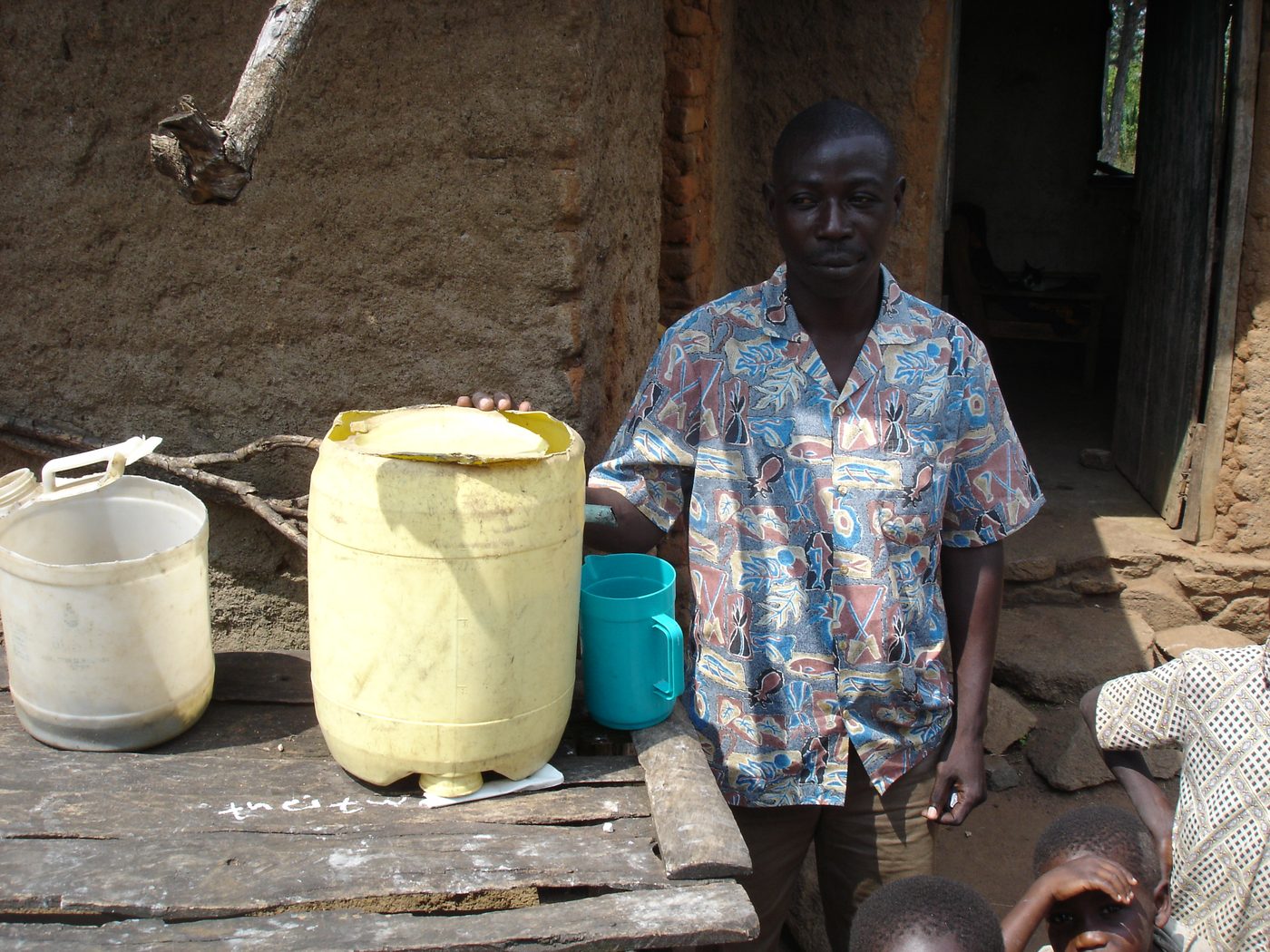
Concrete Biosand Water Filter
A household slow-sand filter in a concrete body that removes most pathogens and turbidity with no power, no cartridges and no ongoing cost.
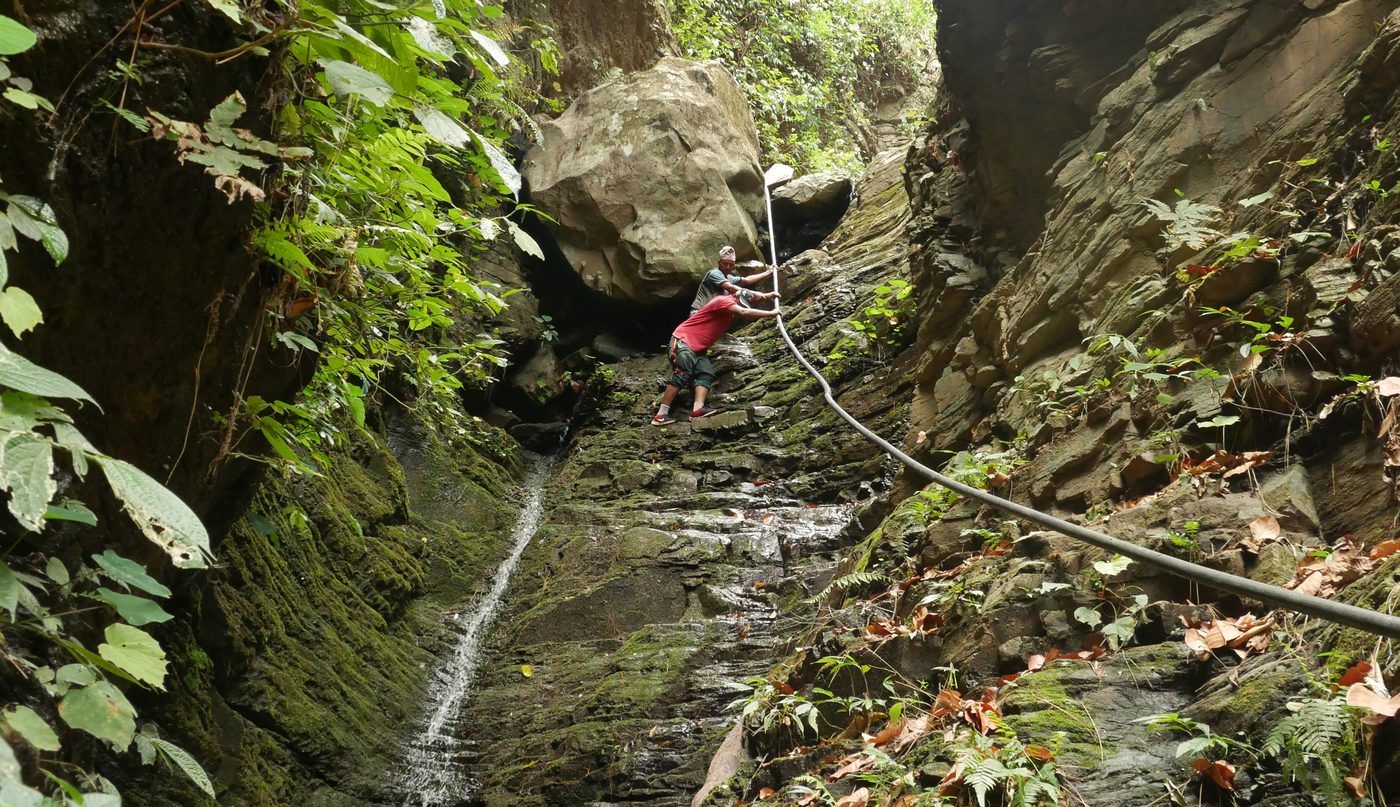
Protected Spring Box
Cap a natural spring at its eye with a sealed masonry box and pipe it to a raised tap, so people collect flowing water that never touches the contaminated surface.
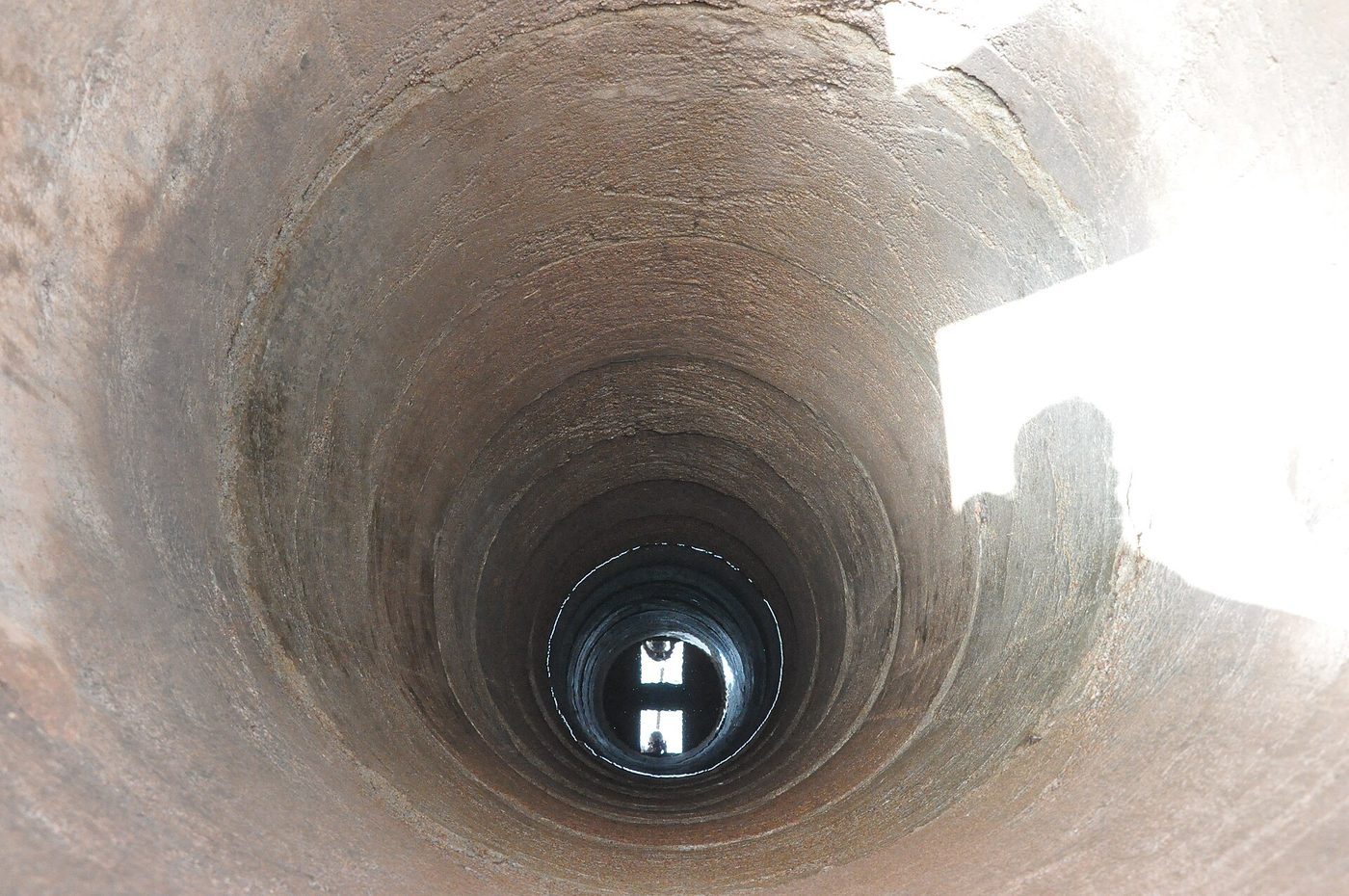
Hand-Dug Well with Concrete Ring Lining
Cast concrete rings on the surface, sink them as you dig, and finish with a sealed apron so the well does not contaminate itself.