
Silver-Treated Ceramic Pot Water Filter
A fired clay pot filter that removes bacteria and protozoa at roughly two litres an hour, sitting in a covered bucket with a tap.
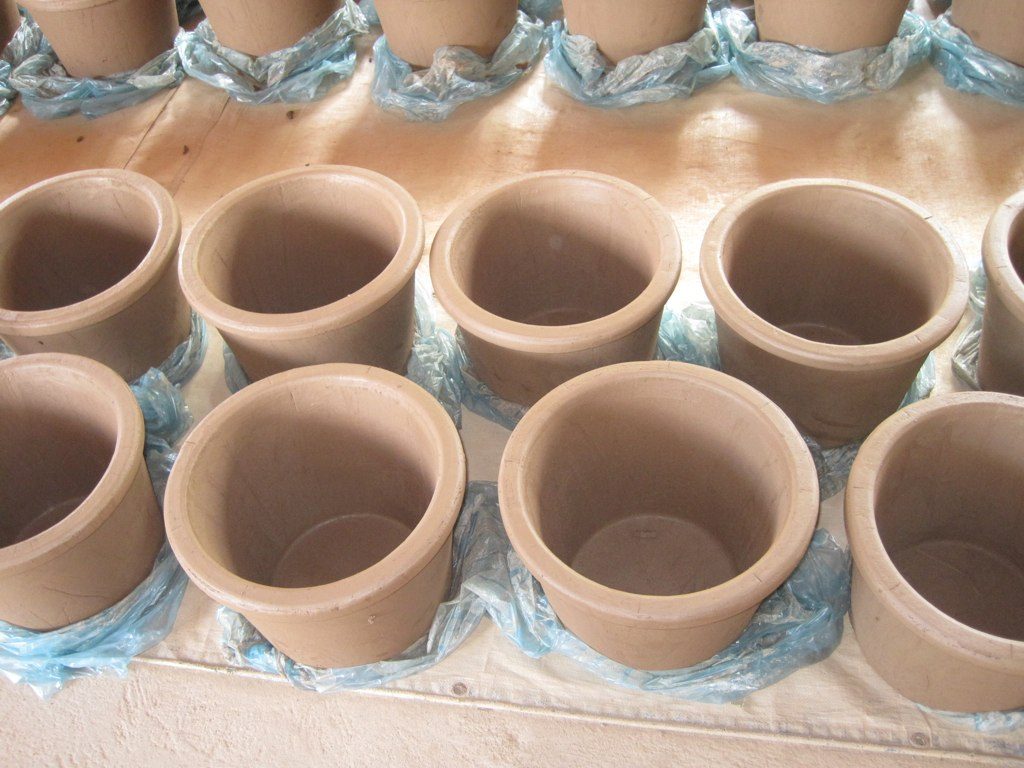
- Estimated cost
- $25 – $50 for pot, bucket, tap and silver treatment
- Skill level
- Intermediate
- Time
- Assembly in an hour; potters need a firing kiln and practice
Why this is a Verified Build
Two households in Dodoma, Tanzania submitted photos and six months of use logs (2026). Locally fired pots, flow measured at 1.6 – 2.2 L/hour after three months of daily scrubbing.
Tools
- Bucket and lid
- Drill with hole saw for the tap
- Soft brush for cleaning
- Measuring jug
- Kiln access, if you are making the pots
If you don't have it
- No kiln? Fire in a sawdust or brick clamp kiln alongside ordinary bricks — the pot needs about 850 °C for 6 hours, which a clamp reaches.
- No colloidal silver? The pot alone removes turbidity and most bacteria; follow with SODIS bottles or 2 drops of chlorine per litre for the pathogen kill.
Materials
- Fired ceramic filter pot (locally produced, clay mixed with fine sawdust or rice husk and fired)
- 20 L food-grade plastic bucket with lid
- Plastic tap with washers
- Colloidal silver solution for treatment
- Clean cloth and soft brush
Dimensions & cut list
One fired clay pot filter element seated in a lidded storage vessel, for household drinking water. These are the reference sizes from Appropedia / Potters for Peace — scale them to what you have, but keep the ratios.
| Pot capacity | 8–10 litres |
|---|---|
| Wall thickness | 12–15 mmThicker runs too slow, thinner cracks and leaks |
| Clay to combustible mix | By volume, 3 parts sieved clay to 1 part fine sawdust or rice husk |
| Sieve size for burnout material | 0.6 mmCoarse grains make pores wide enough to pass bacteria |
| Firing | Hold 880–900 °C for 6–8 hours, cool slowly overnight |
| Target flow rate | 1–3 litres per hour when full |
| Receptacle | 20 litre vessel with tap 5 cm above the base |
Take this list to the yard
- ≈ 8 kg per potSieved clay
- ≈ 2.5 litres per potFine sawdust or rice husk
- 1Storage vessel with tap and lid
- 2 ml per potColloidal silver solution (optional)Painted inside after firing where available
Step by step
Step 1 of 7
Source or make the pot
Buy from a producer following the Potters for Peace specification, or make them: clay mixed with fine sifted sawdust, pressed in a mould and fired to about 900 °C. The burnt-out sawdust leaves the pore structure that does the filtering.
Swipe or use arrow keys
1. Source or make the pot
Buy from a producer following the Potters for Peace specification, or make them: clay mixed with fine sifted sawdust, pressed in a mould and fired to about 900 °C. The burnt-out sawdust leaves the pore structure that does the filtering.
2. Flow-test every pot
Fill the pot and measure output over an hour. Accept 1 – 3 L/hour. Faster means the pores are too coarse to hold back bacteria; much slower means the pot is unusable in practice and will be abandoned.
3. Apply colloidal silver
Brush or dip-apply colloidal silver to the inside and outside of a damp pot per the supplier's dose and let it dry. Silver suppresses bacterial regrowth in the pot itself — it is not a substitute for the ceramic.
4. Fit the receptacle
Drill the bucket 50 mm above the base, fit the tap with washers both sides and check it does not weep. Any leak here is a contamination route.
5. Assemble and prime
Seat the pot in the bucket mouth so its rim is supported and it hangs clear of the stored water. Fit the lid. Run two full pots of water through and discard before drinking.
6. Use and clean weekly
Refill the pot as it empties, never let it run dry for long, and scrub the inside with a soft brush and clean water weekly. Never use soap or bleach on the pot — it clogs the pores and kills the silver.
7. Retire the pot when it fails
Replace after 2 – 3 years, or immediately if the pot is cracked or chipped. A crack lets raw water bypass the ceramic and the filter becomes worse than useless.
Why mine failed
The ways this build usually goes wrong, and what fixes it.
Filter runs far too fast — litres in minutes
CauseBurnout material too coarse, so the pores are wide open
FixIt is no longer safe; retire that pot. Sieve sawdust to 0.6 mm for the next batch and test flow before issuing.
Almost no water passes
CauseWall too thick, too little burnout material, or the pores are clogged with silt
FixScrub the inside with a clean brush and no soap. If flow stays under 1 litre an hour after scrubbing, the pot was made too dense.
Hairline cracks after firing
CauseHeated or cooled too fast
FixRamp slowly and let the kiln cool overnight unopened. Any cracked pot is scrap — a crack is an unfiltered shortcut.
Safety notes
- A cracked or chipped pot passes untreated water. Inspect it every time you refill.
- This filter does not remove dissolved chemicals, salt, fluoride or most viruses. Do not use it on chemically contaminated sources.
- Keep the bucket lid on and the tap clean. Most re-contamination happens in storage, not in the filter.
Source & attribution
This plan is our build-step write-up of work documented by Appropedia / Potters for Peace. The original design and documentation belong to them — go read the source before you build.
Ceramic pot filter production and useLocal adaptations
What builders changed to make this work where they live.
Grace M. · Dodoma, Tanzania
Our water is silty, so we settle it overnight in a covered drum first. Doubled the time between scrubbings and the flow stays near 2 L/hour.
Build this alongside
Plans that use the same materials or serve the same need.
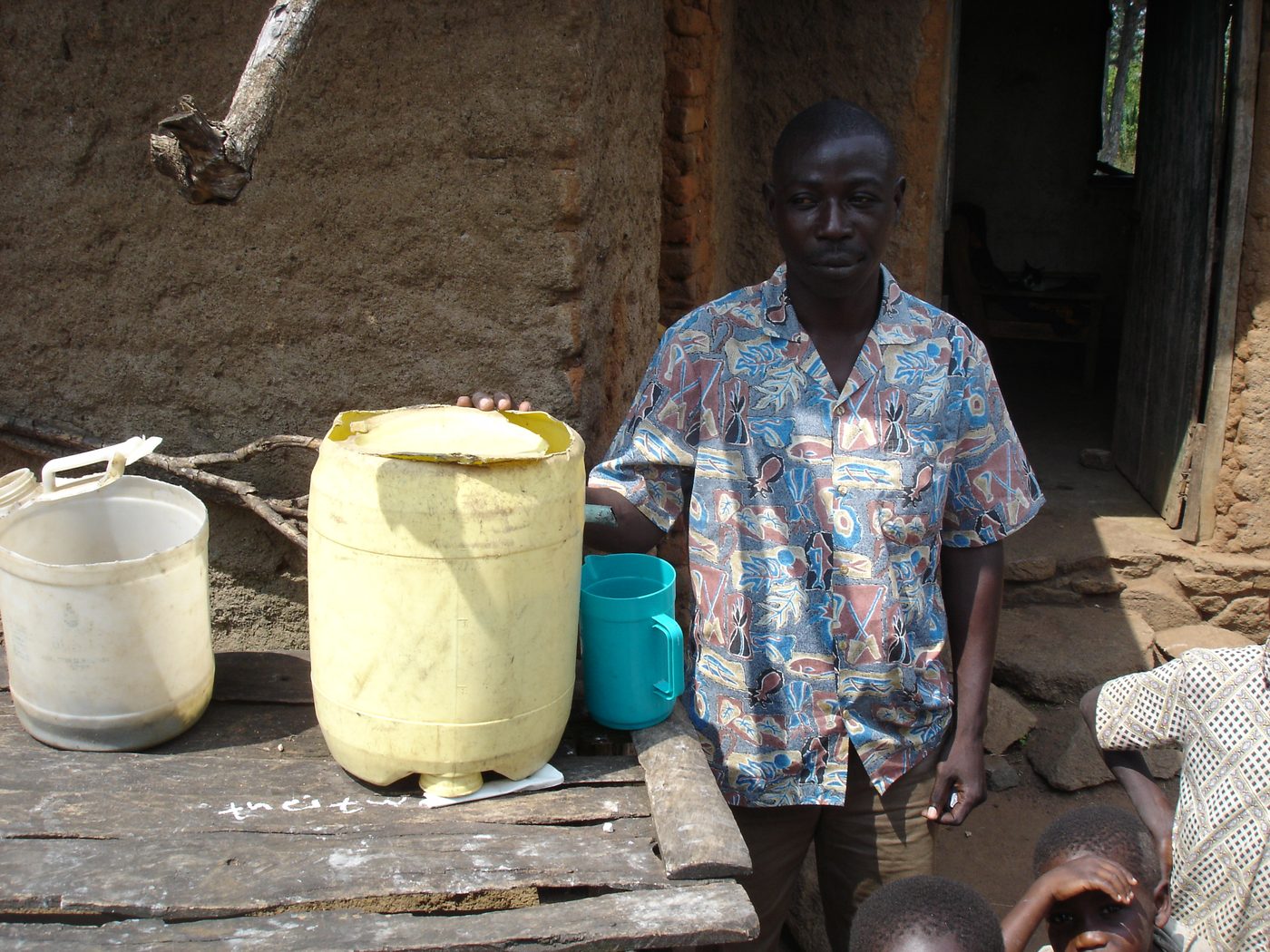
Concrete Biosand Water Filter
A household slow-sand filter in a concrete body that removes most pathogens and turbidity with no power, no cartridges and no ongoing cost.
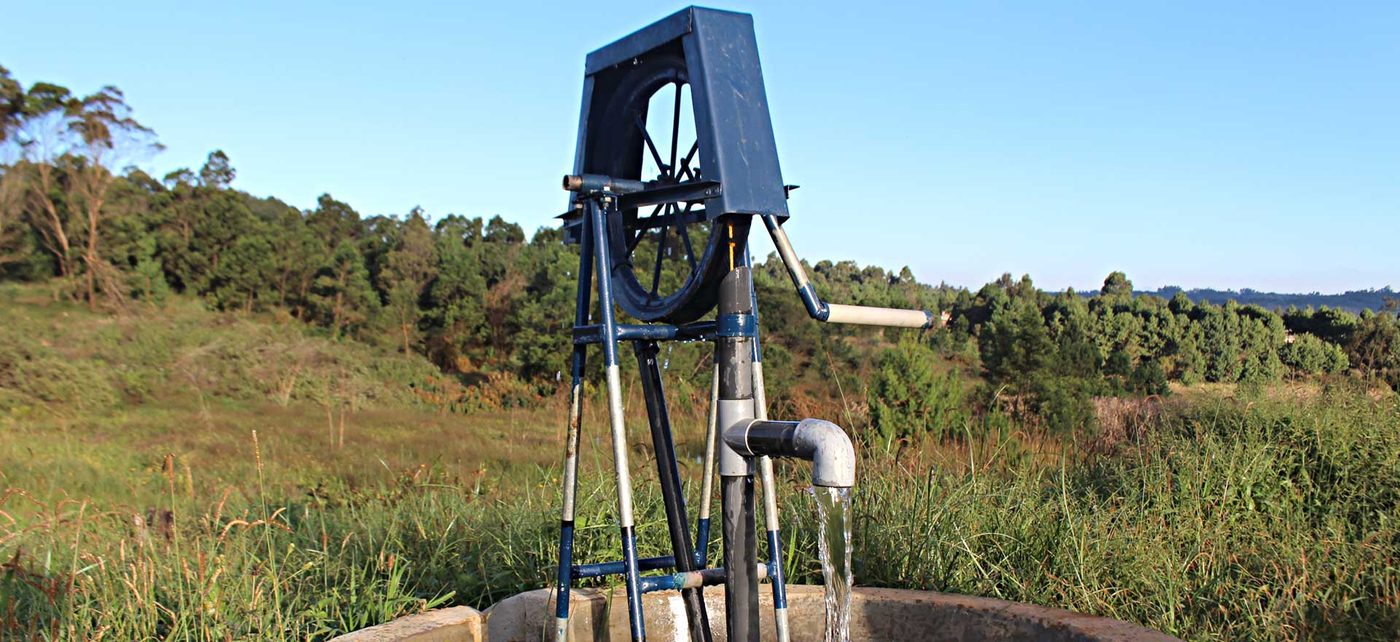
Rope-and-Washer Pump
A hand-cranked loop of rope with rubber washers that lifts water up to about 35 metres, built almost entirely from salvage.
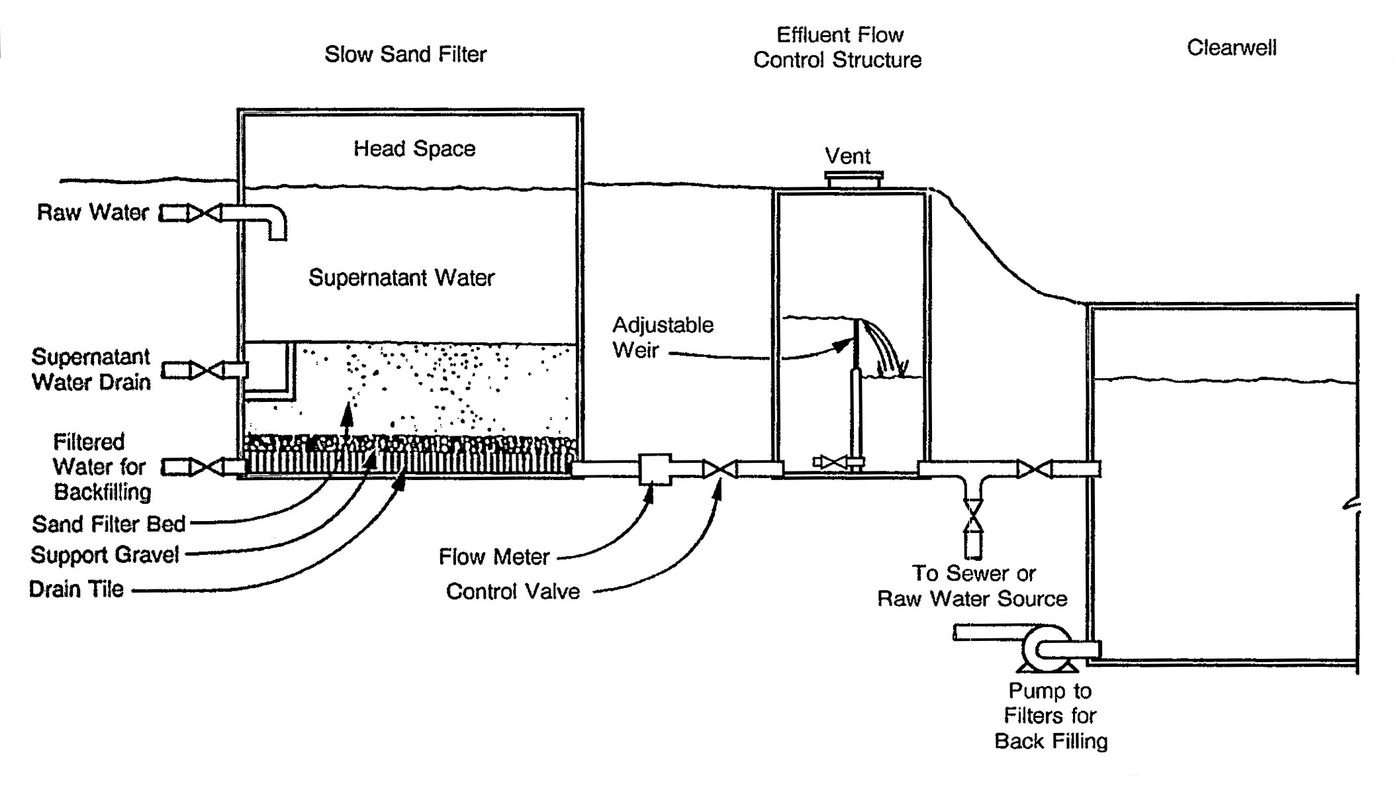
Community Slow Sand Filter
A tank of fine sand with a living biological layer on top that treats a household or small community's drinking water continuously, with no chemicals and no power.