
Gabion Check Dam for Gullies
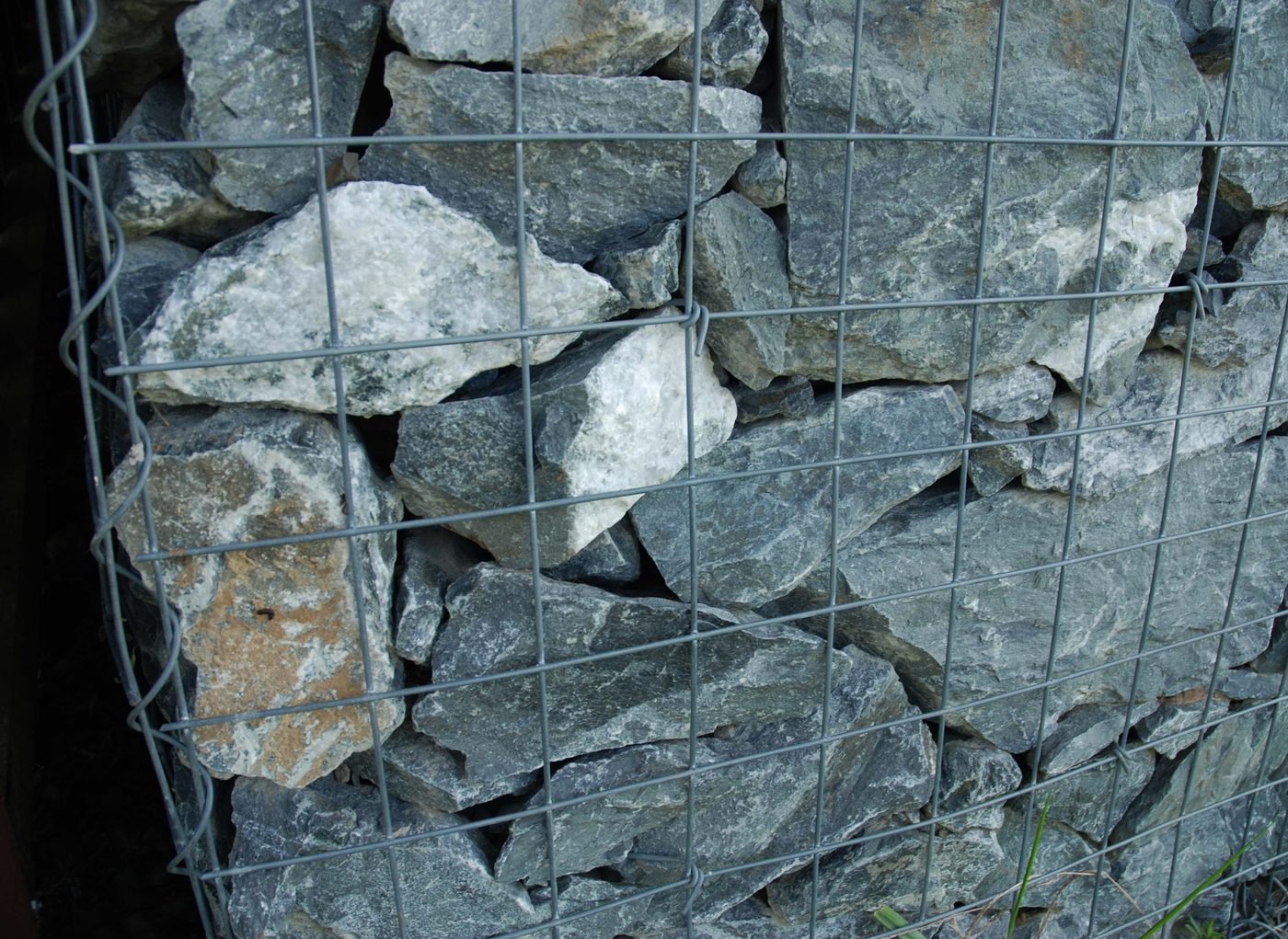
Stack wire baskets filled with stone across an eroding gully to slow runoff, trap silt and let the channel heal itself into a planted terrace.
- Estimated cost
- $120 – $400 per structure if stone is local
- Skill level
- Intermediate
- Time
- 3 – 5 days per dam with a work party
Not yet verified
No confirmed build with photo proof has been submitted for this plan yet. Built it? Send photos and it earns the badge.
Tools
- Fencing pliers
- Crowbar
- Shovels and picks
- Wheelbarrow
- Line level or A-frame
If you don't have it
- No galvanised gabion mesh? Hand-woven baskets from 3 mm wire or brushwood-and-stake bunds work in low-flow gullies; expect to rebuild after big storms.
Materials
- Galvanised hexagonal gabion mesh baskets, typically 2 × 1 × 1 m
- Hard angular stone 100 – 200 mm, enough to fill the baskets
- Binding and bracing wire
- Gravel or geotextile for the upstream filter face
Dimensions & cut list
A gabion check dam across a 4 m gully, 1 m high, to slow runoff and trap sediment. These are the reference sizes from Appropedia / soil and water conservation practice — scale them to what you have, but keep the ratios.
| Gabion baskets | 2 × 1 × 1 m standard units |
|---|---|
| Dam height | 1 m, with a spillway notch 300 mm deep at the centre |
| Keyed into banks | 1 m into each side wall of the gully |
| Foundation key | 500 mm below the gully bed |
| Apron downstream | 2 m of stone-filled mattress, 300 mm thickWithout an apron the falling water scours out the toe and the dam drops in |
| Mesh | Double-twisted hexagonal, 3 mm galvanised wire, 80 × 100 mm openings |
| Rock fill | Angular stone 150–250 mm, hand-packed |
| Spacing between dams | Every 1 m of fall along the gully |
Take this list to the yard
- 6 for one 4 m damGabion baskets
- ≈ 8 m³Angular rock fill
- 15 kgLacing wire
- 10 m²Geotextile or grass sod filter layer
- As availableVegetation for the trapped sediment wedgeGrass or vetiver planted upstream is what makes the structure permanent
Step by step
Step 1 of 6
Read the gully first
Site dams where the gully narrows and there is sound rock or firm subsoil in the bed. Space them so each dam's crest is level with the toe of the one upstream.
Swipe or use arrow keys
1. Read the gully first
Site dams where the gully narrows and there is sound rock or firm subsoil in the bed. Space them so each dam's crest is level with the toe of the one upstream.
2. Key the structure in
Dig the base 400 – 600 mm into the bed and at least 1 m into both banks. Water goes around unkeyed dams and makes the erosion worse.
3. Assemble and wire the baskets
Stand the baskets in place, lace all vertical edges with continuous wire, and wire adjacent baskets to each other so the dam acts as one mass.
4. Fill by hand, face outward
Hand-place the largest flat stones on the visible faces and pack the middle tight. Fit internal bracing wires every 300 mm of height to stop the baskets bellying.
5. Shape a spillway
Make the centre of the crest lower than the ends so overflow goes over the middle, and armour the downstream apron with loose stone to kill the falling energy.
6. Plant and maintain
Plant vetiver, elephant grass or bamboo on the silt that collects behind the dam. Inspect after every heavy rain and re-wire or re-pack anything that has shifted.
Why mine failed
The ways this build usually goes wrong, and what fixes it.
Water has cut round the end of the dam
CauseNot keyed into the gully banks
FixKey the structure at least 1 m into each bank and set the spillway notch clearly lower than the wing ends, so overflow goes over the middle.
Dam has dropped and tilted downstream
CauseToe scour — no apron
FixLay a 2 m stone apron downstream and key the foundation 500 mm into the bed. Falling water digs its own hole in one storm.
Baskets sag and rocks spill out
CauseRounded fill and loose lacing
FixUse angular 150–250 mm rock, hand-pack the faces, and lace every seam continuously with proper lacing wire.
Silt washes straight through the mesh
CauseNo filter layer
FixLay geotextile or thick grass sod on the upstream face, and plant the trapped sediment wedge as soon as it forms.
Safety notes
- Never work in a gully when rain is falling or threatening upstream — flash floods arrive with no warning.
- Cut mesh ends are sharp and springy; wear heavy gloves and eye protection when lacing.
- Rolling stone crushes feet. Boots, clear hand signals and nobody standing below the load.
- A poorly keyed or undersized dam concentrates flow and can cut a deeper gully than the one you started with.
Source & attribution
This plan is our build-step write-up of work documented by Appropedia / soil and water conservation practice. The original design and documentation belong to them — go read the source before you build.
Check damLocal adaptations
What builders changed to make this work where they live.
Field note · Tigray, Ethiopia
Community work parties build a stepped series of small gabions rather than one big dam, which is far more forgiving when a single structure is overtopped.
Build this alongside
Plans that use the same materials or serve the same need.
Protected Spring Box
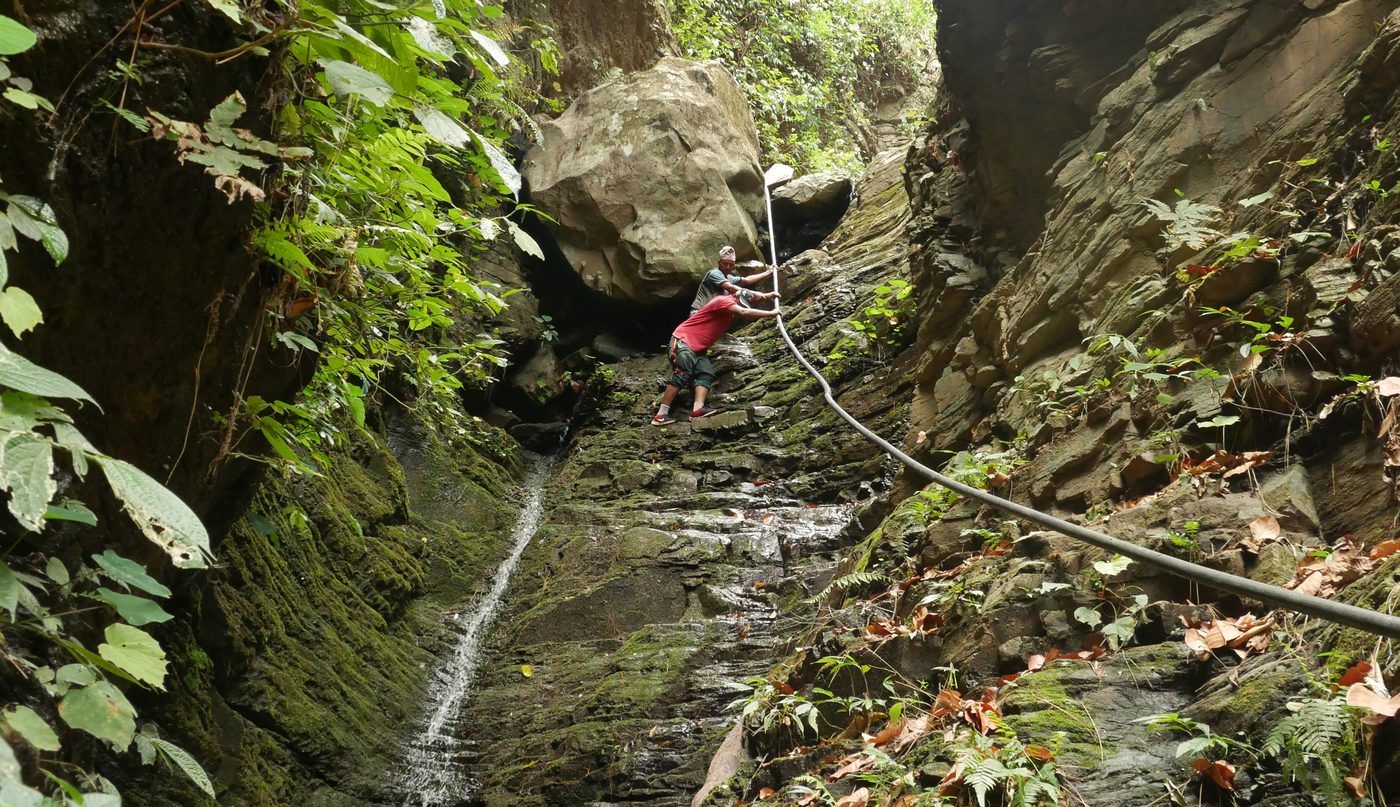
Cap a natural spring at its eye with a sealed masonry box and pipe it to a raised tap, so people collect flowing water that never touches the contaminated surface.
 Diagram
Timber & Stone Tank Stand
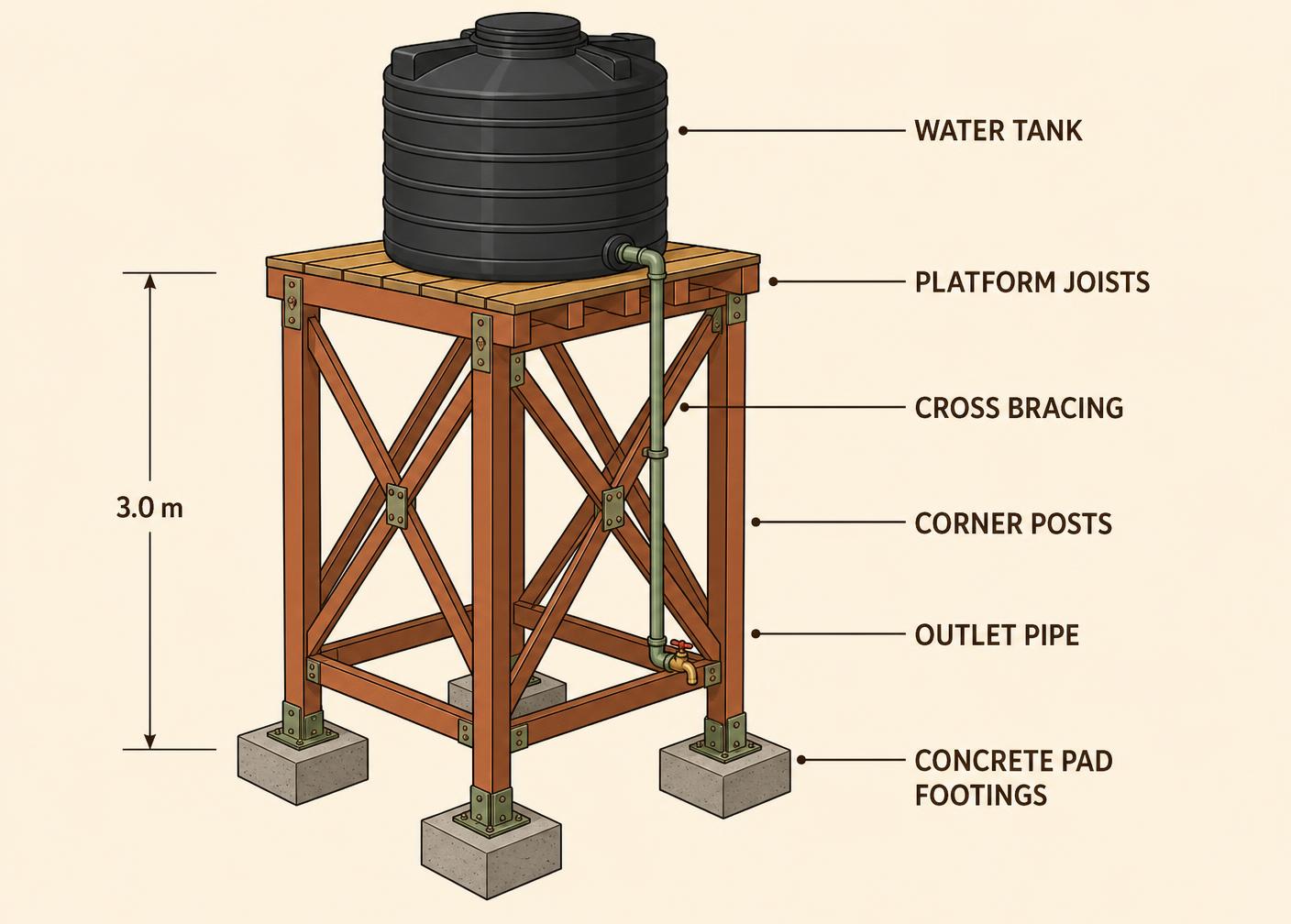
A braced stand that lifts a full water tank safely to head height and gives you gravity pressure at the tap without a pump.

Sand Dam on a Seasonal River
Build a reinforced concrete wall across a sandy seasonal riverbed so each flood leaves coarse sand behind — a buried reservoir that holds clean water through the dry season.