
Sand Dam on a Seasonal River
Build a reinforced concrete wall across a sandy seasonal riverbed so each flood leaves coarse sand behind — a buried reservoir that holds clean water through the dry season.

- Estimated cost
- $3,000 – $12,000 with community labour
- Skill level
- Advanced
- Time
- 1 – 3 months of build, 1 – 4 rainy seasons to fill
Not yet verified
No confirmed build with photo proof has been submitted for this plan yet. Built it? Send photos and it earns the badge.
Tools
- Concrete mixer or mixing platform
- Shuttering timber
- Bar bender and cutters
- Level, line and profiles
- Wheelbarrows
Short a tool or material? Builders below have often swapped something local in — read Local adaptations before you buy anything.
Materials
- Cement, coarse river sand and hard stone aggregate
- Reinforcing bar for the wall and wing keys
- Formwork timber and props
- Draw-off pipe, hand pump or scoop hole materials
Dimensions & cut list
A concrete weir across a seasonal sandy riverbed that stores water inside the sand it traps. These are the reference sizes from Appropedia / sand dam practitioners — scale them to what you have, but keep the ratios.
| Site | Sandy seasonal riverbed on rock or stable clay baseBoth banks must be firm and the bedrock reachable |
|---|---|
| Foundation key | Cut 500–1000 mm into bedrock across the full width |
| Wall height (first stage) | 300–500 mm above the riverbed only |
| Staged raising | Add 300 mm per season once sand has filled to the crestRaising too fast traps silt instead of sand and the dam holds nothing |
| Wall thickness | 600 mm at the base, 300 mm at the crest |
| Wing walls | Keyed 1–2 m into each bank |
| Spillway | The full crest acts as the spillway — level to within 20 mm |
| Stored water | ≈ 25–35% of the trapped sand volume |
| Draw-off | Hand-dug well or scoop hole 2–5 m downstream on the bank |
Take this list to the yard
- 40–120 × 50 kg bags depending on spanCement
- site-wonRiver sand and hardcore
- ≈ 60% of wall volumeRubble stone for the wall core
- as designed for spanReinforcement bar, 12 mm
- reusable setFormwork timber
Step by step
Step 1 of 6
Choose the site with care
You need a seasonal sand river with coarse sand, impermeable bedrock or hard clay in the bed, and rock or firm banks on both sides. Get a hydrogeologist or an experienced sand dam programme to confirm it.
Swipe or use arrow keys
1. Choose the site with care
You need a seasonal sand river with coarse sand, impermeable bedrock or hard clay in the bed, and rock or firm banks on both sides. Get a hydrogeologist or an experienced sand dam programme to confirm it.
2. Excavate to bedrock
Dig the full width of the dam line down to sound rock and key at least 1 m into each bank. Any seam left under the wall becomes the leak that empties the reservoir.
3. Build the wall in lifts
Cast or build a stone-and-mortar wall in 300 – 500 mm lifts, keying each lift into the last and dowelling the reinforcement through.
4. Raise it over several seasons
Build the first stage only 0.5 – 1 m above the bed. Raising it a stage per season is what makes the trapped material coarse sand rather than silt.
5. Shape a spillway and aprons
The whole crest acts as the spillway. Armour the downstream face and apron with stone so the falling flood does not undercut the wall.
6. Add an off-take
Fit a slotted draw-off pipe into the sand behind the wall running to a hand pump or protected tap on the bank, so people do not have to dig scoop holes in the bed.
Why mine failed
The ways this build usually goes wrong, and what fixes it.
Dam fills with silt and mud, not sand
CauseWall raised too high too fast
FixOnly ever raise the wall 300 mm per season, after coarse sand has filled to the crest. A tall wall built in one go creates a still pond that drops silt and stores nothing.
Water leaks away under or around the wall
CauseFoundation not keyed into bedrock, or wing walls too shallow
FixExcavate to solid rock or stable clay across the full width and key the wall 500–1000 mm in, and take the wings 1–2 m into each bank. There is no fixing this later without rebuilding.
Floods cut a channel around one end
CauseCrest not level, so overflow concentrates
FixLevel the crest to within 20 mm with a hose level and armour both banks downstream with rubble or gabions.
Safety notes
- This is engineered structural work. A failed sand dam can wash out downstream farms and homes — build it with technical supervision.
- Never work in the riverbed with rain in the catchment; sand rivers flood in minutes.
- Trench walls in sand collapse. Batter or shore any excavation deeper than 1.2 m.
- Water from scoop holes needs the same treatment as any surface source; a protected off-take is safer.
Source & attribution
This plan is our build-step write-up of work documented by Appropedia / sand dam practitioners. The original design and documentation belong to them — go read the source before you build.
Sand damLocal adaptations
What builders changed to make this work where they live.
Field note · Kitui, Kenya
Self-help groups build several dams along one river and plant the banks, so each dam recharges the next and the whole reach holds water later into the dry season.
Build this alongside
Plans that use the same materials or serve the same need.
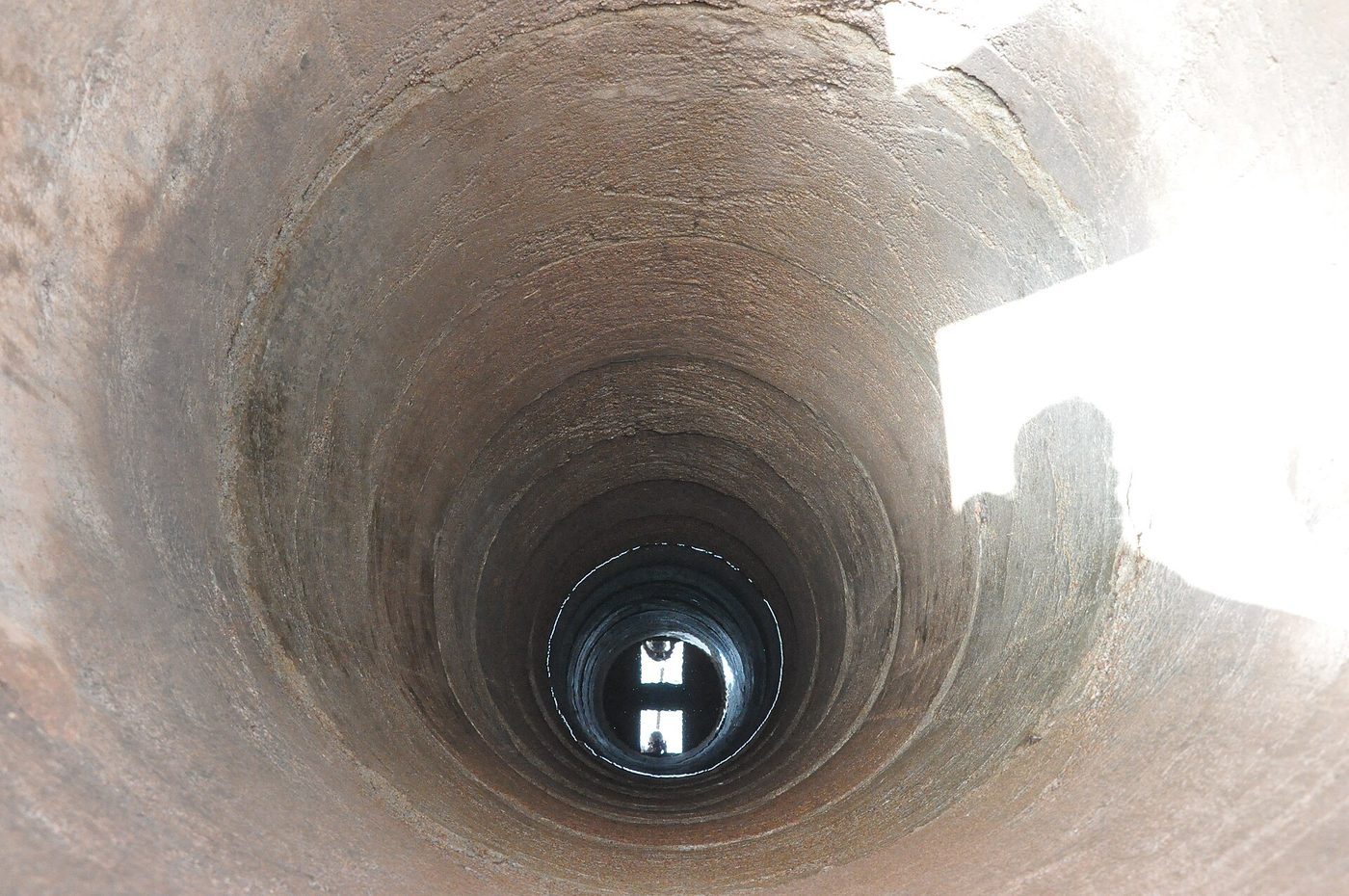
Hand-Dug Well with Concrete Ring Lining
Cast concrete rings on the surface, sink them as you dig, and finish with a sealed apron so the well does not contaminate itself.
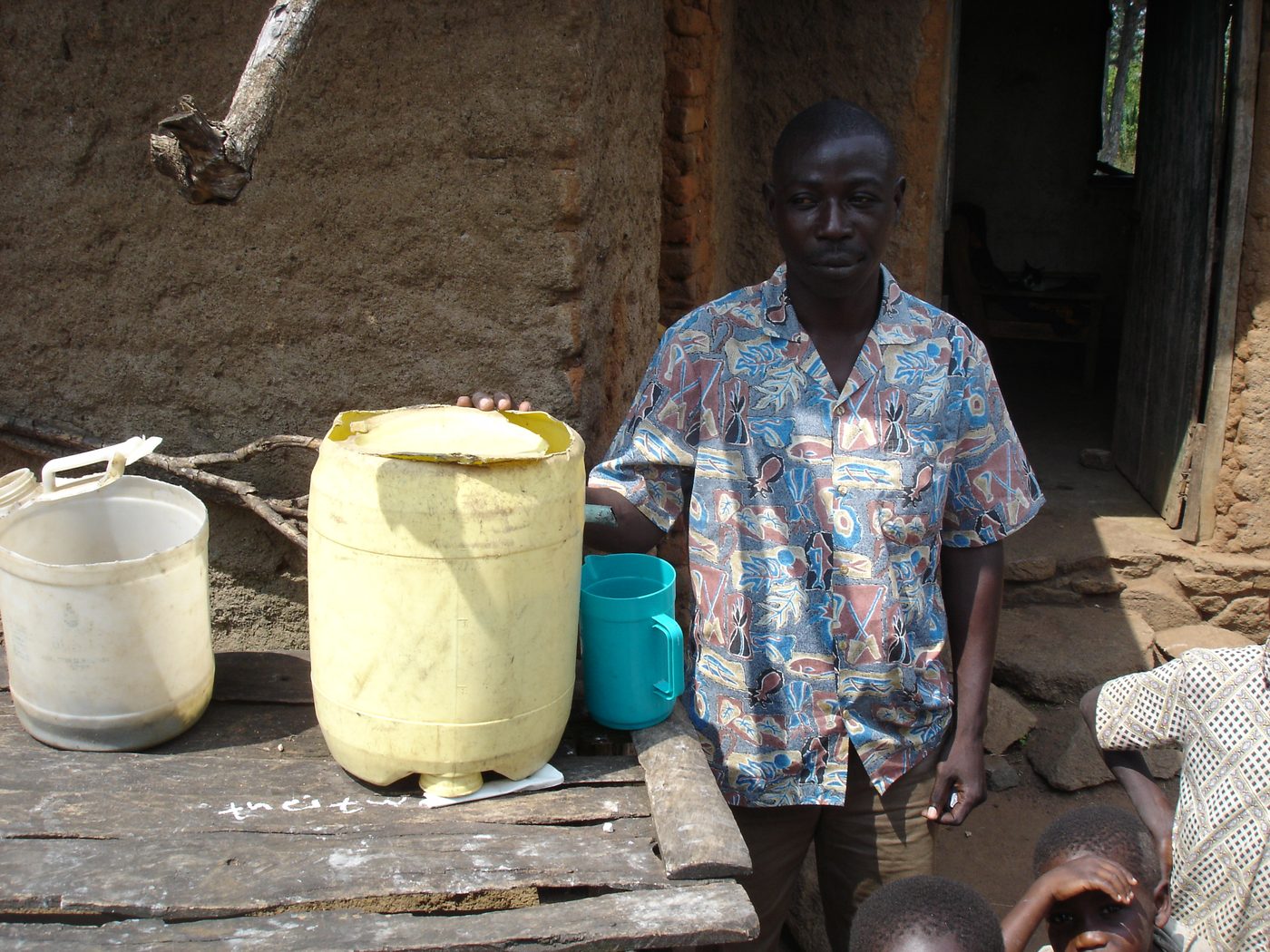
Concrete Biosand Water Filter
A household slow-sand filter in a concrete body that removes most pathogens and turbidity with no power, no cartridges and no ongoing cost.
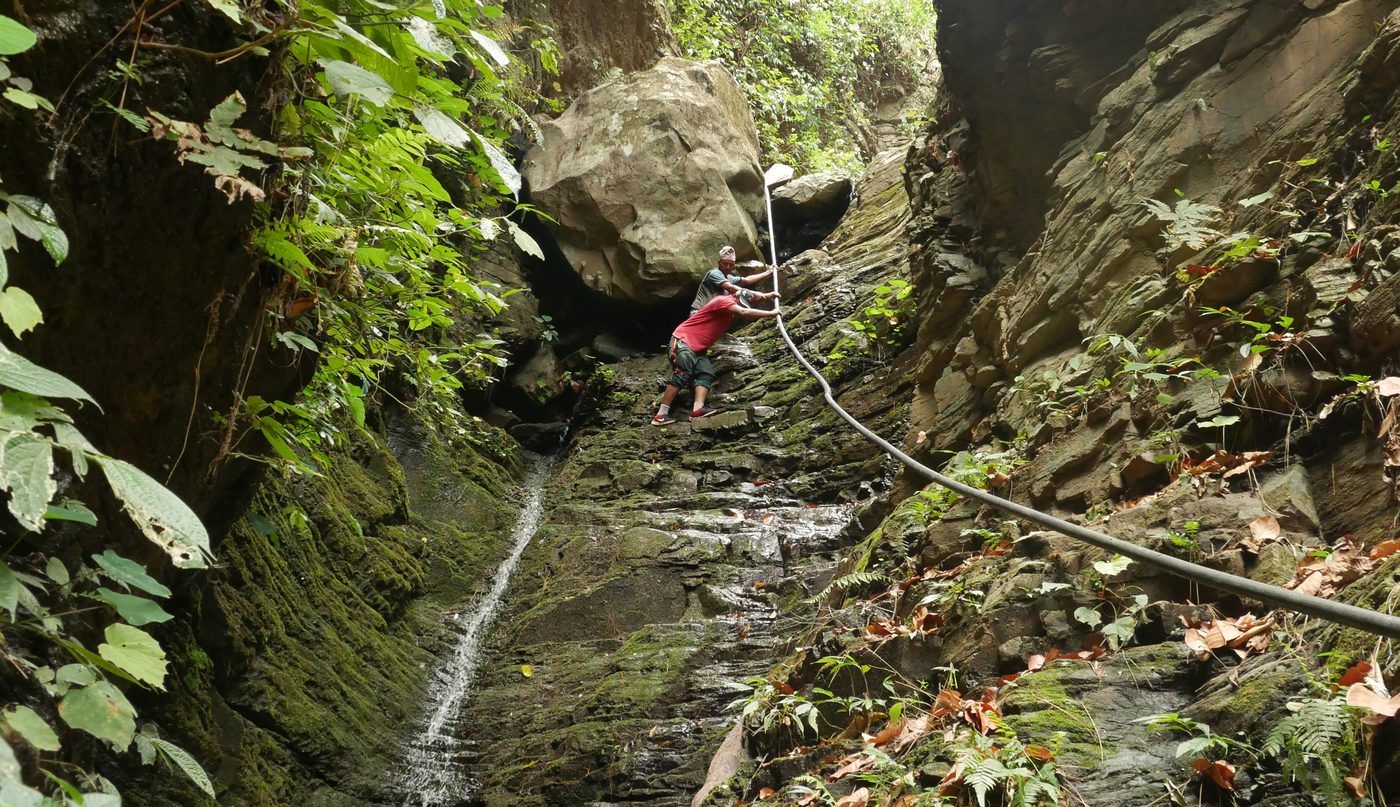
Protected Spring Box
Cap a natural spring at its eye with a sealed masonry box and pipe it to a raised tap, so people collect flowing water that never touches the contaminated surface.