
Greywater Reed Bed
Route kitchen and washing water through a gravel-filled planted bed instead of a stinking pit, and irrigate fruit trees with the outflow.
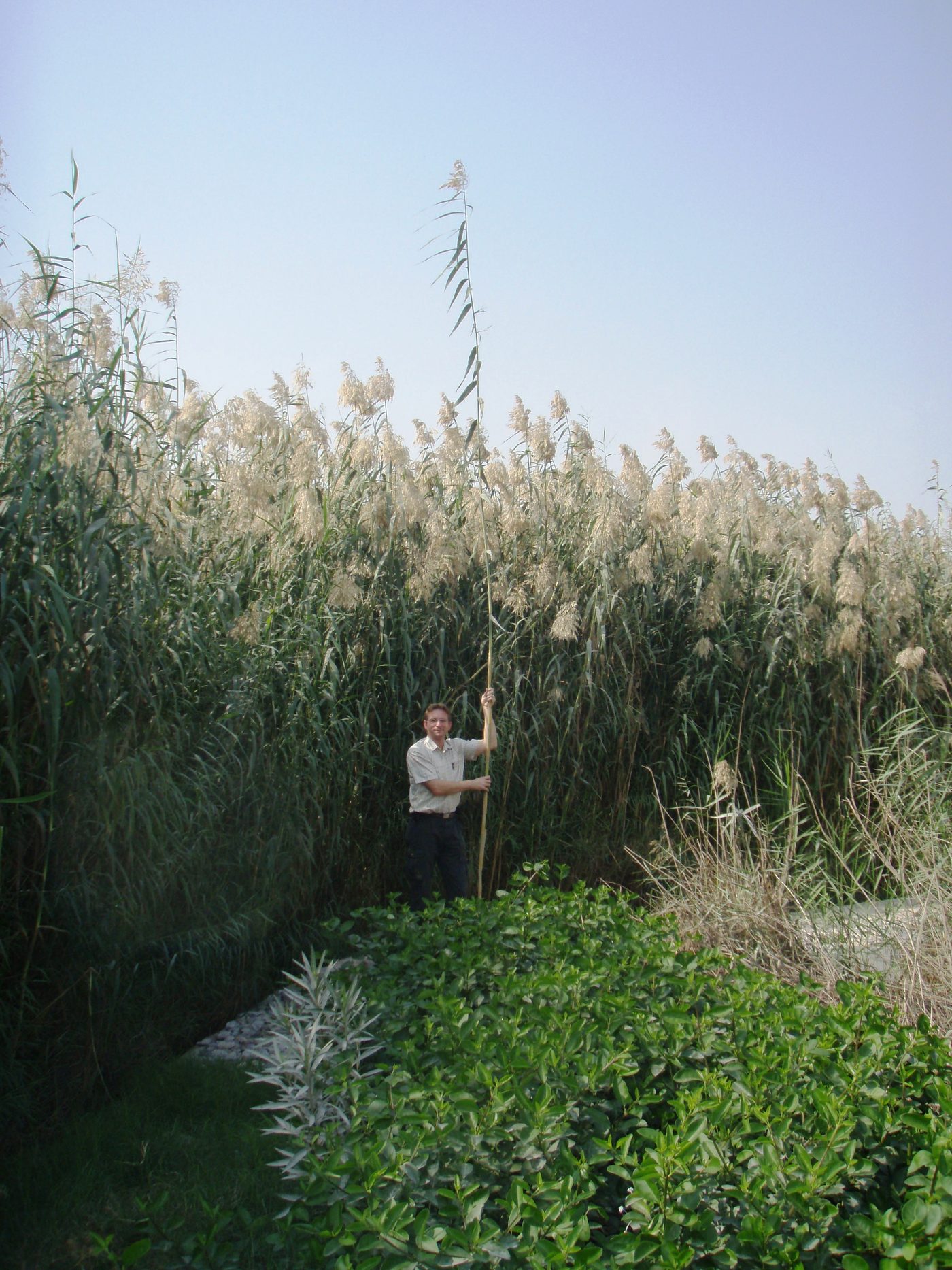
- Estimated cost
- $50 – $200 for a household bed
- Skill level
- Intermediate
- Time
- 2 – 4 days
Not yet verified
No confirmed build with photo proof has been submitted for this plan yet. Built it? Send photos and it earns the badge.
Tools
- Shovels and picks
- Hacksaw
- Drill for the distribution pipe
- Level and line
- Wheelbarrow
Short a tool or material? Builders below have often swapped something local in — read Local adaptations before you buy anything.
Materials
- Pond liner, thick plastic sheet or a rendered basin
- Washed gravel 10 – 20 mm for the bed, coarser at inlet and outlet
- Perforated distribution and collection pipes
- A grease trap or settling drum before the bed
- Reeds, papyrus, canna or vetiver as the planting
Dimensions & cut list
A horizontal-flow gravel reed bed treating kitchen and washing water from one household. These are the reference sizes from Appropedia / SuSanA greywater practice — scale them to what you have, but keep the ratios.
| Bed area | 1 m² per personAdd 50% where washing is heavy |
|---|---|
| Bed depth | 60 cm of gravel, water level held 5 cm below the surface |
| Gravel | Inlet and outlet zones 40–60 mm; main body 10–20 mm washed |
| Slope of the base | 1%, falling to the outlet |
| Grease trap before the bed | 60 litre baffled chamberNon-negotiable; grease blinds the gravel |
| Planting | Reeds/vetiver/canna at 4 per m² |
| Lining | Puddled clay 15 cm or 500 micron plastic |
Take this list to the yard
- ≈ 0.6 m³ per m² of bedWashed gravel
- Bed area + 1 m all roundPond liner or clay
- Bed widthInlet distribution pipe 50 mm, slotted
- 1Outlet pipe with adjustable elbowLets you set and re-set the water level
Step by step
Step 1 of 6
Fit a grease trap first
Kitchen fat kills reed beds. Put a baffled drum or two-chamber trap upstream and clean it weekly.
Swipe or use arrow keys
1. Fit a grease trap first
Kitchen fat kills reed beds. Put a baffled drum or two-chamber trap upstream and clean it weekly.
2. Dig and line the bed
Size roughly 1 – 2 m² per person. Dig 600 – 700 mm deep with a slight fall to the outlet and line it so greywater cannot seep to groundwater.
3. Lay the pipework
Perforated inlet pipe in coarse stone across the head of the bed, collector pipe in coarse stone at the outlet end, running to a level-control elbow.
4. Fill with washed gravel
Fill to within 100 mm of the top. Set the outlet level so the water surface always sits 50 – 100 mm below the gravel surface — that is what stops mosquitoes and smell.
5. Plant and establish
Plant reeds through the gravel at three or four per square metre. Run it on low flow for a month while roots take hold.
6. Use the outflow
Pipe the treated water to banana pits or fruit trees below ground level. Never spray it or use it on leaf crops eaten raw.
Why mine failed
The ways this build usually goes wrong, and what fixes it.
Water ponds on the surface and smells
CauseGravel blinded with grease and fines
FixThe grease trap is doing nothing or does not exist. Fit and empty a baffled 60 litre trap, then dig out and wash the first metre of inlet gravel.
Reeds die back
CauseBed drying out, or bleach and detergent in the feed
FixKeep the water level 5 cm under the surface with the outlet elbow, and stop bleach, disinfectant and heavy detergent going down the sink.
Mosquitoes breeding in the bed
CauseStanding water on the surface
FixA horizontal-flow bed should have no open water at all. Lower the outlet, and top up the gravel so it is proud of the water line.
Safety notes
- Reed bed outflow is treated, not clean. Keep it out of drinking sources and away from salad crops.
- Never route toilet water (blackwater) into a simple household reed bed.
- Keep the water below the gravel surface — a ponding bed breeds mosquitoes fast.
- Harsh bleach and strong detergents kill the biology; switch the household to mild soap first.
Source & attribution
This plan is our build-step write-up of work documented by Appropedia / SuSanA greywater practice. The original design and documentation belong to them — go read the source before you build.
Constructed wetland for greywaterLocal adaptations
What builders changed to make this work where they live.
Field note · Windhoek, Namibia
Households plant the bed with vetiver and use the outflow for a banana circle, which soaks up every drop even in the dry months.
Build this alongside
Plans that use the same materials or serve the same need.
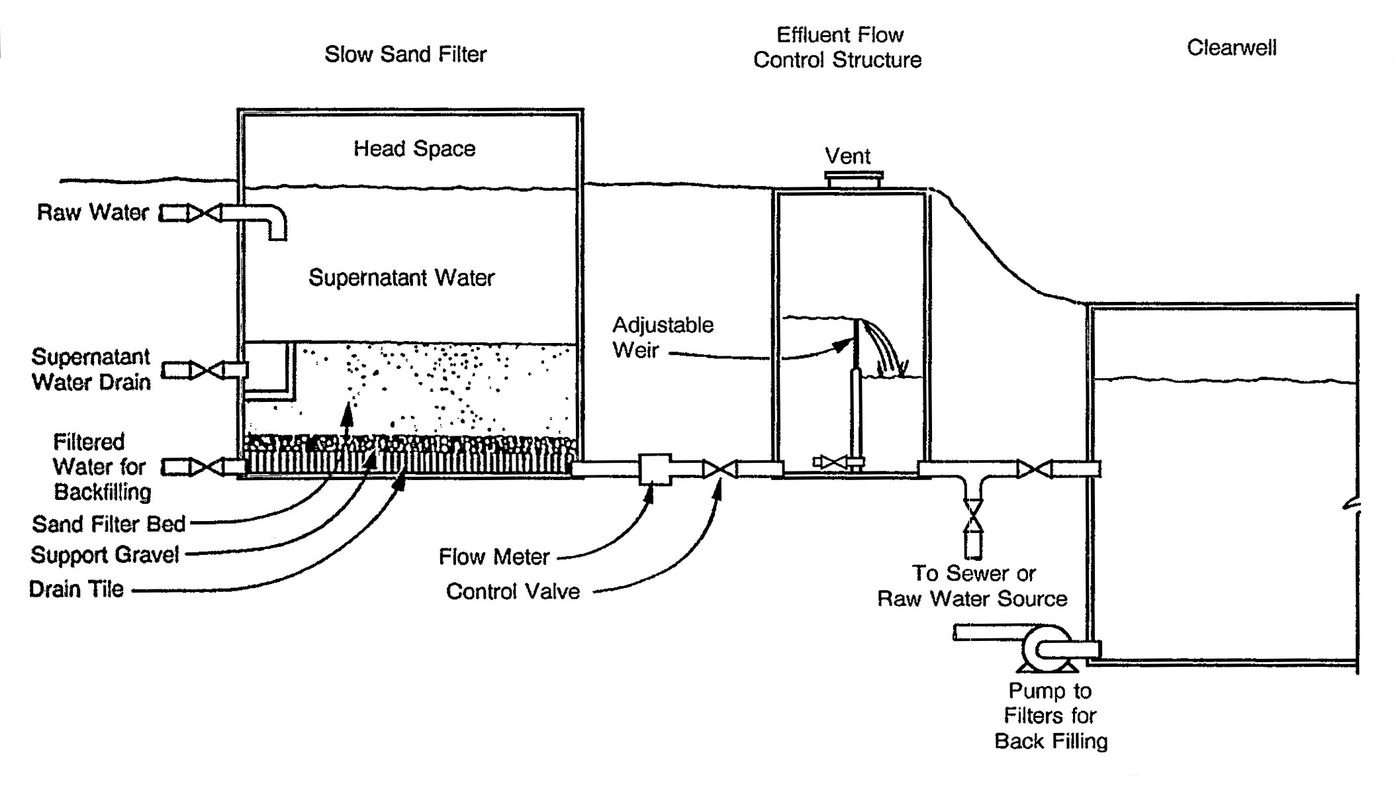
Community Slow Sand Filter
A tank of fine sand with a living biological layer on top that treats a household or small community's drinking water continuously, with no chemicals and no power.
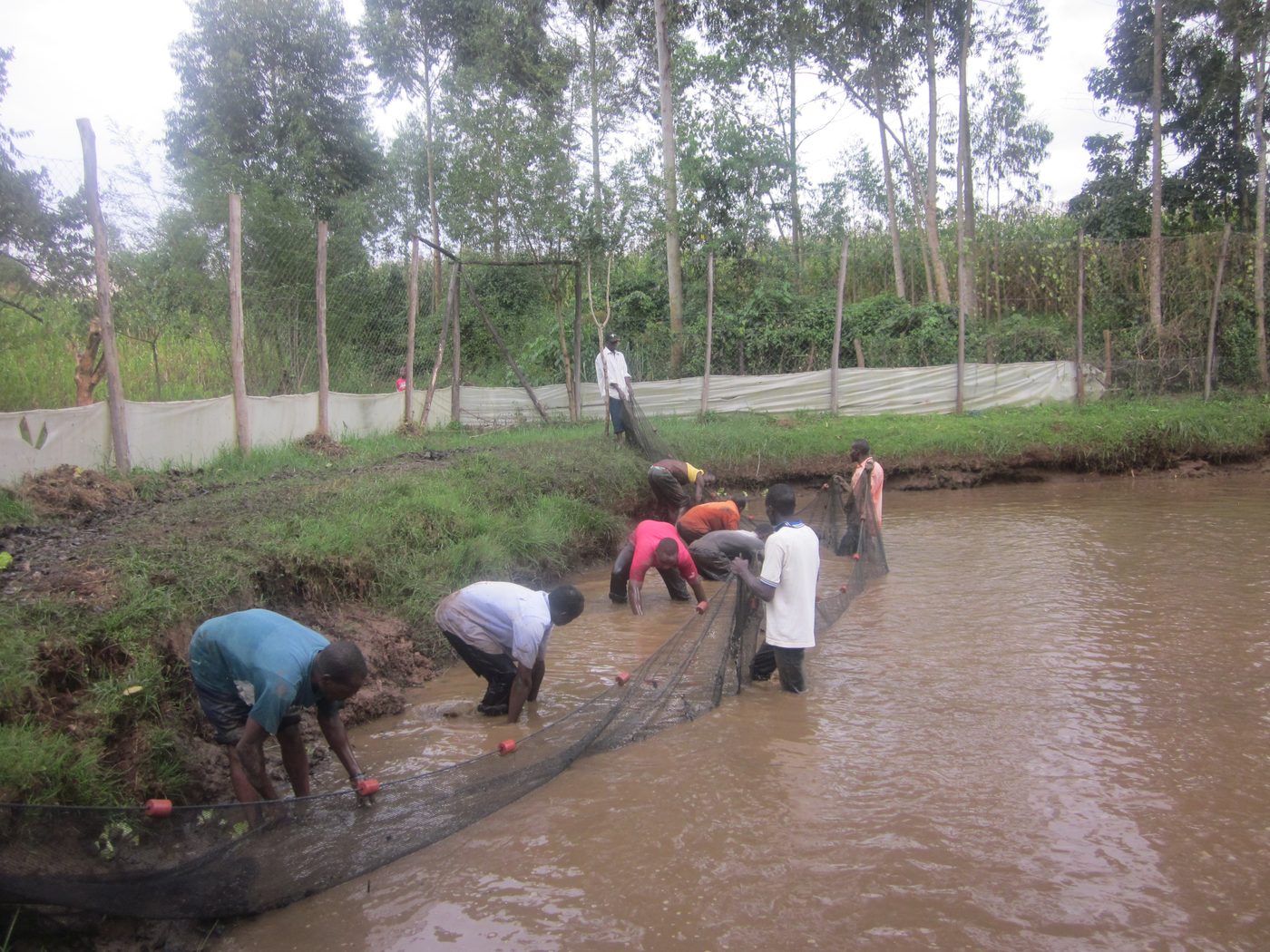
Lined Tilapia Fish Pond
A hand-dug, lined pond stocked with tilapia and fed on farm waste — a protein and income source that also stores irrigation water.
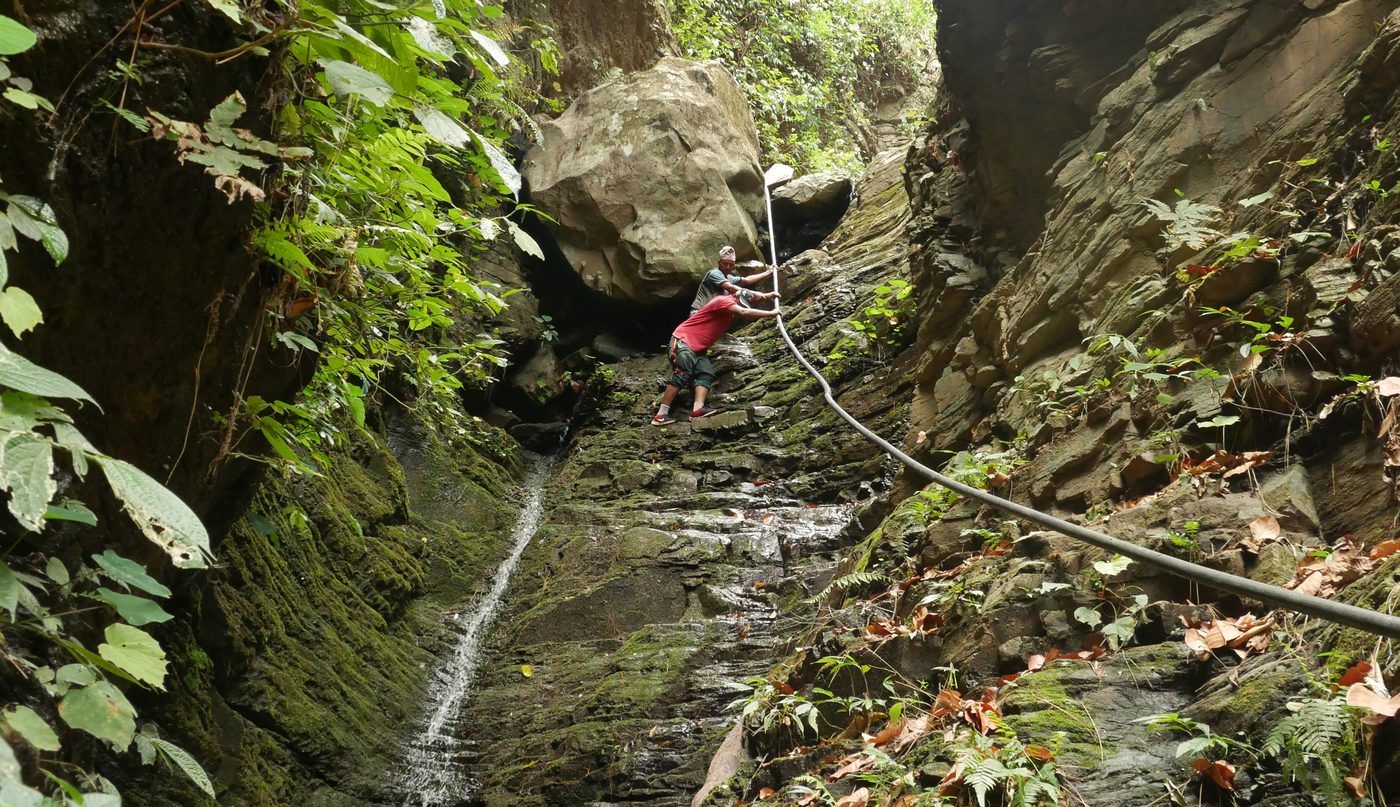
Protected Spring Box
Cap a natural spring at its eye with a sealed masonry box and pipe it to a raised tap, so people collect flowing water that never touches the contaminated surface.