
Buried Clay Pot (Olla) Irrigation
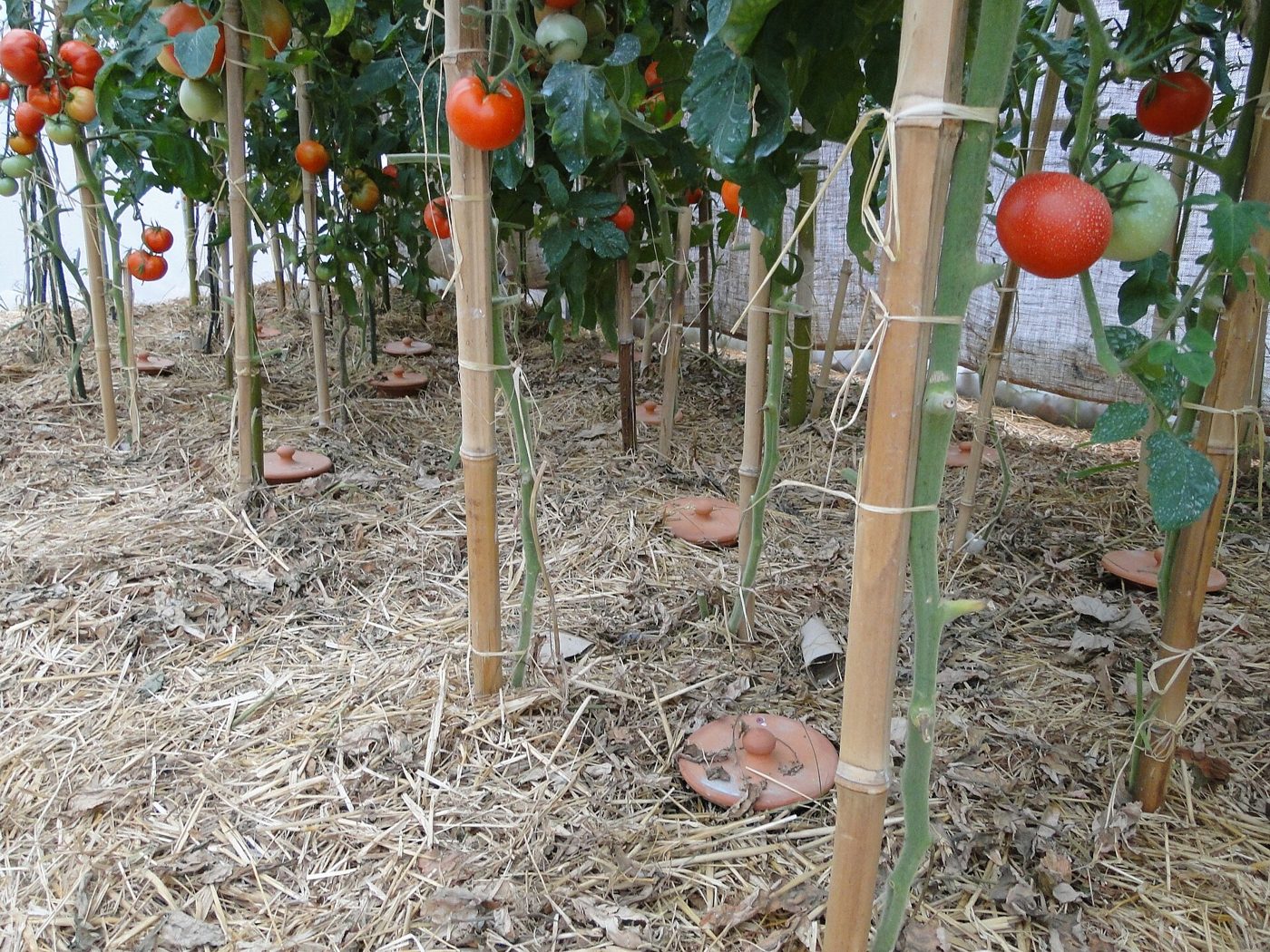
Bury unglazed clay pots between plants and fill them weekly — water seeps out at root depth on demand, cutting irrigation water by half or more.
- Estimated cost
- $1 – $3 per pot; 10 – 20 pots for a family plot
- Skill level
- Beginner
- Time
- Half a day to install a bed
Not yet verified
No confirmed build with photo proof has been submitted for this plan yet. Built it? Send photos and it earns the badge.
Tools
- Hoe or trowel
- Bucket
- Measuring stick
Short a tool or material? Builders below have often swapped something local in — read Local adaptations before you buy anything.
Materials
Dimensions & cut list
Buried unglazed clay ollas watering a vegetable bed, one pot per 1 m² of planting. These are the reference sizes from Appropedia — scale them to what you have, but keep the ratios.
| Pot volume | 8–10 litres |
|---|---|
| Wall thickness | 8–12 mmThicker walls seep too slowly; thinner ones empty in a day |
| Firing | Low fire, unglazed, no slip on the buried body |
| Burial depth | Neck 30–50 mm above soil level, body fully buried |
| Spacing | 900 mm–1.2 m between pots |
| Wetting radius | ≈ 400 mm in loam, less in sand |
| Refill interval | Every 3–5 days in dry season |
Take this list to the yard
- 1 per m²Unglazed fired clay potsOr glue two cheap flowerpots rim-to-rim and plug one drain hole
- 1 per potTight lids or flat stonesLids stop evaporation and mosquito breeding
- 50 mm layerMulch for the bed surface
Step by step
Step 1 of 6
Test the pot's seep rate
Fill a pot and stand it on dry ground overnight. It should sweat and empty over two to four days. A pot that empties in hours is cracked; one that stays dry is fired too hard or glazed.
Swipe or use arrow keys
1. Test the pot's seep rate
Fill a pot and stand it on dry ground overnight. It should sweat and empty over two to four days. A pot that empties in hours is cracked; one that stays dry is fired too hard or glazed.
2. Space by wetting radius
A buried pot wets a zone roughly the width of the pot's diameter plus its depth on each side — plan pots at 0.6 – 1 m centres for vegetables, wider for tree seedlings.
3. Bury with the neck proud
Dig a hole, seat the pot firmly against undisturbed soil on all sides, and backfill so only 25 – 50 mm of the neck stands above the surface.
4. Plant around the pot
Sow or transplant in a ring 100 – 200 mm out from the pot wall. Roots will find the moist zone and grow towards it.
5. Fill and lid
Fill the pot and cover it. The lid stops evaporation, keeps out debris and blocks mosquitoes from laying — it is essential, not optional.
6. Mulch and top up on a schedule
Mulch the bed to cut surface loss and check pots every three to seven days. Lift and clean pots at season end; scrub off root mats and salt crust.
Why mine failed
The ways this build usually goes wrong, and what fixes it.
Pot empties in a day
CauseWalls too thin or the clay too porous
FixUse pots with 8–12 mm walls fired at low temperature. Test before burying: a filled pot standing in air should still be half full after two days.
Pot never empties and plants stay dry
CauseClay too dense, or fired too hot / glazed
FixNever use glazed pots. If the seepage is too slow, plants set closer to the pot body will still find the moisture — but replace with softer-fired pots for the next bed.
Mosquitoes breeding in the pots
CauseOpen necks
FixKeep a lid or flat stone on every neck. It stops both mosquitoes and evaporation.
Plants a hand-span away are wilting
CauseSpacing too wide for sandy soil
FixIn sand, cut spacing to 700–800 mm and plant right at the pot edge, and mulch the surface. Wetting radius shrinks fast as sand content rises.
Safety notes
- Always lid the pots — open buried water is a mosquito breeding site.
- Do not fill ollas with greywater; it clogs the pot wall and contaminates crops.
- Lift pots before heavy frost or ground compaction damages them.
Source & attribution
This plan is our build-step write-up of work documented by Appropedia. The original design and documentation belong to them — go read the source before you build.
Clay pot (olla) irrigationLocal adaptations
What builders changed to make this work where they live.
- No adaptations shared yet for this plan.
Build this alongside
Plans that use the same materials or serve the same need.
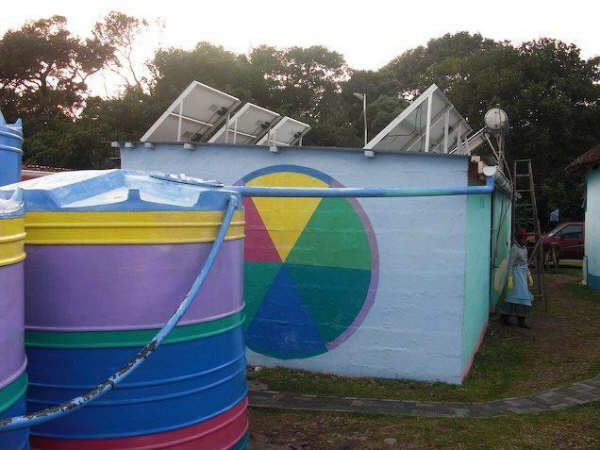
Rooftop Rainwater Harvesting with First-Flush Diverter
Catch and store roof runoff, and throw away the dirty first few litres automatically so what reaches your tank is worth storing.
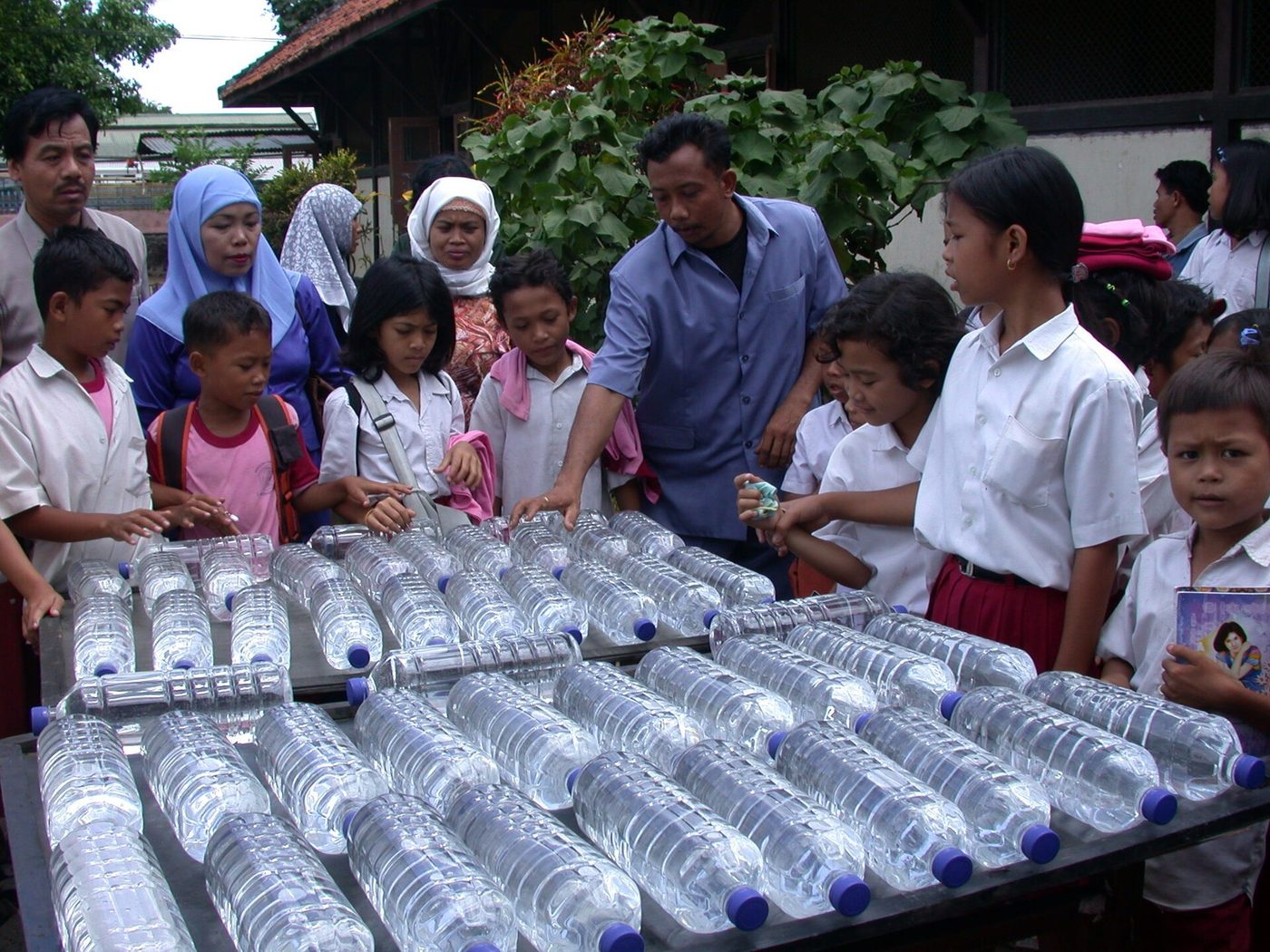
SODIS Solar Water Disinfection Rack
Clear PET bottles on a black-painted roof rack, using six hours of sun to make biologically safe drinking water at no running cost.
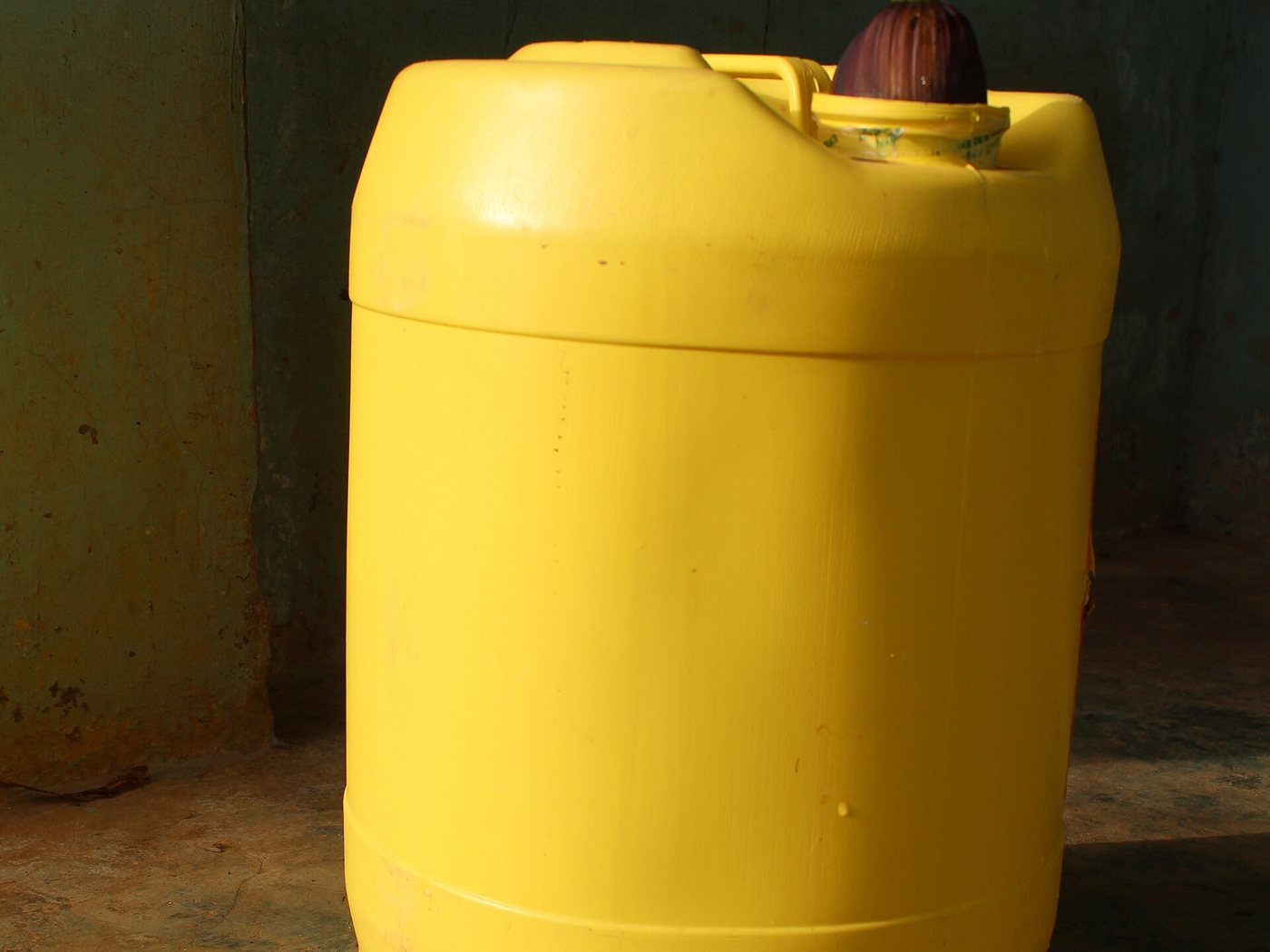
Safe Water Storage Vessel
Convert an ordinary jerrycan or clay pot into a narrow-mouth, tap-fitted, lidded storage vessel so treated water does not get recontaminated by hands and cups.