
Tippy Tap Handwashing Station
A foot-operated hands-free handwashing station built from a jerrycan, sticks and string — runs on a fifth of the water of a tap.
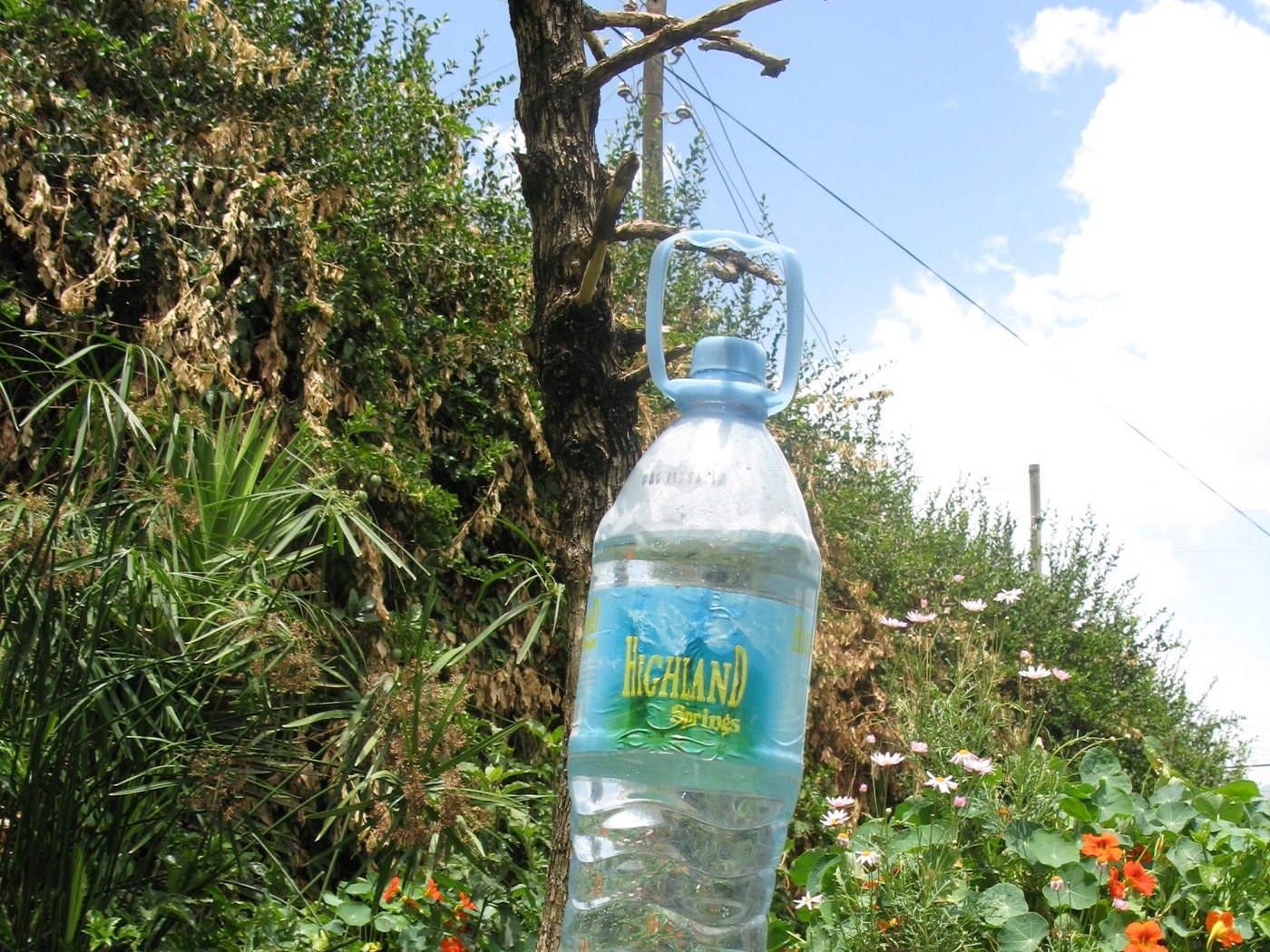
- Estimated cost
- Under $5, often free from scrap
- Skill level
- Beginner
- Time
- 1 hour
Why this is a Verified Build
Verified with photo proof at two primary schools in Lusaka, Zambia. Staff reported one 5 L can serving roughly 40 handwashes.
Tools
- Knife or a heated nail
- Machete or saw
- Shovel
- Matches or a candle
If you don't have it
- No jerrycan? Any 3 – 5 L plastic bottle hung the same way works; punch the outlet hole with a hot nail rather than cutting it.
- No soap bar? Hang a mesh bag of soap offcuts, or a bottle of ash-water — ash scrubs pathogens off hands when soap runs out.
Materials
Dimensions & cut list
One foot-operated station at a latrine or kitchen door, for one household. These are the reference sizes from Appropedia — scale them to what you have, but keep the ratios.
| Container | 3–5 litre jerrycan |
|---|---|
| Spout hole | 3 mm, burned with a hot nail 3 cm below the cap |
| Container height | Base of the can 100 cm above the ground |
| Uprights | Two forked poles, 150 cm long, buried 40 cm |
| Crossbar | 120 cm, sitting in the forks |
| Foot lever | 60 cm stick, hanging 15 cm above the ground |
| Drainage pit | 40 × 40 × 30 cm filled with stones |
Take this list to the yard
- 1Jerrycan with cap
- 2Forked poles
- 3Straight sticks (crossbar, lever, soap hanger)
- 3 mCord or wire
- ≈ 2 bucketsStones for the soak pit
Step by step
Step 1 of 7
Site it right
Put the station on the path between the latrine and the living or eating area, where people pass anyway. A handwashing station nobody walks past does not get used.
Swipe or use arrow keys
1. Site it right
Put the station on the path between the latrine and the living or eating area, where people pass anyway. A handwashing station nobody walks past does not get used.
2. Plant the frame
Dig two holes 800 mm apart and set the forked uprights 400 mm deep, tamping backfill hard. Rest the crossbar in the forks and lash it.
3. Pierce the jerrycan
Heat a nail and melt a 3 mm hole in the can's shoulder, just below the neck on the side that will face downward when tipped. Melt two more holes near the handle to hang it from.
4. Hang and rig the lever
Hang the can from the crossbar so it swings freely. Tie a string from the can's neck down to a foot stick set 200 mm above the ground. Pressing the stick tips the can and water runs from the hole.
5. Hang the soap
Put a bar of soap in a net or stocking and tie it to the crossbar. Loose soap on the ground gets dirty, gets lost and gets skipped.
6. Build the soak pit
Dig a 400 mm pit under the station and fill it with gravel so wastewater soaks away. Standing greywater breeds mosquitoes and turns the spot into mud.
7. Keep the cap on
The screw cap keeps dust and insects out. Refill daily and check the hole has not blocked.
Why mine failed
The ways this build usually goes wrong, and what fixes it.
Station is always empty
CauseNobody has been given the job of filling it
FixName one person per day and put the jerrycan where they pass anyway. A tippy tap fails socially long before it fails mechanically.
Ground below turns to mud
CauseNo soak pit
FixDig 40 × 40 × 30 cm below the spout and fill it with stones.
Water runs out too fast
CauseSpout hole too large
FixPlug it with a sliver of wood and burn a fresh 3 mm hole. One tip should use about 200 ml.
Soap keeps disappearing
CauseLoose bar left on the ground
FixHang the soap in a piece of stocking or netting tied to the crossbar.
Safety notes
- Hands must never touch the can, the cap or the soap directly — that is the whole point of the foot lever, so make sure the rig actually works hands-free.
- Site the station at least 10 m from any well or spring, and downhill of it.
- Refill from a safe water source; a tippy tap does not treat water.
- Check the uprights weekly — a stick frame loosens in wet ground and can fall on a child.
Source & attribution
This plan is our build-step write-up of work documented by Appropedia. The original design and documentation belong to them — go read the source before you build.
Tippy tap construction and placement guidanceLocal adaptations
What builders changed to make this work where they live.
Mwansa P. · Lusaka, Zambia
We planted a small banana at the soak pit. It takes all the greywater and the children now check it daily.
Yaw B. · Kumasi, Ghana
Swapped sticks for 40 mm galvanised pipe set in concrete at the school. Same design, survives 300 children a day.
Build this alongside
Plans that use the same materials or serve the same need.
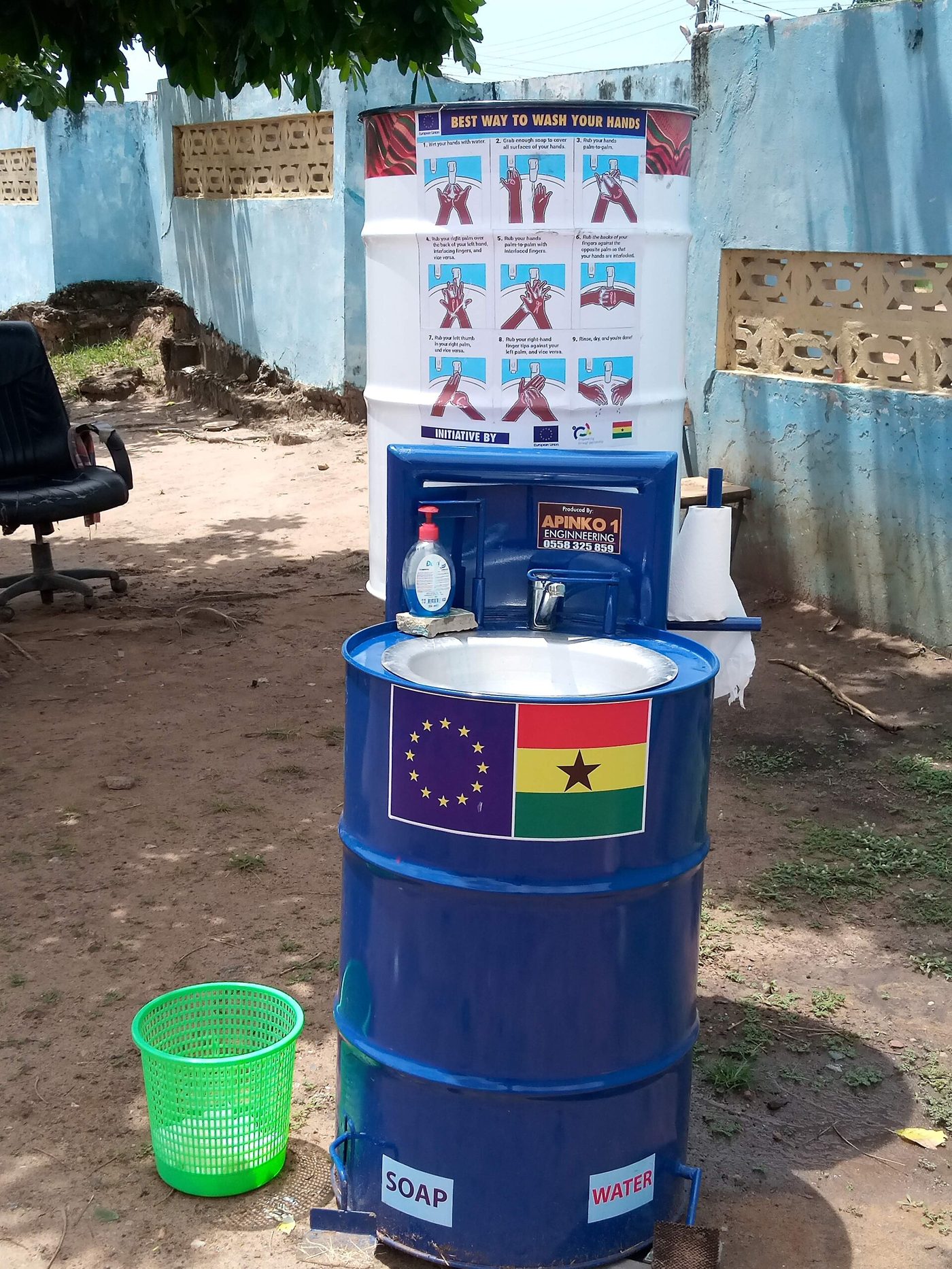
Foot-Pedal Handwashing Station
A hands-free pedal station that runs on a jerrycan of water — no tap to touch, so washing hands doesn't recontaminate them.
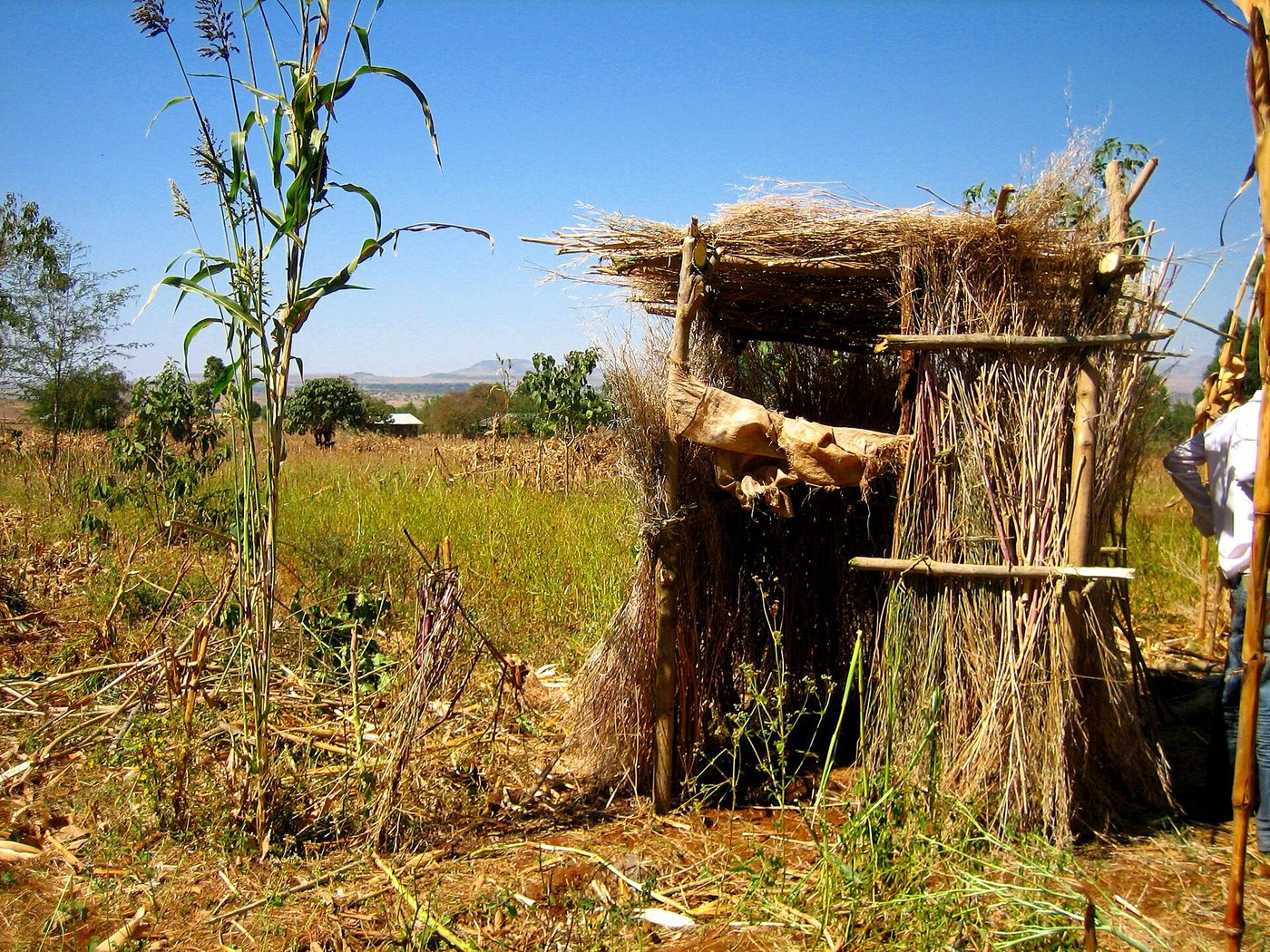
Arborloo Shallow-Pit Compost Toilet
A shallow pit toilet with a movable slab and superstructure — fill it, cap it with soil, plant a tree on it and dig the next one.
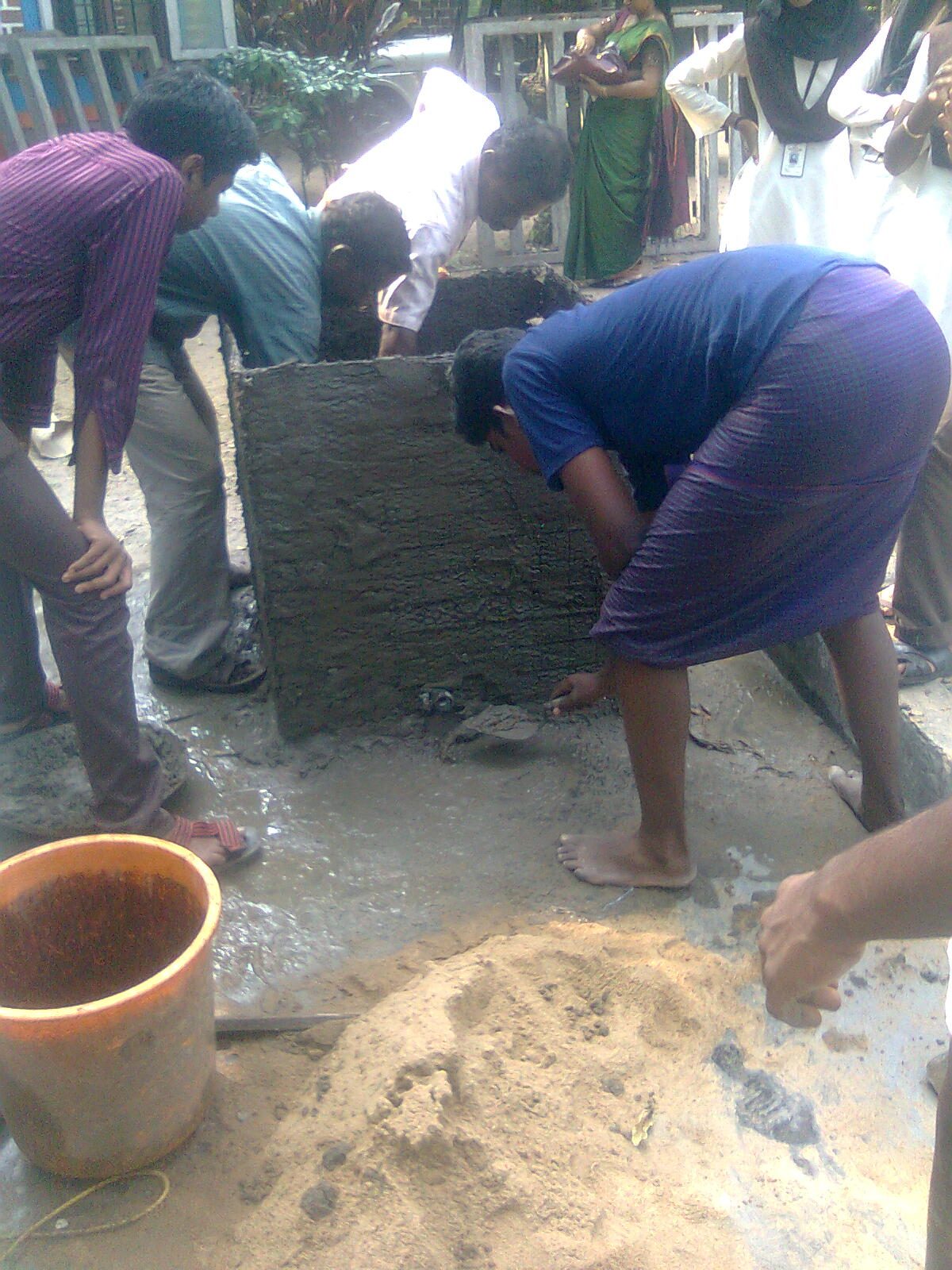
Ferrocement Water Storage Tank
A wire-mesh and mortar shell that stores 5,000 litres for a fraction of the price of an imported plastic tank, built entirely on site.